Click on your selected market and read the latest business news from…
USA · Japan · China · Canada · Germany · Austria · Switzerland · Luxembourg · Belgium · Netherlands · Sweden · Norway · Finland · Denmark
Germany’s producer prices continued to decline in early 2026, signaling a gradual easing of industrial cost pressures. The drop is largely driven by falling energy prices, which have significantly reduced overall production costs across key sectors. However, the trend is not uniform, as some parts of the supply chain still experience price increases. These developments may indicate a broader slowdown in inflation, though the impact on consumers is expected to be gradual. Policymakers remain cautious, as mixed signals suggest that underlying inflationary pressures have not fully disappeared.
Germany’s producer prices fell sharply in February 2026, driven mainly by a significant drop in energy costs. Lower prices for natural gas and electricity played a key role in pushing the overall index down both year-on-year and month-on-month. However, the trend remains uneven, as prices for capital goods, intermediate goods, and some consumer products continued to rise. This divergence highlights ongoing cost pressures in certain sectors despite the broader decline. Overall, the data suggests easing inflationary pressures, but the economic outlook remains complex and uncertain.
Germany’s economy is showing tentative signs of recovery in 2026, with modest growth expected after a period of stagnation. While public spending and selective investment support stability, external pressures and cautious private sector activity continue to pose risks. Overall, the outlook is one of stability without strong momentum, highlighting the need for strategic adjustments.
Austria’s inflation remained relatively stable at 2.2% in February 2026, according to a flash estimate by Statistics Austria. The slight increase from January suggests that price growth is stabilising rather than continuing to decline. Rising service prices remain the main driver of inflation, while falling energy costs help contain overall price pressures. However, mixed trends across different categories highlight that inflation dynamics are still uneven. Overall, Austria appears to be entering a phase of moderate and controlled inflation, though some uncertainty remains.
Austria’s economic recovery remains fragile, as highlighted by OECD, with slowing growth and rising fiscal challenges posing key risks. While the economy showed modest improvement in 2025, geopolitical tensions and external uncertainties continue to threaten stability. A major concern is the budget deficit, which is expected to require sustained consolidation efforts in the coming years. Doubts over current fiscal measures have sparked debate about the need for stronger policy actions. Overall, Austria faces a delicate balance between supporting growth and restoring fiscal discipline in an uncertain environment.
Austria’s construction sector continues to struggle in 2026, as weak demand and limited project activity slow down recovery. According to Infina, lower interest rates have provided some relief, but financing conditions and regulatory factors still constrain growth. Government support measures aim to stimulate the market, yet their impact remains modest so far. At the same time, new opportunities are emerging in renovation and smaller, more affordable housing projects. Overall, the sector shows signs of stabilisation, but a strong recovery is still some distance away.
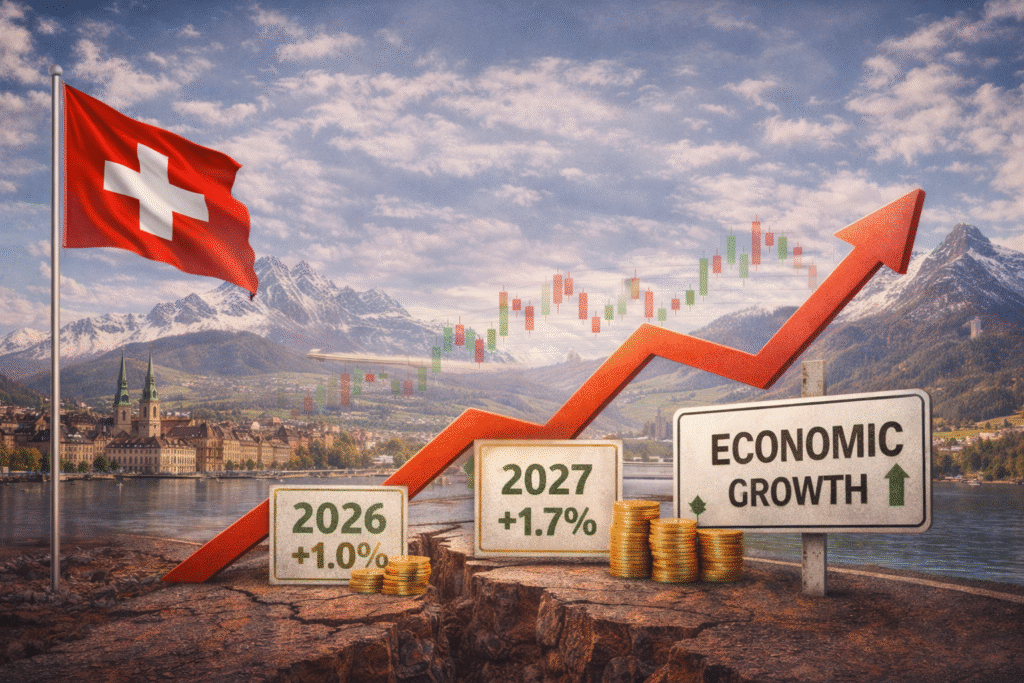
Switzerland’s economic growth is expected to remain below average in 2026, with GDP projected at around 1.0%, according to Federal Government Expert Group on Business Cycles. Rising energy prices and ongoing geopolitical tensions are key factors weighing on the outlook, contributing to slightly higher inflation expectations. While recent data تشير some stabilisation, external pressures continue to affect exports and investment activity. The labour market also reflects the slowdown, with a moderate increase in unemployment المتوقع. Overall, Switzerland faces a cautious and uncertain economic path, with gradual improvement anticipated in 2027.

Switzerland’s economy is expected to grow by 1.0% in 2026, with stronger expansion projected for 2027. According to Federal Expert Group on Economic Forecasts, recent data تشير stabilisation and a gradual recovery trend. However, rising energy prices and global uncertainties continue to pose risks to the outlook. Despite these challenges, the overall perspective remains cautiously positive.

Switzerland’s hotel industry continued its growth in February 2026, with overnight stays rising by 2.1%. According to Federal Statistical Office (BFS), both domestic and international demand contributed evenly to the increase. While overall tourism remains strong, regional trends vary, with gains from some markets offset by declines in others. Overall, the sector shows stable and sustained momentum.
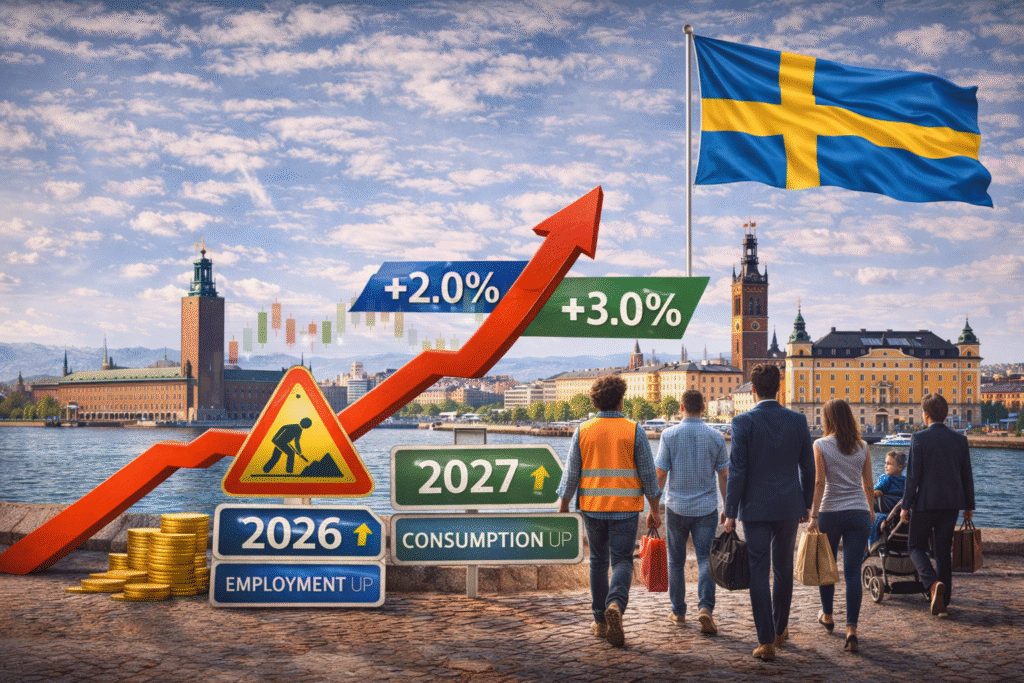
Sweden’s economy is showing clear signs of recovery in 2026, supported by rising employment and stronger household consumption. According to Swedish Association of Local Authorities and Regions, growth is expected to accelerate further in the coming years. Lower inflation is also helping improve purchasing power and supporting the recovery. However, structural labour market challenges remain, highlighting an uneven rebound. Overall, Sweden appears to be gradually exiting its recent economic downturn.
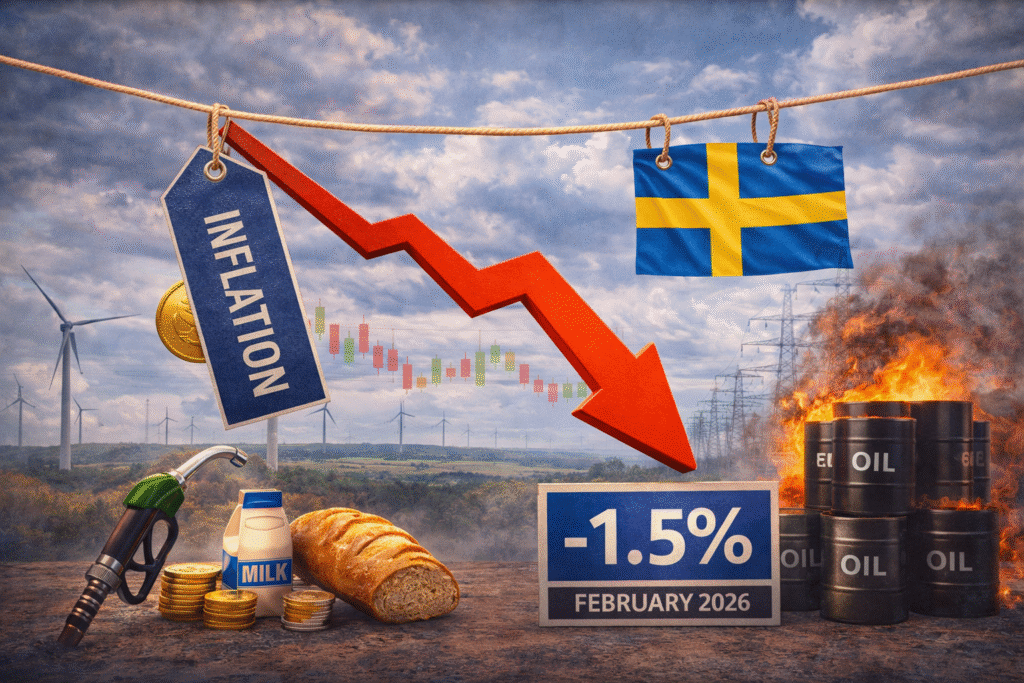
Sweden’s inflation is expected to continue declining in early 2026, with underlying price pressures remaining weak. According to Morningstar, both goods and services inflation are slowing, keeping overall inflation below the central bank’s target. However, rising energy prices pose a potential risk that could reverse the trend. Policymakers are therefore likely to remain cautious in the current uncertain environment.
Sweden’s economy is beginning to recover in 2026, supported by improving demand and easing inflation. According to Teknikföretagen, the economy has likely passed its lowest point and is entering a gradual upswing. However, industrial activity remains weak and the recovery is expected to be uneven. Ongoing global uncertainty continues to limit stronger growth momentum.
Norwegian households are becoming more pessimistic about the national economy, with confidence declining sharply in early 2026. According to Finans Norge, rising uncertainty around inflation, interest rates, and global developments is driving negative sentiment. Despite this, personal financial situations remain relatively stable for many households. The growing gap between personal stability and national economic concerns suggests increasing caution in consumer behaviour.
Norway’s tax system is facing criticism for its treatment of foreign pensions, which are often taxed less favourably than domestic schemes. According to Finansavisen, this creates liquidity issues and potential double taxation for internationally mobile workers. Experts warn that the current framework may discourage foreign professionals from working in Norway. Calls for reform are growing, with a focus on fairness and improved workforce mobility.
Norway’s central bank is prioritising stability as it navigates ongoing economic uncertainty. In her address, Ida Wolden Bache подчеркнула the need to balance inflation control with economic growth. Interest rate decisions remain delicate, as policymakers aim to avoid both prolonged inflation and excessive slowdown. Overall, the outlook is stable, but continued caution is required.
Denmark’s economy is showing diverging growth patterns in early 2026, with strong industrial performance contrasting weak domestic demand. According to Statistics Denmark, exports and production continue to support growth, while household consumption remains subdued. The labour market stays stable, but investment activity is cautious. Overall, the outlook points to continued uneven economic development.
Denmark’s economy remains strong in 2026, supported by robust employment and solid export performance. According to Jyske Bank, growth is expected to continue but gradually slow in the coming years. Consumer confidence is improving, and the housing market remains stable. However, external risks are likely to shape the outlook, pointing to steady but moderating growth ahead.
Denmark’s retail sales declined slightly in February 2026, reflecting weaker short-term consumer activity. According to Statistics Denmark, the drop was driven mainly by lower sales in leisure goods and electronics. However, annual figures still show growth, suggesting overall resilience in consumption. The decline may partly be temporary, influenced by seasonal factors such as weather.
Finland is considering raising daily allowances for conscripts, with broad political support emerging across parties. According to Yle, current payments are seen as low, prompting calls for a fairer system. While the government acknowledges the need for change, budget constraints may delay implementation. Overall, an increase appears likely, but not in the immediate future.
Consumer confidence in Finland declined further in February 2026, reflecting growing pessimism about the economy. According to Statistics Finland, rising inflation expectations and concerns about unemployment are weighing heavily on sentiment. Households are becoming more cautious with spending and borrowing decisions. Overall, weak confidence is likely to continue affecting economic activity in the near term.
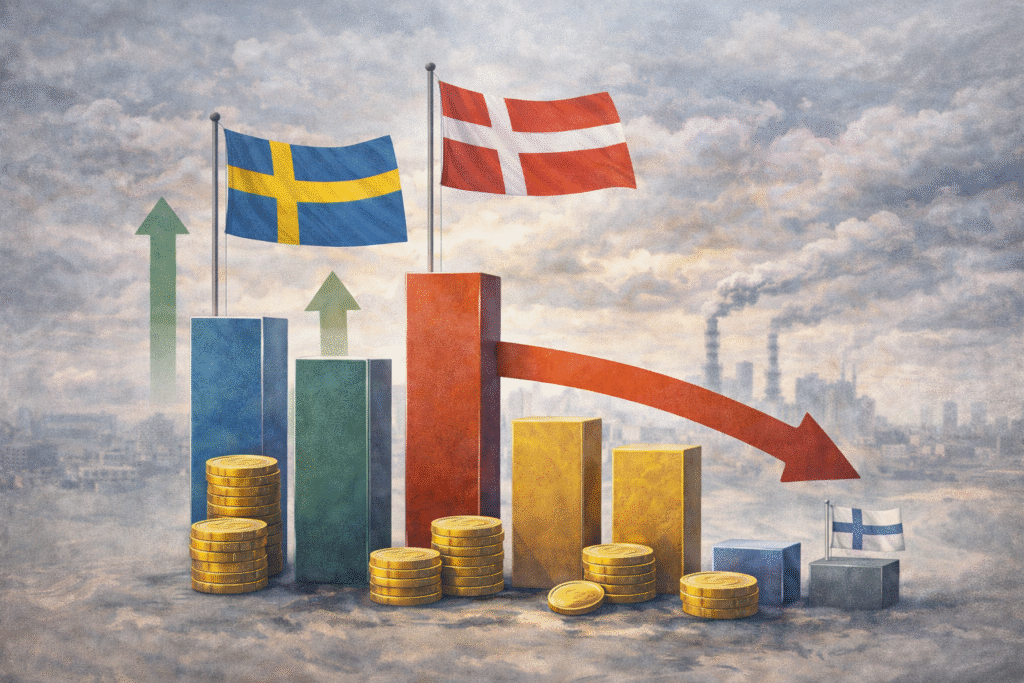
Finland’s economy has remained largely stagnant for over 15 years, mainly due to weak productivity growth. According to Uusi Suomi, this has left the country behind Nordic peers like Sweden and Denmark. Structural challenges and past economic shocks have limited long-term growth and improvements in living standards. Overall, meaningful recovery will require deeper economic reforms and renewed productivity.
Belgium’s economy is expected to grow moderately in 2026, with stable expansion supported by easing inflation. According to KBC Group, falling energy prices are driving lower overall inflation, while core inflation remains more persistent. Growth is forecast to continue at a steady but modest pace. Overall, the outlook points to a balanced and stable economic environment.
Belgium’s economy is expected to see a slight pickup in growth in early 2026, with GDP rising modestly. According to National Bank of Belgium, domestic demand remains the main driver of economic activity. However, growth continues at a slow and steady pace rather than accelerating strongly. Overall, the outlook points to stable but limited economic momentum.
Belgium’s inflation rose slightly to 1.45% in February 2026, reflecting moderate price growth. According to Statbel, falling energy prices continue to hold down overall inflation, while services remain the main driver of increases. Core inflation also edged higher, indicating persistent underlying pressures. Overall, inflation remains stable but uneven across sectors.
Inflation in the Netherlands remained stable at 2.4% in February 2026, indicating consistent price growth. According to Statistics Netherlands (CBS), services continue to drive inflation, while other categories show more moderate changes. Energy prices remained stable, supporting the overall balance. Despite steady inflation, underlying price dynamics remain uneven across sectors.
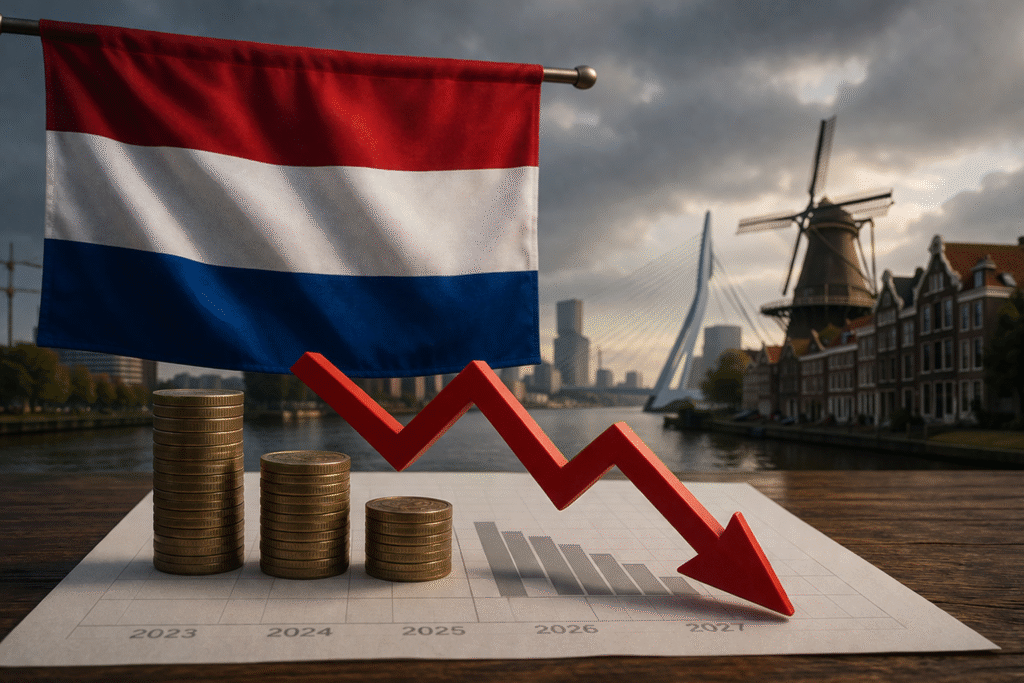
The Dutch economy is expected to slow in the coming years, with growth moderating after a strong 2025. According to CPB Netherlands Bureau for Economic Policy Analysis, geopolitical tensions and global uncertainty are key factors weighing on the outlook. While domestic demand offers some support, investment remains cautious. Overall, growth is set to continue, but at a slower and more fragile pace.
The Dutch economic outlook remains negative, though slightly improved in February 2026. According to Statistics Netherlands (CBS), most indicators are still below trend despite modest gains in exports and consumption. Investment continues to lag, while the labour market remains relatively stable. Overall, the economy is stabilising, but a full recovery is yet to emerge.
Luxembourg’s construction sector shows mixed signals in early 2026, with improving sentiment but weak activity levels. According to Statistics Luxembourg (STATEC), confidence and employment are gradually rising, while overall output remains low. Investment trends are uneven, reflecting differing demand across segments. Overall, early signs of recovery are visible, but a strong rebound has yet to materialise.
Luxembourg is seeing a decline in short-time work requests in early 2026, indicating easing labour market pressures. According to the government’s Comité de conjoncture, fewer companies applied for support and the number of affected workers dropped significantly. This suggests improving short-term conditions for businesses and employment. Overall, the data points to gradual stabilisation in the labour market.
Consumer confidence in Luxembourg improved in February 2026, driven by more optimistic expectations for the economy and personal finances. According to Banque centrale du Luxembourg, households are also showing a greater willingness to spend. However, past financial assessments remain weak, indicating continued caution. Overall, confidence is improving, but not uniformly across all areas.
The US labor market unexpectedly contracted in February 2026, with job losses signaling a slowdown in hiring. According to CNN, the decline contrasts sharply with earlier growth and suggests weakening momentum. While layoffs remain stable, reduced hiring is driving the downturn. Overall, the data points to a cooling labor market and growing economic uncertainty.
US inflation showed mixed signals in February 2026, with ongoing price pressures in key areas. According to CNBC, shelter and services continue to drive inflation, while other categories show signs of stabilisation. Core inflation remains elevated, indicating persistent underlying pressures. Overall, inflation is easing gradually but remains above target.
Debates on labor markets are gaining renewed attention, focusing on regulation and emerging technologies. According to Conversable Economist, issues like noncompete clauses and occupational licensing show mixed economic effects, particularly on worker mobility and costs. At the same time, the impact of AI remains uncertain, with outcomes depending on how the technology is adopted. Overall, research highlights increasing complexity and uncertainty in modern labor markets.
Canada’s labour market growth is slowing in early 2026, with weaker job creation and reduced workforce expansion. According to United Steelworkers (USW), full-time employment growth has declined while part-time jobs are increasing. This shift points to changing labour market dynamics and potentially less stable employment. Overall, the labour market remains positive but shows clear signs of cooling momentum.
Canada’s labour market saw a sharp downturn in February 2026, with around 84,000 jobs lost. According to CBC, the unemployment rate also rose, reflecting weakening conditions. Job losses were concentrated in full-time and private sector roles, affecting multiple industries. Overall, the data raises concerns about slowing economic momentum.
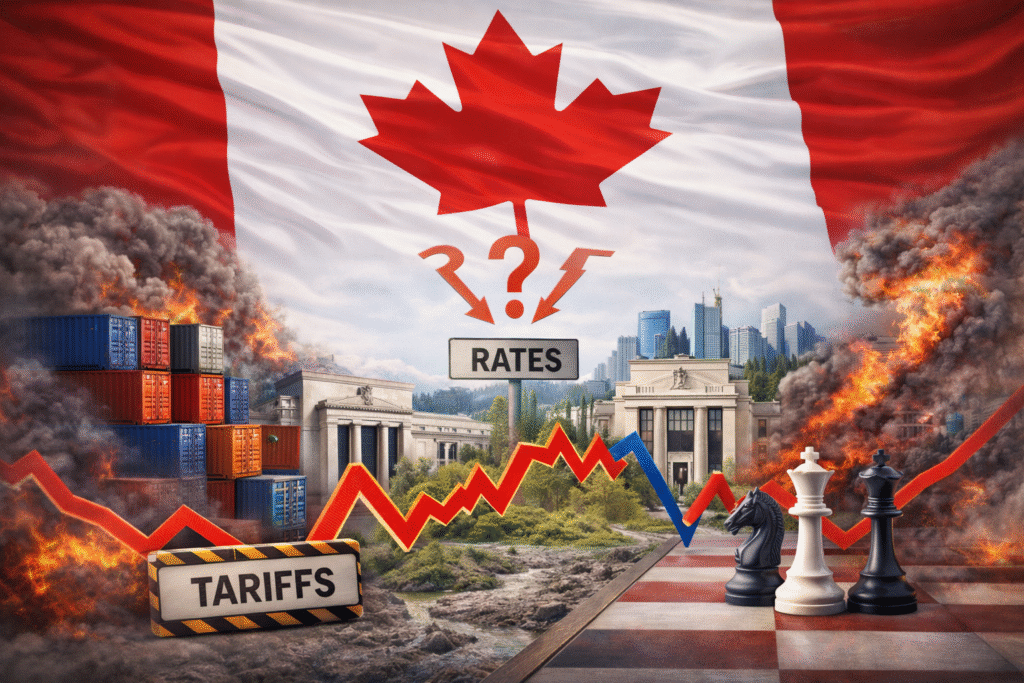
Global markets in February 2026 were shaped by trade tensions, geopolitical risks, and shifting interest rate expectations. According to Canada Life Investment Management, these factors combined to create a volatile and uncertain investment environment. Investor sentiment remained cautious as multiple forces influenced market movements. Overall, continued volatility is likely in the near term.
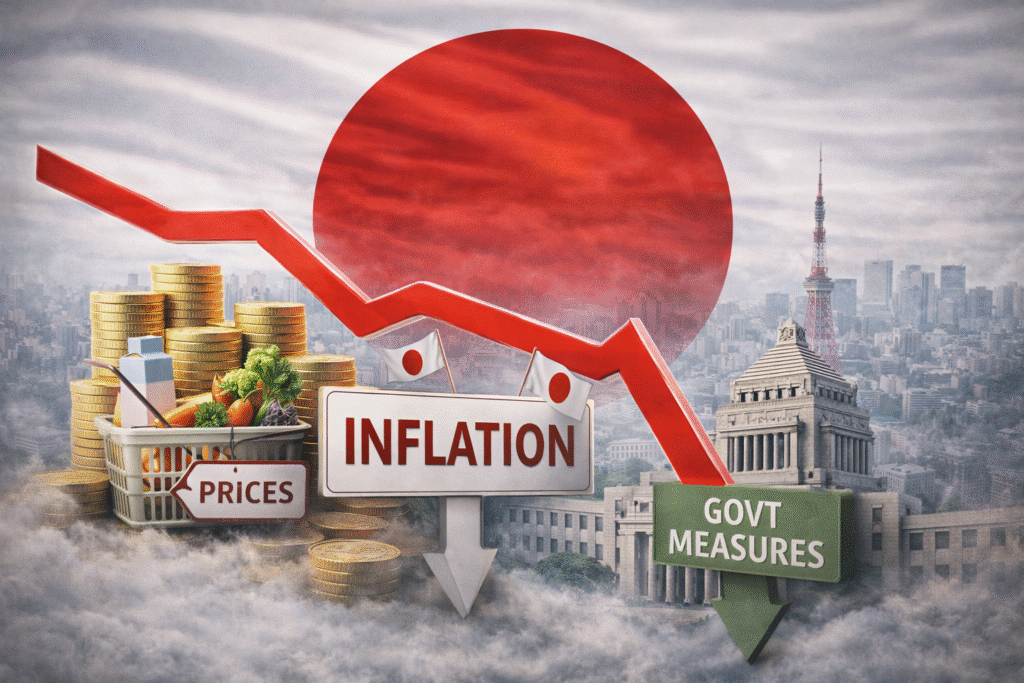
Japan’s inflation showed signs of easing in February 2026, reflecting a slowdown in overall price growth. According to CNBC, government measures—particularly on energy—played a key role in reducing inflation. However, underlying pressures remain, especially in services and food prices. Overall, inflation is moderating but still presents a mixed and uncertain outlook.
Japan’s economy is expected to grow modestly in 2026, with domestic demand supporting steady expansion. According to Daiwa Institute of Research, improving wages and lower inflation are helping sustain consumption. However, external risks-especially from global demand-continue to weigh on the outlook. Overall, growth remains stable but limited.
The global economy in 2026 is experiencing an uneven recovery, with growth varying significantly across regions. According to Dai-ichi Life Research Institute, Japan remains weak, while the US shows resilience and Europe benefits from fiscal support. China and other Asian economies face structural and external challenges. Overall, global growth continues but remains fragmented and uncertain.
China is aiming for a strong economic start in 2026, driven by expansionary fiscal policy and stronger domestic demand. According to China Daily, government spending and support for households are expected to play a central role in growth. Consumption is increasingly positioned as a key economic driver. Overall, the outlook points to solid but policy-dependent growth.
China’s economy entered 2026 on a firmer footing, supported by strong industrial output and exports. According to Reuters, external demand and manufacturing activity are driving early growth. However, domestic consumption remains weak, and confidence among households is still fragile. Overall, the outlook is positive but uncertain, with sustainability of growth still in question.
China’s economy showed a strong start to 2026, driven by industrial growth and solid export performance. According to Asianews Network, manufacturing and high-tech sectors are key contributors to this momentum. However, domestic demand remains uneven, with consumption still relatively cautious. Overall, growth is strong but not yet fully balanced.