Fiscal Expansion and Domestic Demand Set to Drive Growth in New Development Phase
China Targets Strong Economic Start for 2026
Fiscal Expansion and Domestic Demand Set to Drive Growth in New Development Phase
PUBLISHED March 27, 2026
Growth-Oriented Policy Framework for 2026
According to China Daily, China is preparing to adopt a growth-oriented economic strategy for 2026, with policymakers expected to prioritise a strong start to the new development cycle. As the first year of the 15th Five-Year Plan, the government is likely to focus on maintaining economic momentum through proactive fiscal measures and targeted policy support.
Fiscal Policy Takes the Leading Role
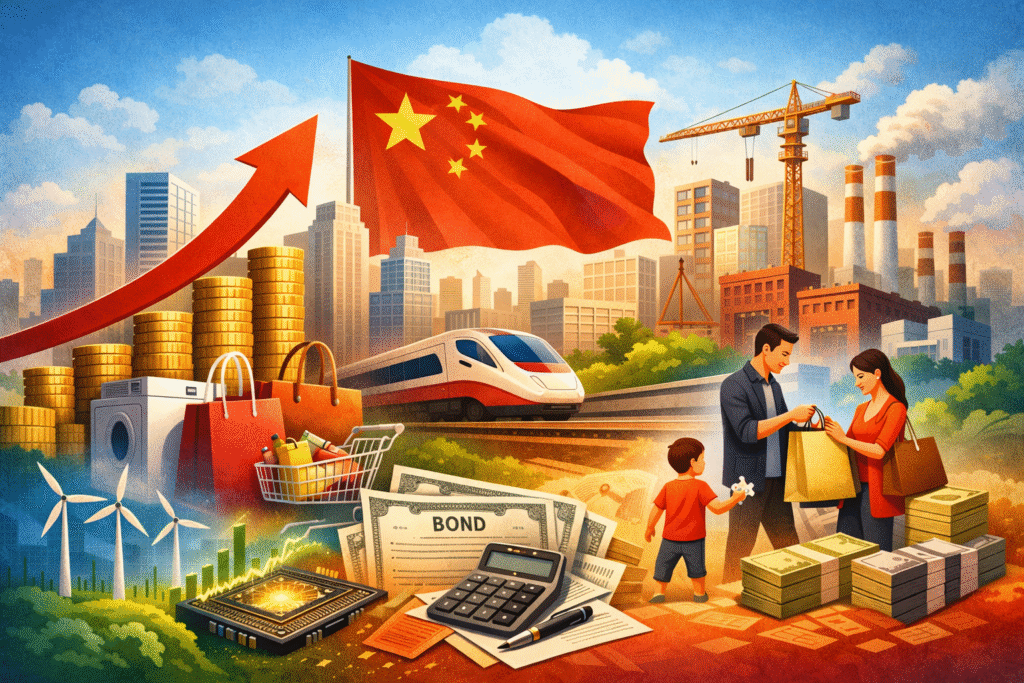
The report highlights that fiscal policy will be the main driver of economic support, with increased government spending and earlier issuance of bonds expected. Resources are likely to be directed toward households, services, and emerging industries, signalling a shift toward strengthening domestic demand rather than relying solely on traditional growth models.
Consumption Elevated as a Core Growth Engine
A key priority for 2026 is boosting consumption, which is expected to become a central pillar of economic growth. Policymakers aim to channel more support to households and encourage spending, reflecting a broader transition toward a more consumption-driven economy.
Economists expect China’s growth target to be set between 4.5% and 5%, a level considered relatively ambitious under current conditions. Achieving this target will require stronger and more expansionary policy measures, particularly in the early stages of the year.
Economists expect China’s growth target to be set between 4.5% and 5%, a level considered relatively ambitious under current conditions. Achieving this target will require stronger and more expansionary policy measures, particularly in the early stages of the year.
Monetary Policy to Remain Supportive but Cautious
While fiscal policy is expected to take the lead, monetary policy will continue to play a supporting role. The central bank is likely to maintain sufficient liquidity in the financial system, but large-scale interest rate cuts are expected to remain limited, reflecting a more cautious approach.
Potential Impact on Economic Structure
The policy direction suggests a gradual shift in China’s growth model. If successful, increased support for consumption and services could reduce reliance on investment-driven growth and create a more balanced economic structure. At the same time, the strong emphasis on fiscal expansion indicates that growth will remain heavily policy-driven in the near term, which may lead to uneven development across sectors.
Outlook: Strong Start, but Policy Dependence Remains
Overall, China is expected to enter 2026 with a strong policy push aimed at sustaining growth. However, the reliance on fiscal measures and the need to actively stimulate demand suggest that underlying economic momentum may still require continuous support in the coming period.
Monetary Policy to Remain Supportive but Cautious
While fiscal policy is expected to take the lead, monetary policy will continue to play a supporting role. The central bank is likely to maintain sufficient liquidity in the financial system, but large-scale interest rate cuts are expected to remain limited, reflecting a more cautious approach.
Potential Impact on Economic Structure
The policy direction suggests a gradual shift in China’s growth model. If successful, increased support for consumption and services could reduce reliance on investment-driven growth and create a more balanced economic structure. At the same time, the strong emphasis on fiscal expansion indicates that growth will remain heavily policy-driven in the near term, which may lead to uneven development across sectors.
Outlook: Strong Start, but Policy Dependence Remains
Overall, China is expected to enter 2026 with a strong policy push aimed at sustaining growth. However, the reliance on fiscal measures and the need to actively stimulate demand suggest that underlying economic momentum may still require continuous support in the coming period.
Follow us on LinkedIn!
Follow us on LinkedIn!
Would you like to sell your products or services worldwide?
Schedule an appointment with our international sales team
Would you like to sell your products or services worldwide?
Schedule an appointment with our international sales team