Switzerland Faces Below-Average Economic Growth in 2026
Rising Energy Prices and Global Uncertainty Weigh on Outlook Despite Signs of Stabilisation
Switzerland Faces Below-Average Economic Growth in 2026
Rising Energy Prices and Global Uncertainty Weigh on Outlook Despite Signs of Stabilisation
PUBLISHED March 27, 2026
A Downward Revision of Growth Expectations
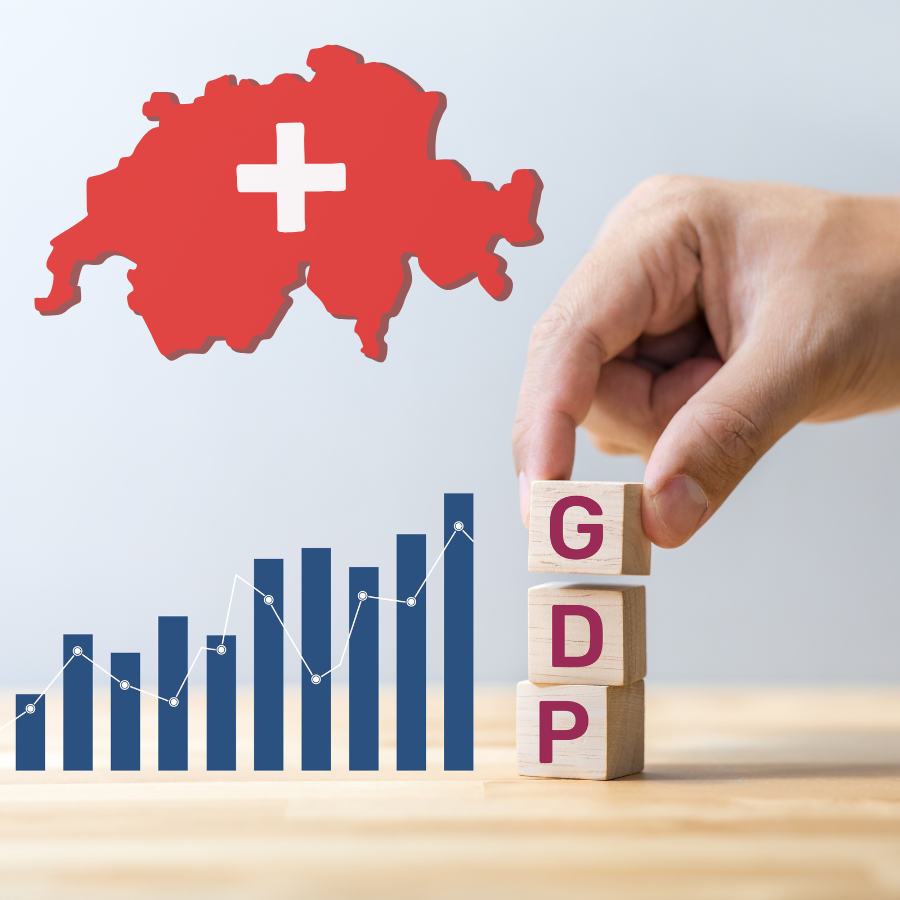
According to a forecast published by the Federal Government Expert Group on Business Cycles, Switzerland’s economic growth outlook for 2026 has been slightly revised downward, with GDP expected to grow by 1.0%. This represents below-average growth and reflects increasing economic challenges, particularly in the international environment. The forecast follows earlier expectations of slightly stronger performance, indicating a more cautious outlook for the Swiss economy.
Recent Data Suggests Short-Term Stabilisation
Despite the weaker forecast, recent economic data points to some stabilisation at the end of 2025.
Switzerland’s GDP grew by 0.2% in the fourth quarter after a previous decline, suggesting that the economy has regained some footing. Early indicators and surveys also suggest that growth has continued into the first quarter of 2026, although at a modest pace.
Global Conflicts Drive Energy Prices Higher
A key factor influencing the outlook is the rise in global energy prices, linked to geopolitical tensions, particularly the conflict in the Middle East. Since late February, international energy prices have increased significantly, adding pressure to the global economy and contributing to higher expected inflation.
The uncertainty surrounding the development of the conflict makes future economic conditions difficult to predict.
Inflation Expected to Rise Slightly
In response to higher energy prices, inflation in Switzerland is now expected to be slightly higher than previously forecast, reaching around 0.4% in 2026. Although this remains relatively low compared to other economies, it signals a shift from earlier expectations of even weaker price growth. At the same time, higher inflation may reduce the momentum of private consumption, which has been an important driver of economic stability.
External Pressures Affect Exports and Investment
Switzerland’s export-oriented economy continues to face challenges from subdued global demand and the strong Swiss franc. These factors are weighing on key sectors of the economy, particularly those exposed to international markets. As a result, investment activity is also being dampened, further limiting overall economic growth.
External Pressures Affect Exports and Investment
Switzerland’s export-oriented economy continues to face challenges from subdued global demand and the strong Swiss franc. These factors are weighing on key sectors of the economy, particularly those exposed to international markets. As a result, investment activity is also being dampened, further limiting overall economic growth.
Labour Market Reflects Economic Trends
The economic situation is also visible in labour market developments. The unemployment rate is expected to rise to an average of 3.0% in 2026, before gradually declining again in 2027. While this increase is relatively moderate, it reflects the broader slowdown in economic activity and the challenges faced by businesses.
Outlook for Gradual Improvement in 2027
Looking ahead, the Swiss economy is expected to regain some momentum in 2027, with growth projected to increase to 1.7%. This improvement is linked to expectations of stronger global demand and a gradual recovery in key trading partners, particularly in Europe. Increased utilisation of production capacities is also expected to support investment activity.
Uncertainty Remains a Key Risk Factor
Despite the outlook for gradual recovery, uncertainty remains a central issue. The future development of geopolitical conflicts, energy markets, and global economic conditions will play a decisive role in shaping Switzerland’s economic trajectory. The forecast highlights that while the economy is stabilising, it remains vulnerable to external shocks.
Labour Market Reflects Economic Trends
The economic situation is also visible in labour market developments. The unemployment rate is expected to rise to an average of 3.0% in 2026, before gradually declining again in 2027. While this increase is relatively moderate, it reflects the broader slowdown in economic activity and the challenges faced by businesses.
Outlook for Gradual Improvement in 2027
Looking ahead, the Swiss economy is expected to regain some momentum in 2027, with growth projected to increase to 1.7%. This improvement is linked to expectations of stronger global demand and a gradual recovery in key trading partners, particularly in Europe. Increased utilisation of production capacities is also expected to support investment activity.
Uncertainty Remains a Key Risk Factor
Despite the outlook for gradual recovery, uncertainty remains a central issue. The future development of geopolitical conflicts, energy markets, and global economic conditions will play a decisive role in shaping Switzerland’s economic trajectory. The forecast highlights that while the economy is stabilising, it remains vulnerable to external shocks.
Follow us on LinkedIn!
Follow us on LinkedIn!
Would you like to sell your products or services worldwide?
Schedule an appointment with our international sales team
Would you like to sell your products or services worldwide?
Schedule an appointment with our international sales team