China’s Economy Enters 2026 on Firmer Footing Amid Rising Risks
Strong Industrial Output and Exports Contrast with Weak Domestic Demand
China’s Economy Enters 2026 on Firmer Footing Amid Rising Risks
Strong Industrial Output and Exports Contrast with Weak Domestic Demand
PUBLISHED March 27, 2026
Stronger Start to 2026 Than Expected
According to Reuters, China’s economy began 2026 with stronger momentum than previously anticipated, as industrial output, retail sales and investment all showed improvement in the first months of the year. Industrial production expanded notably, supported by robust manufacturing activity and stronger external demand.
Exports and Industry Drive Growth
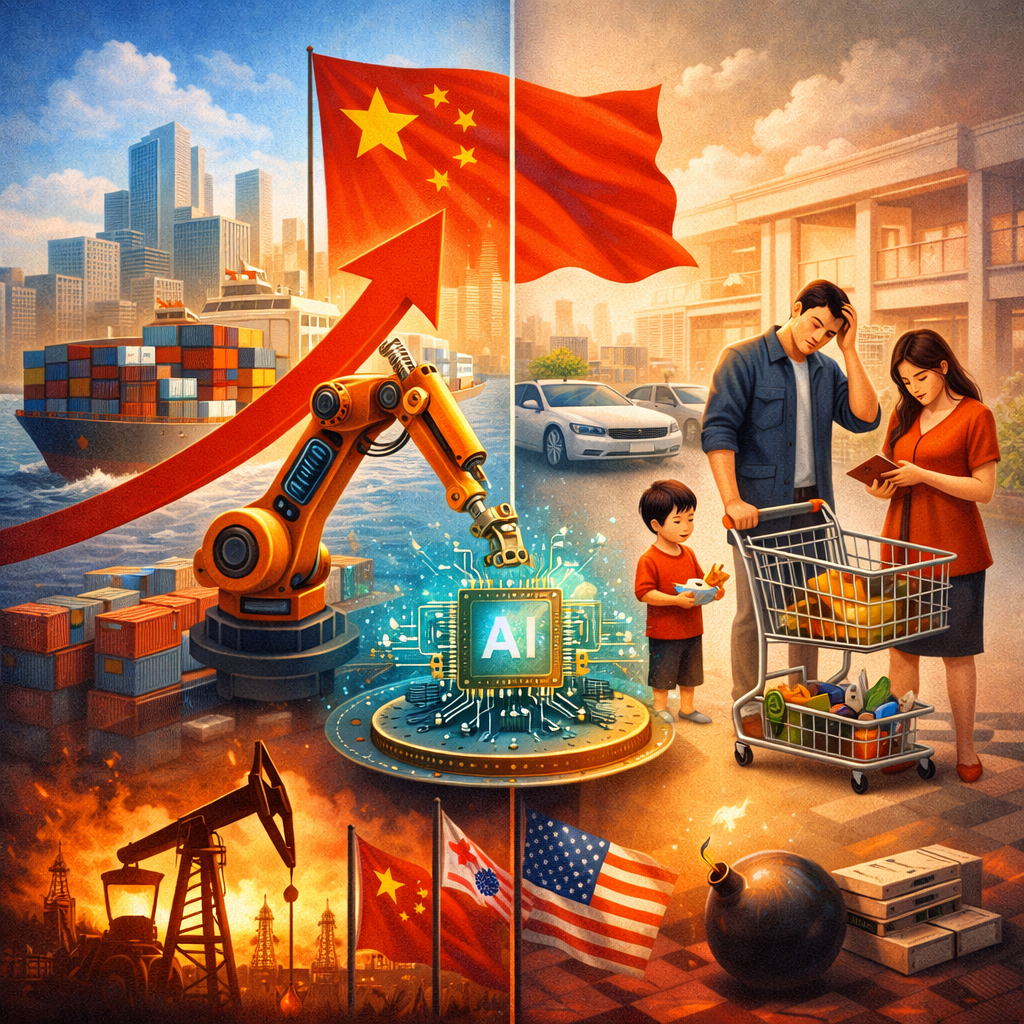
A key driver of this early strength has been export demand, particularly linked to technology-related sectors such as AI.
This external demand has also supported upstream manufacturing, helping to stabilise broader industrial activity and providing a boost to overall economic performance.
Consumption Remains Fragile Despite Improvement
Despite stronger headline data, domestic demand remains weak. Retail sales improved, partly due to seasonal factors such as the Lunar New Year, but underlying consumption trends remain cautious.
Indicators such as declining vehicle sales and weaker spending per trip suggest that households are still hesitant.
Labour Market and Confidence Show Signs of Strain
The labour market continues to present challenges, with unemployment rising and job prospects described as difficult. At the same time, weak household borrowing points to limited confidence among consumers, reinforcing concerns about the sustainability of domestic demand.
Investment Rebounds but Structural Issues Persist
Investment showed an unexpected increase, driven largely by infrastructure spending and policy support. However, this recovery comes against the backdrop of a prolonged downturn in the property sector, which continues to weigh on the broader economy.
Investment Rebounds but Structural Issues Persist
Investment showed an unexpected increase, driven largely by infrastructure spending and policy support. However, this recovery comes against the backdrop of a prolonged downturn in the property sector, which continues to weigh on the broader economy.
Global Risks and Policy Challenges Intensify
The outlook is increasingly shaped by external risks, including geopolitical tensions and instability in global trade and energy markets. These factors could affect both exports and domestic prices, complicating policy decisions. At the same time, the government’s growth target reflects a cautious approach, balancing the need for stability with structural challenges.
Potential Impact on Economic Structure
The data suggests a growing imbalance between strong external demand and weak domestic consumption. If this trend continues, China’s economy may remain heavily dependent on exports and policy-driven investment, which could limit long-term stability. A stronger recovery would likely require more sustained improvements in household confidence and income.
Outlook: Strong Start, but Sustainability in Question
Overall, China has entered 2026 with a firmer economic base, but underlying weaknesses and rising global risks create uncertainty. The key challenge will be whether early momentum can translate into a more balanced and sustainable growth path.
Global Risks and Policy Challenges Intensify
The outlook is increasingly shaped by external risks, including geopolitical tensions and instability in global trade and energy markets. These factors could affect both exports and domestic prices, complicating policy decisions. At the same time, the government’s growth target reflects a cautious approach, balancing the need for stability with structural challenges.
Potential Impact on Economic Structure
The data suggests a growing imbalance between strong external demand and weak domestic consumption. If this trend continues, China’s economy may remain heavily dependent on exports and policy-driven investment, which could limit long-term stability. A stronger recovery would likely require more sustained improvements in household confidence and income.
Outlook: Strong Start, but Sustainability in Question
Overall, China has entered 2026 with a firmer economic base, but underlying weaknesses and rising global risks create uncertainty. The key challenge will be whether early momentum can translate into a more balanced and sustainable growth path.
Follow us on LinkedIn!
Follow us on LinkedIn!
Would you like to sell your products or services worldwide?
Schedule an appointment with our international sales team
Would you like to sell your products or services worldwide?
Schedule an appointment with our international sales team