Swiss Hotel Industry Records Continued Growth in February 2026
Overnight Stays Increase as Domestic and International Demand Remains Strong
Swiss Hotel Industry Records Continued Growth in February 2026
Overnight Stays Increase as Domestic and International Demand Remains Strong
PUBLISHED March 27, 2026
Steady Growth in Overnight Stays
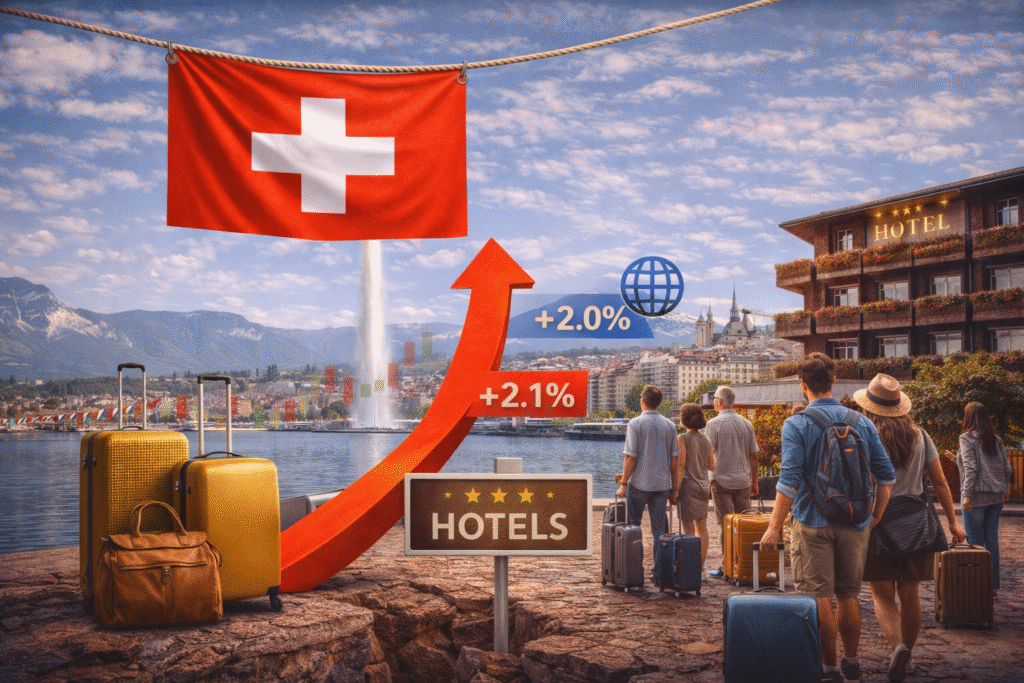
According to data reported by Bluewin based on figures from the Federal Statistical Office (BFS), Switzerland’s hotel industry recorded a further increase in overnight stays in February 2026 compared to the same month of the previous year. The number of stays rose by 2.1%, confirming that the positive trend observed in recent months is continuing.
Domestic and Foreign Guests Drive Demand
The growth was supported by both domestic and international travellers, each contributing to the overall increase. Demand from Swiss guests rose by 2.1%, while overnight stays by foreign visitors increased by 2.0%,
indicating a balanced recovery across different visitor groups. This suggests that tourism demand remains broadly stable and diversified, rather than relying on a single source of growth.
European Markets Show Mixed Developments
Within Europe, the development of visitor numbers varied significantly depending on the country of origin. While overall demand from European countries increased moderately, some markets performed particularly strongly. Overnight stays by German visitors rose sharply, while bookings from countries such as France and the United Kingdom declined.
These differences highlight the uneven recovery of tourism flows within Europe.
Contrasting Trends in Global Tourism Flows
Outside Europe, developments were also mixed. Demand from Asian markets declined overall, despite a strong increase in visitors from China. This growth, however, was not sufficient to offset significant decreases from other regions, including the Gulf states and India. At the same time, the American market showed a notable increase, with strong growth in overnight stays, particularly from the United States.
Tourism Demand Remains at a High Level
Despite these regional differences, the overall level of demand in the Swiss hotel sector remains high. The continued increase in overnight stays follows a record year in 2025, when the industry reached its highest number of annual overnight stays. The data suggests that Switzerland continues to be an attractive destination for both domestic and international tourists.
Tourism Demand Remains at a High Level
Despite these regional differences, the overall level of demand in the Swiss hotel sector remains high. The continued increase in overnight stays follows a record year in 2025, when the industry reached its highest number of annual overnight stays. The data suggests that Switzerland continues to be an attractive destination for both domestic and international tourists.
Positive Trend Continues from January
The February figures build on a strong start to the year, as January had already recorded an increase in overnight stays compared to the previous year. This indicates that the upward trend is not limited to a single month but reflects a broader development in the tourism sector.
Awaiting Final Figures for Confirmation
The data currently available is based on an updated estimate, with final and detailed figures expected to be released at a later date. These will provide a clearer picture of the full extent of tourism activity in February and allow for a more detailed analysis of trends within the sector.
Outlook: Stable Growth with Regional Variations
Looking ahead, the Swiss hotel industry appears to be on a stable growth path, supported by strong demand and continued international interest. However, the differences between regional markets suggest that future development may remain uneven. The data indicates a generally positive outlook, but one that is shaped by shifting global travel patterns and changing demand structures.
Positive Trend Continues from January
The February figures build on a strong start to the year, as January had already recorded an increase in overnight stays compared to the previous year. This indicates that the upward trend is not limited to a single month but reflects a broader development in the tourism sector.
Awaiting Final Figures for Confirmation
The data currently available is based on an updated estimate, with final and detailed figures expected to be released at a later date. These will provide a clearer picture of the full extent of tourism activity in February and allow for a more detailed analysis of trends within the sector.
Outlook: Stable Growth with Regional Variations
Looking ahead, the Swiss hotel industry appears to be on a stable growth path, supported by strong demand and continued international interest. However, the differences between regional markets suggest that future development may remain uneven. The data indicates a generally positive outlook, but one that is shaped by shifting global travel patterns and changing demand structures.
Follow us on LinkedIn!
Follow us on LinkedIn!
Would you like to sell your products or services worldwide?
Schedule an appointment with our international sales team
Would you like to sell your products or services worldwide?
Schedule an appointment with our international sales team