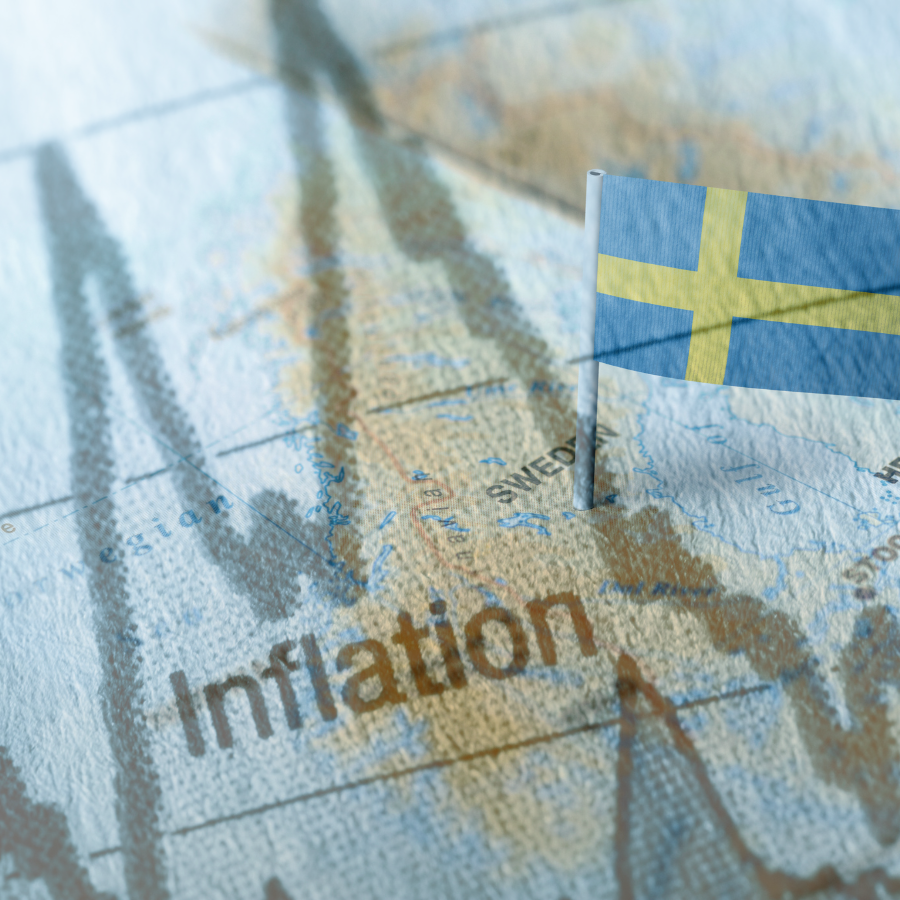
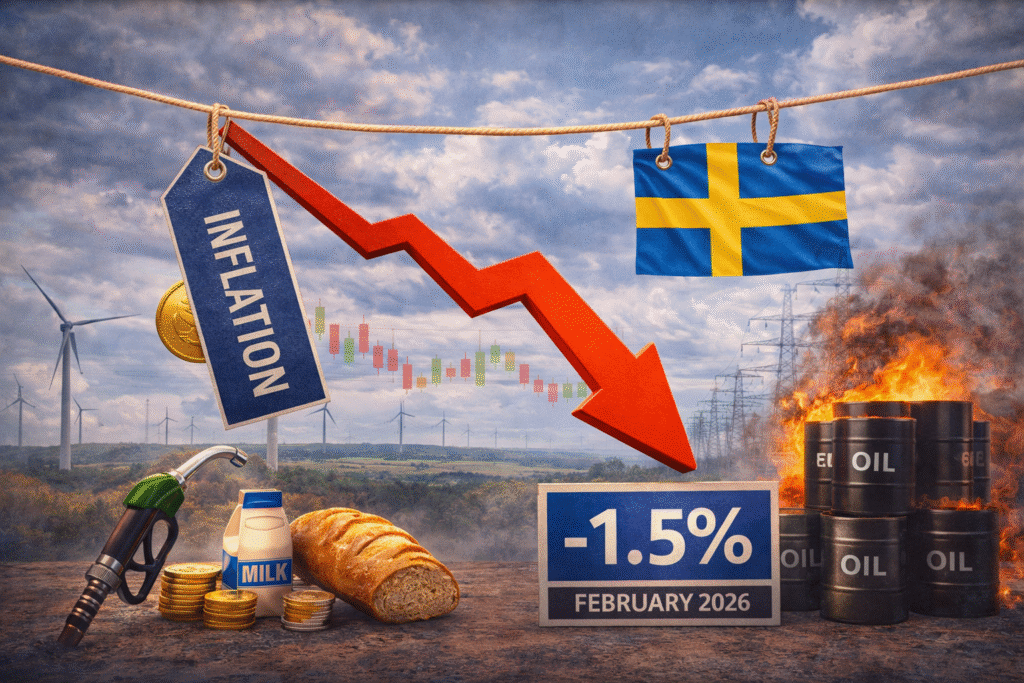
According to an analysis published by Morningstar, inflation in Sweden is expected to continue declining in February 2026, following a series of lower-than-anticipated readings in recent months. The overall trend suggests that price pressures are easing more broadly across the economy, reinforcing expectations that inflation will remain below the central bank’s target in the near term.
Core Inflation Remains Below Target
A key feature of the current inflation environment is the weakness of underlying price pressures. Core inflation, which excludes energy-related volatility, has been consistently below expectations and remains clearly under the Riksbank’s target level. This reflects a broader slowdown in both goods and services price growth, indicating that inflationary pressures are not only declining but doing so across multiple sectors.
Broad-Based Decline in Price Pressures
The downward movement in inflation is not limited to a single category but appears to be widespread. Goods prices have declined in part due to currency developments, while service inflation has slowed more than anticipated. This broad-based easing strengthens the view that inflation is moving toward a more subdued and stable level, rather than being driven by temporary or isolated factors.
Energy Prices Could Reverse the Trend
Despite the overall decline, risks to the inflation outlook remain. Rising energy prices, linked to geopolitical tensions, could lead to a temporary increase in headline inflation. These developments introduce uncertainty into the outlook, as higher energy costs may partially offset the broader disinflationary trend observed in other sectors.
Energy Prices Could Reverse the Trend
Despite the overall decline, risks to the inflation outlook remain. Rising energy prices, linked to geopolitical tensions, could lead to a temporary increase in headline inflation. These developments introduce uncertainty into the outlook, as higher energy costs may partially offset the broader disinflationary trend observed in other sectors.
Monetary Policy Faces a Complex Environment
The current inflation dynamics present a challenge for monetary policy. With inflation below target but external risks increasing, policymakers are likely to adopt a cautious approach. The central bank is expected to monitor developments closely, particularly in relation to energy prices and global economic conditions, before making any significant policy adjustments.
Market Expectations Shift with New Risks
Recent geopolitical developments have already influenced market expectations regarding interest rates. While earlier forecasts pointed toward possible rate cuts, the rise in energy prices has introduced the possibility of a different policy path. This shift highlights how quickly the inflation outlook can change in response to external factors, even when underlying trends remain weak.
A Delicate Balance Between Decline and Uncertainty
Overall, Sweden’s inflation outlook in early 2026 is characterised by a clear downward trend combined with increasing uncertainty. While underlying price pressures remain subdued, external risks—particularly those linked to energy markets—could alter the trajectory in the coming months. The situation reflects a delicate balance between continued disinflation and the potential for renewed volatility.
Monetary Policy Faces a Complex Environment
The current inflation dynamics present a challenge for monetary policy. With inflation below target but external risks increasing, policymakers are likely to adopt a cautious approach. The central bank is expected to monitor developments closely, particularly in relation to energy prices and global economic conditions, before making any significant policy adjustments.
Market Expectations Shift with New Risks
Recent geopolitical developments have already influenced market expectations regarding interest rates. While earlier forecasts pointed toward possible rate cuts, the rise in energy prices has introduced the possibility of a different policy path. This shift highlights how quickly the inflation outlook can change in response to external factors, even when underlying trends remain weak.
A Delicate Balance Between Decline and Uncertainty
Overall, Sweden’s inflation outlook in early 2026 is characterised by a clear downward trend combined with increasing uncertainty. While underlying price pressures remain subdued, external risks—particularly those linked to energy markets—could alter the trajectory in the coming months. The situation reflects a delicate balance between continued disinflation and the potential for renewed volatility.
Follow us on LinkedIn!
Follow us on LinkedIn!
Would you like to sell your products or services worldwide?
Schedule an appointment with our international sales team
Would you like to sell your products or services worldwide?
Schedule an appointment with our international sales team