Japan’s Inflation Shows Signs of Easing in February 2026
Government Measures and Sectoral Differences Shape Price Developments
PUBLISHED March 27, 2026
Inflation Moderates in February
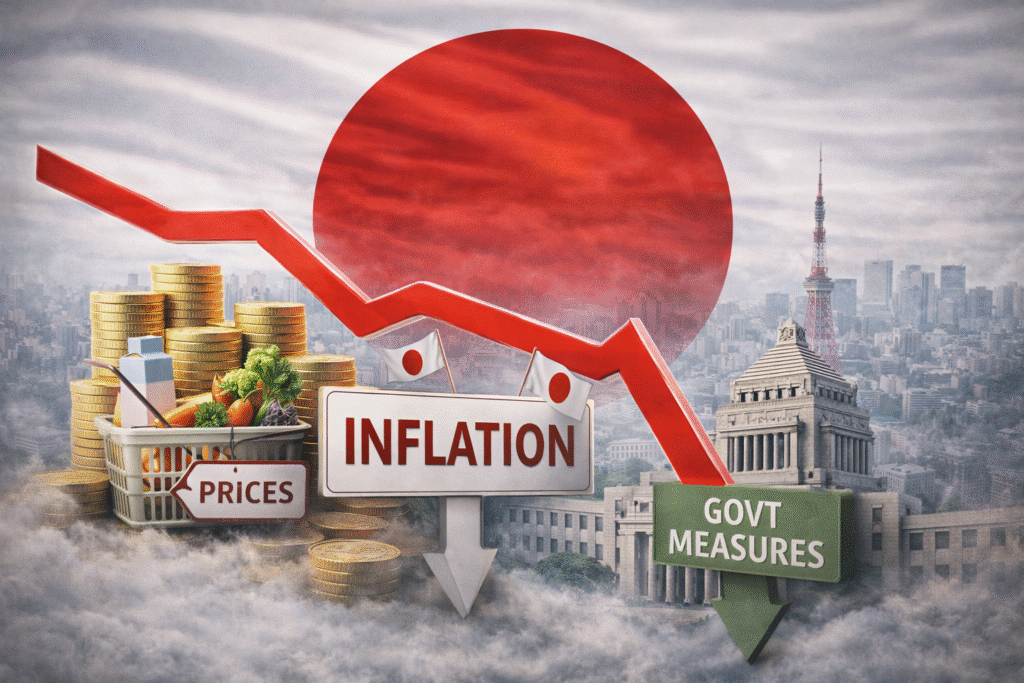
According to CNBC, inflation in Japan slowed in February 2026, continuing a recent trend of easing price pressures. The latest data suggests that overall inflation is no longer accelerating, reflecting a shift in the country’s price dynamics.
Policy Measures Influence Price Trends
One of the key factors behind the slowdown is the impact of government measures aimed at reducing energy costs.
These policies have contributed to lower overall inflation, highlighting the role of state intervention in shaping short-term price developments.
Core Inflation Also Shows Changes
Core inflation, which excludes certain volatile components, also declined compared to previous periods. This indicates that the moderation in inflation is not limited to a single category but reflects broader developments in the economy.
Underlying Pressures Remain Present
Despite the overall slowdown, underlying inflationary pressures have not disappeared. Some sectors, particularly services, continue to experience price increases, suggesting that domestic demand and cost factors are still influencing inflation.
Food Prices Continue to Contribute
Food prices remain an important component of inflation, with continued increases observed. This highlights that while some elements of inflation are easing, others remain persistent.
Food Prices Continue to Contribute
Food prices remain an important component of inflation, with continued increases observed. This highlights that while some elements of inflation are easing, others remain persistent.
Mixed Inflation Dynamics Across Sectors
The data points to a mixed inflation environment, where declining energy-related prices are offset by continued increases in other areas. This creates a more complex picture of inflation rather than a uniform decline.
Implications for Monetary Policy
The evolving inflation trend presents a challenge for policymakers. The central bank must assess whether the slowdown is temporary or signals a more lasting shift, particularly in light of ongoing underlying pressures.
Outlook: Easing Inflation with Continued Uncertainty
Overall, Japan’s inflation appears to be moderating, but uncertainty remains. Future developments will depend on both domestic conditions and the continuation of policy measures affecting key price components.
Mixed Inflation Dynamics Across Sectors
The data points to a mixed inflation environment, where declining energy-related prices are offset by continued increases in other areas. This creates a more complex picture of inflation rather than a uniform decline.
Implications for Monetary Policy
The evolving inflation trend presents a challenge for policymakers. The central bank must assess whether the slowdown is temporary or signals a more lasting shift, particularly in light of ongoing underlying pressures.
Outlook: Easing Inflation with Continued Uncertainty
Overall, Japan’s inflation appears to be moderating, but uncertainty remains. Future developments will depend on both domestic conditions and the continuation of policy measures affecting key price components.
Follow us on LinkedIn!
Follow us on LinkedIn!
Would you like to sell your products or services worldwide?
Schedule an appointment with our international sales team
Would you like to sell your products or services worldwide?
Schedule an appointment with our international sales team