






























Click on your selected market and read the latest business news from…

Click on your selected market and read the latest business news from…

Sales Magazine powered by ReformBusiness, your external sales partner

GERMANY | Selected business news for successful international sales

GERMANY | Selected business news for successful international sales

Germany’s inflation ticked slightly higher at the start of 2026, signalling that the disinflation process is advancing but not yet complete. Consumer prices rose 2.1% year-on-year in January, up from 1.8% in December. Key highlights: Food prices accelerated to 2.1%, while services inflation remained the main pressure point at 3.2%. Energy prices fell by 1.7%, helping to contain overall inflation despite slightly higher motor fuel costs. Sentiment indicators suggest underlying price pressures remain somewhat elevated, with core inflation at 2.5%. Overall, Germany enters 2026 with inflation broadly contained but still facing sticky service-driven pressures.

Read here

Germany’s construction sector slipped back into contraction at the start of 2026, signalling that the recovery seen late last year remains fragile. The HCOB Germany Construction PMI fell to 44.7 in January from 50.3 in December, marking the fastest decline in three months. Key highlights: Residential and commercial building drove the downturn as demand remained weak across the private sector. In contrast, civil engineering continued to expand for a third consecutive month, supported by public infrastructure activity. Sentiment indicators point to ongoing demand challenges, with new orders declining again in January. Overall, Germany’s construction market enters 2026 fragile and uneven, with infrastructure-focused segments offering the clearest near-term opportunities.

Read here

Cyberattacks against German companies are escalating, causing an estimated €200 billion in annual damage as criminal networks and state-linked actors intensify digital threats. While large corporations often have structured defenses, many small and medium-sized firms still lack basic protections, leaving them highly exposed. Experts warn that no company is immune and stress the need for two-factor authentication, regular updates, data backups and clear emergency plans. With hybrid attacks, AI-driven cybercrime and stricter EU rules raising the stakes, cybersecurity has become a structural business risk rather than a purely technical issue.

Read here

AUSTRIA | Selected business news for successful international sales

AUSTRIA | Selected business news for successful international sales

Austria enters 2026 with cautious signs of stabilisation after several weak years, suggesting the economy is gradually moving out of its downturn. Real GDP is expected to grow by 0.5% in 2025 and accelerate to 1.2% in 2026 following contractions in the previous two years. Key highlights: Private consumption is forecast to rise modestly, while investment is set to return to growth after a sharp decline in 2024. Exports are also projected to stabilise, supporting the recovery outlook. Sentiment indicators point to a more predictable environment, with inflation expected to ease to 2.6% and employment growth strengthening. Overall, Austria begins 2026 on a slow but improving recovery path rather than a rapid expansion trajectory.

Read more

Austria’s economy is showing tentative signs of recovery at the start of 2026, suggesting the country is gradually emerging from its recent downturn. GDP is estimated to have grown around 0.5% in 2025 and is expected to expand by roughly 1% in 2026, pointing to a measured improvement rather than a strong upswing. Key highlights: Inflation has eased to 3.8% and is projected to fall toward 2.5%, while targeted policy measures on electricity and rents aim to support household purchasing power. Consumer confidence is slowly recovering, supported by improving planning visibility for businesses. Overall, Austria enters 2026 with cautious optimism, but the recovery path remains gradual and competitive.

Read more

Austria’s retail sector entered 2026 with improving sentiment following a stronger-than-expected Christmas season, suggesting the market is gradually stabilising. Real retail sales steadied in December after a November decline, while broader economic output grew 0.2% quarter-on-quarter in Q4 2025. Key highlights: Food retail showed renewed momentum, whereas non-food segments remained subdued. Inflation fell sharply to 2.0% in January from 3.8%, supporting household purchasing power. Retail turnover reached €79.5 billion in 2025, marking modest nominal and real growth. Overall, Austria’s retail market begins 2026 with renewed confidence but still faces an uneven and moderate recovery path.

Read more

SWITZERLAND | Selected business news for successful international sales

SWITZERLAND | Selected business news for successful international sales

Switzerland’s labour market opened 2026 with a moderate seasonal uptick in unemployment, though underlying conditions remain stable. Registered unemployment rose to 152,280 in January, pushing the jobless rate up to 3.2% amid typical winter softening. Key highlights: Jobseekers increased to 248,358, while youth unemployment edged higher to 2.6%. Long-term unemployment also rose modestly, though overall levels remain contained by Swiss standards. Short-time work continued to decline, signalling resilient labour demand despite the seasonal slowdown. Overall, Switzerland enters 2026 with a fundamentally robust labour market, with recent weakness largely reflecting normal winter volatility rather than structural deterioration.

Read more

Switzerland’s construction sector enters 2026 with moderate growth expectations, though the market is increasingly shaped by structural pressures rather than cyclical expansion. The industry is projected to grow around 1.6% annually through 2029, supported mainly by infrastructure and energy investments. Key highlights: Federal rail projects worth roughly CHF 16.4 billion and expanding photovoltaic capacity are set to drive activity. At the same time, digital construction tools such as BIM are becoming operational standards across the sector. Persistent skilled labour shortages and high cost levels continue to constrain the market environment. Overall, Switzerland’s construction industry begins 2026 stable but structurally challenged, favouring firms that prioritise efficiency and specialisation.

Read more

Switzerland’s economy enters 2026 with improving business sentiment, signalling a cautiously brighter outlook after a prolonged soft patch. KOF surveys show both current conditions and expectations turning more positive across much of the private sector. Key highlights: Manufacturing is leading the upswing, with industrial sentiment returning to positive territory for the first time since spring 2023, supported by chemicals and pharmaceuticals. Confidence is also improving across key service segments, though retail gains remain modest and commercial construction orders stay weak. Overall, Switzerland begins 2026 with broadening optimism, but the recovery remains early and uneven.

Read more

SWEDEN | Selected business news for successful international sales

SWEDEN | Selected business news for successful international sales

Early 2026 has brought the first tentative signs of improvement in the Swedish economic and market environment, after a prolonged period of caution and negative sentiment. According to TIN Fonder’s January commentary, so-called “green shoots” are starting to emerge, suggesting that the economy may be slowly shifting toward a more constructive phase. The overall macroeconomic picture remains mixed and fragile, with the environment only gradually becoming less hostile rather than showing a strong recovery. 

Read more

Sweden enters 2026 with strengthening growth prospects and is expected to outperform many peers as the cycle turns. GDP is forecast to expand by 2.7% in 2026, up from 1.8% in 2025, marking a clear recovery phase. Key highlights: Rising real household incomes are set to support consumption, while business investment is also expected to improve. The Swedish krona remains undervalued but could strengthen as confidence returns. External trade risks, particularly potential US tariffs, remain a key watchpoint. Overall, Sweden begins 2026 with solid recovery momentum and the potential to lead the next European upswing.

Read more

Sweden enters 2026 with strengthening recovery potential and is widely seen as well positioned to lead Europe’s next upswing. Forecasts cited by Handelsbanken suggest the economy is moving into a more supportive phase as global conditions stabilise. Key highlights: Sweden’s high cyclical sensitivity is expected to work in its favour as monetary pressure eases and external demand improves. Financial conditions are becoming more supportive, reinforcing the growth outlook. External uncertainties, including trade and currency volatility, remain the main risk factors. Overall, Sweden begins 2026 in a strong relative position, with momentum building toward a broader European recovery.

Read more

NORWAY | Selected business news for successful international sales

NORWAY | Selected business news for successful international sales

Norway enters 2026 with solid economic resilience despite still-elevated inflation, highlighting the economy’s underlying strength. Central bank assessments indicate activity has held up better than expected even after sharp monetary tightening. Key highlights: Strong employment and low unemployment continue to support domestic demand, while wage growth remains firm. Inflation, however, is still above target, keeping Norges Bank cautious on policy easing. External uncertainty remains an important risk factor for the outlook. Overall, Norway begins 2026 resilient but still balancing steady growth against persistent price pressures.

Read more

Norway enters 2026 on a path toward more normal growth, supported by improving household demand and modest investment gains. Real household consumption rose 2.7% in 2025, while mainland business investment increased 1.9%, signalling gradual stabilisation. Key highlights: Public sector demand also expanded, but inflation remains elevated, with CPI at 3.6% and core inflation at 3.4% in January. Persistent price pressures are creating uncertainty around the timing of potential rate cuts. Overall, Norway begins 2026 with steady economic momentum, but the pace of recovery remains closely tied to the disinflation path.

Read more

Norway’s inflation accelerated at the start of 2026, signalling that price pressures remain persistent despite earlier easing trends. The CPI rose 3.6% year-on-year in January, up 0.4 percentage points from December, with monthly prices increasing 0.6%. Key highlights: Higher rents, car prices and electricity costs were the main drivers, while services inflation remained firm with prices excluding rent up 4.1% year-on-year. Food price growth provided partial relief, easing compared with December. Core inflation (CPI-ATE) edged up to 3.4%, confirming underlying pressures remain elevated. Overall, Norway begins 2026 with stubborn inflation dynamics that may delay a full return to price stability.

Read more

DENMARK | Selected business news for successful international sales

DENMARK | Selected business news for successful international sales

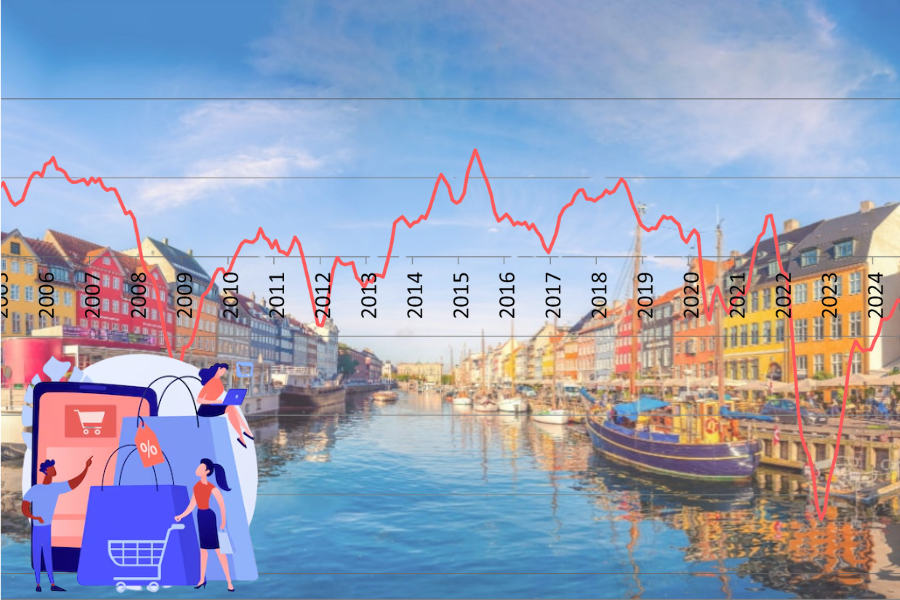
Denmark’s inflation cooled sharply at the start of 2026, indicating that price pressures are easing across the economy. The CPI rose just 0.8% year-on-year in January, while core inflation stood at a moderate 1.9%. Key highlights: Monthly prices fell 0.6%, driven mainly by lower electricity, clothing and holiday rental costs. Housing — particularly rent — remains the main contributor to annual inflation, alongside selected food items. Statistics Denmark also introduced a new CPI weight base from January. Overall, Denmark begins 2026 with well-contained inflation, though housing costs remain the primary pressure point.

Read more

Global markets enter 2026 in a shifting interest-rate environment as investor focus broadens from inflation toward growth and policy divergence. Othania notes that rate paths are becoming more regionally differentiated, increasing sensitivity to central bank signals. Key highlights: The Bank of Japan’s rate hike is influencing global bond dynamics, while China continues to show uneven momentum with domestic demand under pressure. Markets are moving into a more volatile and less synchronised phase, raising the importance of diversification. Overall, 2026 begins with intact risk appetite but a more fragmented and selective global investment landscape.

Read more

Denmark begins 2026 with fewer corporate bankruptcies, signalling a relatively stable business environment despite lingering uncertainty. In January, 378 companies failed, down 13.1% year-on-year. Key highlights: Major sectors showed improvement, with retail bankruptcies falling 29.3%, transport down 28.6% and construction down 28.4%. The regional picture remains uneven, however, with some areas still seeing increases and transport retaining the highest failure concentration relative to active firms. Overall, Denmark enters 2026 with a resilient but watchful insolvency landscape, pointing to stabilisation rather than a firm downward trend.

Read more

FINLAND | Selected business news for successful international sales

FINLAND | Selected business news for successful international sales

Finland’s economy is showing early signs of recovery, with growth and employment expected to strengthen as domestic demand improves. The Bank of Finland indicates the country is gradually navigating out of recession amid a supportive euro area backdrop. Key highlights: Private consumption is projected to pick up, investment is set to recover and export growth is expected to continue. Inflation is forecast to remain moderate, supporting purchasing power. Public finances remain a structural concern, with deficits and debt still elevated. Overall, Finland enters 2026 on a cautiously improving path, though fiscal sustainability remains the key long-term risk.

Read more

Finland’s economy is set to return to growth in 2026–2027, but the recovery is expected to remain uneven as household demand lags. GDP is forecast to expand by around 1.5% on average, supported mainly by exports and investment momentum. Key highlights: Export demand is strengthening and investment activity remains solid, providing the main growth engine. Private consumption, however, stayed flat in 2025 as households increased savings. The elevated savings rate continues to cloud the outlook for a broader rebound. Overall, Finland enters the recovery phase with improving fundamentals, but a stronger consumer revival remains the critical missing piece.

Read more

Electrification and digitalisation are rapidly reshaping industry and real estate, signalling a structural shift in how assets are powered and managed. Companies are increasingly replacing fossil-based systems with electric solutions, making power supply reliability a strategic priority. Key highlights: Buildings are evolving into active energy hubs with integrated solar, storage and EV charging, while digital tools are becoming essential to manage growing system complexity. The convergence of energy and data is emerging as the key competitive differentiator. Overall, the transition is accelerating, favouring organisations that invest early in integrated electrification and digital capabilities.

Read more

BELGIUM | Selected business news for successful international sales

BELGIUM | Selected business news for successful international sales

Belgium’s purchasing power is set to improve gradually through 2031, pointing to steady but moderate gains for households. Real income per capita is projected to rise by about 1.1% annually, supported by stable employment conditions. Key highlights: GDP growth is expected to hold in the 1.1–1.4% range over the medium term, indicating a stable but unspectacular expansion. The recovery follows several years of inflation-driven erosion in real incomes. Structural constraints, including modest productivity growth, continue to cap the upside. Overall, Belgium enters a phase of gradual household recovery rather than a strong consumption boom.

Read more

Belgium’s chemical industry faces mounting structural pressure despite rising public support, with unions warning that current policies are failing to safeguard jobs and climate goals. Key highlights: CSC reports that plant closures have already affected around 30,000 positions and warns up to 200,000 jobs could be at risk over five years. The sector’s continued reliance on fossil energy is seen as a key vulnerability in the energy transition. Unions are calling for conditional subsidies and stronger worker involvement in strategic decisions. Overall, Belgium’s chemical sector enters 2026 under intensifying pressure for structural reform.

Read more

Antwerp’s diamond industry closed 2025 with lower overall activity, though late-year data suggest the downturn may be stabilising. Total trade reached USD 19.1 billion, reflecting continued global pressure on the diamond market. Key highlights: AWDC reports the sector is adjusting to softer demand and structural shifts across luxury goods. Activity improved in the second half of the year, hinting that the steep contraction phase may be easing. Despite weaker volumes, Antwerp retains its central role in the global natural diamond trade. Overall, the market enters 2026 smaller but showing early signs of stabilisation.

Read more

NETHERLANDS | Selected business news for successful international sales

NETHERLANDS | Selected business news for successful international sales

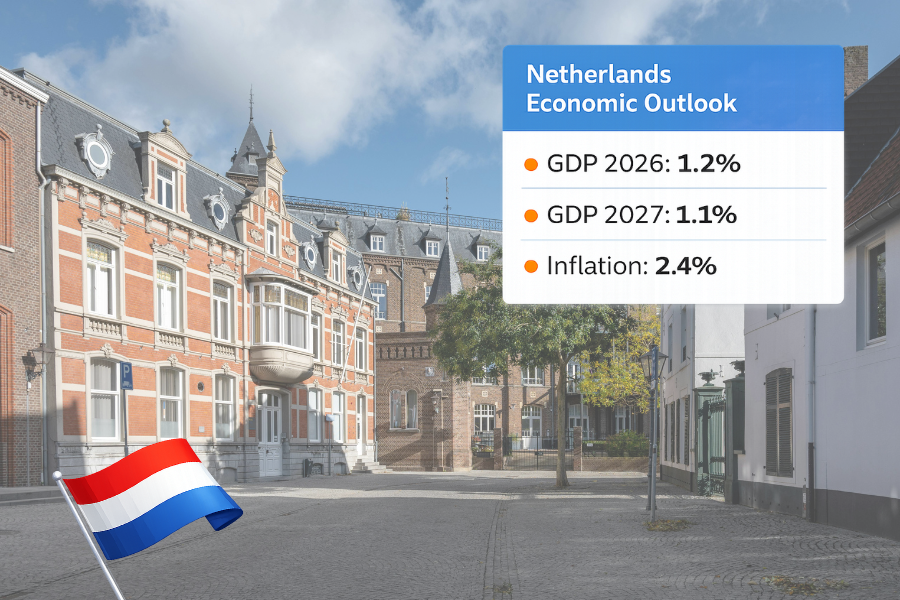
The Netherlands enters 2026 on a path of moderate but stable growth following recent volatility. GDP is projected to expand by around 1.2% in 2026 and 1.1% in 2027, signalling steady normalisation. Key highlights: Inflation is expected to ease toward 2.4%, supporting purchasing power, while exports and government spending remain the main growth drivers. Business sentiment has improved, but consumer confidence is still weak, pointing to an uneven recovery. Structural fundamentals remain solid despite recent headwinds. Overall, the Dutch economy begins 2026 stable but without strong acceleration.

Read more

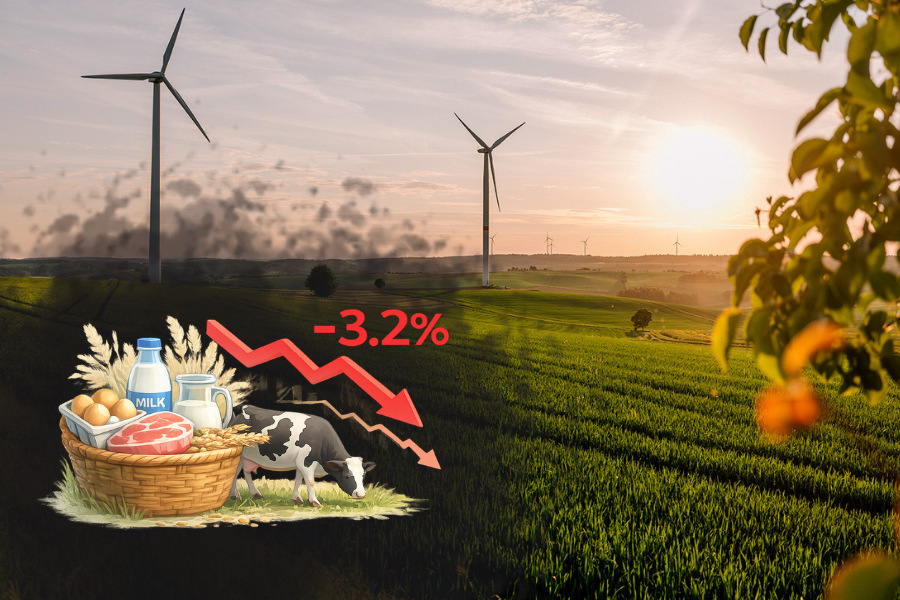
Dutch agriculture is expected to contract in 2026, making it the only major sector projected to decline. Rabobank forecasts real agricultural value added will fall by 3.2%, reflecting mounting structural pressures. Key highlights: Livestock farming is set to see the sharpest drop at around -5% due to buy-out schemes and capacity adjustments. Arable output is also forecast to weaken across key crops. Falling prices for meat, milk and eggs could deepen the downturn in nominal terms. Overall, Dutch agriculture enters 2026 in a phase of structural contraction rather than cyclical weakness.

Read more

The Netherlands enters 2026 with a strong and expanding tech ecosystem, though scaling startups into global players remains the central challenge. TNO highlights a healthy pipeline supported by solid research institutions and active investment flows. Key highlights: The number of tech firms continues to rise and funding remains robust, but the share of companies reaching scale-up status still lags top ecosystems. Investors are becoming more selective, concentrating capital into larger later-stage rounds. Overall, Dutch tech begins 2026 on strong foundations, but closing the scale-up gap will be critical for long-term competitiveness.

Read more

LUXEMBOURG | Selected business news for successful international sales

LUXEMBOURG | Selected business news for successful international sales

Luxembourg enters 2026 facing a decisive test of its economic competitiveness as growth conditions become more fragile. Policymakers are increasingly framing the year as a turning point for reinforcing the country’s attractiveness as a business hub. Key highlights: Authorities warn current growth may be insufficient to sustain Luxembourg’s social model, putting productivity, investment and business confidence under scrutiny. The government has elevated competitiveness to a top policy priority. Structural reforms are seen as increasingly urgent amid geopolitical uncertainty. Overall, Luxembourg begins 2026 from a strong base but under rising pressure to safeguard its long-term growth model.

Read more

Luxembourg’s construction sector remains under heavy pressure after several years of downturn. Between January 2021 and September 2025, 712 firms went bankrupt and more than 4,500 jobs were lost, underscoring the depth of the slump. Key highlights: Higher interest rates, rising costs and weaker real-estate demand continue to squeeze the industry. The employment impact is becoming increasingly visible across the sector’s supply chain. Observers view the downturn as structural rather than temporary. Overall, Luxembourg’s construction market enters 2026 still searching for a clear bottom.

Read more

Organisations are entering a more complex cyber threat environment, making structured long-term strategies essential. Luxembourg’s roadmap outlines 30 actions through 2030 to progressively strengthen cyber resilience. Key highlights: Early priorities focus on data governance foundations, followed by automation and AI-driven security, with real-time defence tools planned later in the decade. The report warns many firms are advancing AI faster than their data readiness allows. Digital sovereignty and risk appetite are also shaping strategy choices. Overall, cybersecurity is evolving into a core strategic capability requiring phased, long-term investment.

Read more

USA | Selected business news for successful international sales

USA | Selected business news for successful international sales

North American airports enter 2026 with continued investment and capacity planning, signalling a shift from recovery to long-term positioning. Aviation Week reports highlight ongoing infrastructure activity alongside network adjustments across the U.S. and Canada. Key highlights: Tampa International is advancing its Airside D expansion to support future international growth, while many U.S. hubs are prioritising efficiency and passenger-flow improvements. Canadian operators are focusing more on network optimisation than major builds. Overall, the sector begins 2026 in cautious growth mode, with investment becoming more targeted and strategic.

Read more

The global cyber threat environment remained intense in January 2026, with data breaches and ransomware incidents continuing across multiple sectors. CM Alliance reports that attackers are maintaining broad, opportunistic targeting rather than focusing on specific industries. Key highlights: Ransomware remains a major disruption vector, often combined with data exfiltration to increase leverage. High-profile incidents affected government, healthcare, education and consumer services alike. Organisational resilience remains uneven, exposing gaps in detection and response. Overall, cyber risk enters 2026 at persistently high levels, demanding continuous and proactive defence strategies.

Read more

The U.S. labor market opened 2026 with stronger-than-expected hiring, signalling continued resilience. The economy added 130,000 jobs in January, well above forecasts, while unemployment edged down to 4.3%. Key highlights: Prior months were revised lower, indicating softer late-2025 momentum, and long-term unemployment remained elevated at 1.8 million. Labor force participation held steady at 62.5%, showing limited inflow of new workers. The solid data could complicate the timing of further Fed rate cuts. Overall, the U.S. enters 2026 with a firm but gradually cooling labor market.

Read more

CANADA | Selected business news for successful international sales

CANADA | Selected business news for successful international sales

Canada entered 2026 with a mixed macro signal as inflation eased while labour-market momentum softened. CPI slowed to 2.3% year-on-year, driven largely by lower gasoline prices, though underlying inflation remained firmer. Key highlights: Employment edged lower and private-sector payrolls fell by 52,000, while the unemployment rate dipped to 6.5% mainly due to reduced labour-force participation. Food inflation stayed elevated, even as shelter costs cooled below 2%. Overall, Canada begins 2026 stable but clearly moderating, with labour-market softness emerging as the key watchpoint.

Read more

Canada’s inflation edged lower in January 2026, continuing a gradual disinflation trend. CPI slowed to 2.3% year-on-year from 2.4% in December, driven mainly by falling gasoline prices. Key highlights: Underlying pressures remain firmer, with food and restaurant prices still rising faster than headline inflation. Shelter costs continued to ease, helping offset stronger categories. Core measures showed incremental improvement but remain above full comfort levels. Overall, Canada begins 2026 with inflation moving in the right direction, though the disinflation process remains uneven and incomplete.

Read more

Canada holds significant untapped growth potential if it reduces internal trade barriers, according to the IMF. The Fund estimates these frictions are equivalent to roughly a 9% tariff nationwide, limiting productivity and business scale. Key highlights: Removing non-geographic barriers could lift real GDP by nearly 7% over time, with services reform delivering most of the gains. Smaller provinces stand to benefit the most proportionally. The IMF frames deeper internal integration as both a productivity and resilience priority. Overall, Canada enters 2026 with meaningful growth upside largely within its own domestic market.


Read more

JAPAN | Selected business news for successful international sales

JAPAN | Selected business news for successful international sales

Japan’s economy is set to expand moderately in 2026 as the long-awaited wage-price cycle gains traction. The Bank of Japan expects growth to temporarily exceed potential, supported by solid corporate profits and ongoing business investment. Key highlights: Labour market tightness and rising wages are reinforcing income growth, though private consumption is likely to recover only gradually. Inflation is projected to dip below 2% in early fiscal 2026 before stabilising near target. The BOJ signals readiness for gradual policy normalisation if trends hold. Overall, Japan enters 2026 with strengthening internal momentum but still faces external uncertainties.

Read more

Japan is set for slow but stable expansion through 2035, with growth constrained by structural headwinds. The Daiwa Institute projects real GDP to average about 0.8% annually over the period. Key highlights: Wage gains, exports and business investment will support early growth, but demographic decline and rising interest rates are expected to weigh later. Inflation is forecast near 2.1%, allowing gradual BOJ rate normalisation. The yen is projected to strengthen over time. Overall, Japan’s medium-term outlook remains stable but structurally capped by demographics and fiscal pressures.

Read more

Japan opened 2026 with stronger-than-expected export growth, offering a positive signal for the external sector. Shipments recorded their fastest annual increase in over three years, supported largely by robust demand from Asia. Key highlights: Lunar New Year timing boosted exports to China, while imports declined on lower energy costs, narrowing the trade deficit. However, demand remains uneven across regions and part of the surge may prove temporary. Overall, Japan begins 2026 with improved trade momentum, though sustainability remains uncertain.

Read more

CHINA | Selected business news for successful international sales

CHINA | Selected business news for successful international sales

China is stepping up efforts to boost domestic consumption, but structural barriers continue to slow the shift away from its investment-led model. Analysts note that household spending remains constrained by income uncertainty and a production-heavy growth framework. Key highlights: Trade-in subsidies are supporting selected retail segments but offer only temporary relief. High savings rates and cautious consumers remain the core drag on demand. Policymakers are increasingly targeting services consumption, though deeper reforms are needed for lasting impact. Overall, China enters 2026 committed to rebalancing, but the transition toward consumption-led growth is likely to be gradual.

Read more

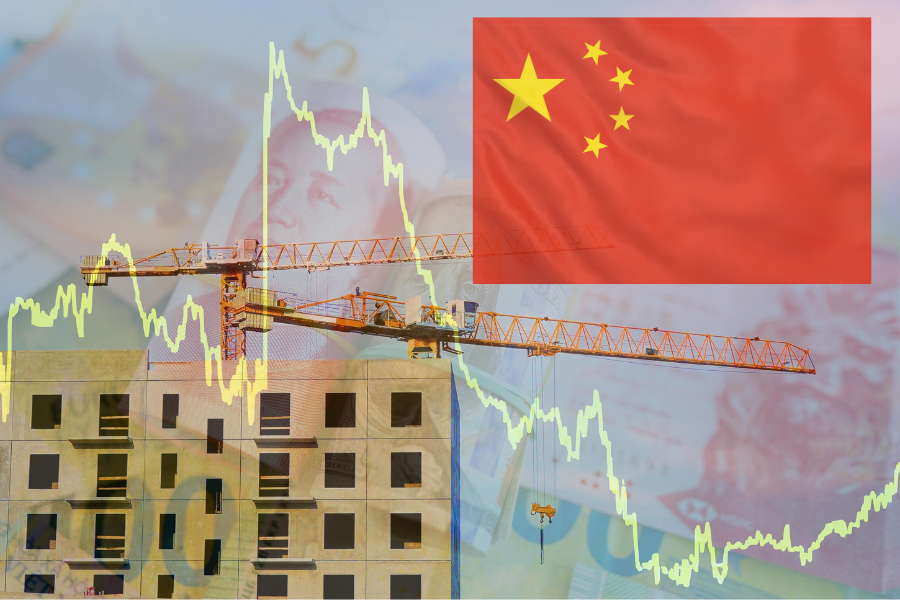
China’s growth is set to moderate in 2026 as weak domestic demand continues to weigh on the outlook. Fitch forecasts real GDP will slow to 4.1%, down from about 5.0% in 2025. Key highlights: Subdued consumer confidence, a prolonged property downturn and local government constraints are limiting internal momentum. Exports are providing only partial support, while policy easing is expected to remain measured. The growth profile therefore remains uneven. Overall, China enters 2026 on a controlled but slower expansion path, with domestic demand the key constraint.

Read more

China regained its position as Germany’s largest trading partner in 2025, highlighting the depth of bilateral ties despite geopolitical tensions. Total trade reached €251 billion, surpassing Germany–U.S. trade at €240 billion. Key highlights: Germany’s heavy reliance on Chinese imports remains the defining feature of the relationship, with a wide trade imbalance. U.S. trade was partly hit by tariff effects, contributing to the ranking shift. The automotive sector stays highly exposed to the Chinese market. Overall, Germany enters 2026 balancing strong economic links with growing strategic caution toward China.

Read more

Follow us on LinkedIn!

Follow us on LinkedIn!

Schedule an appointment with our experts

Schedule an appointment with our experts