Click on your selected market and read the latest business news from…

Click on your selected market and read the latest business news from…

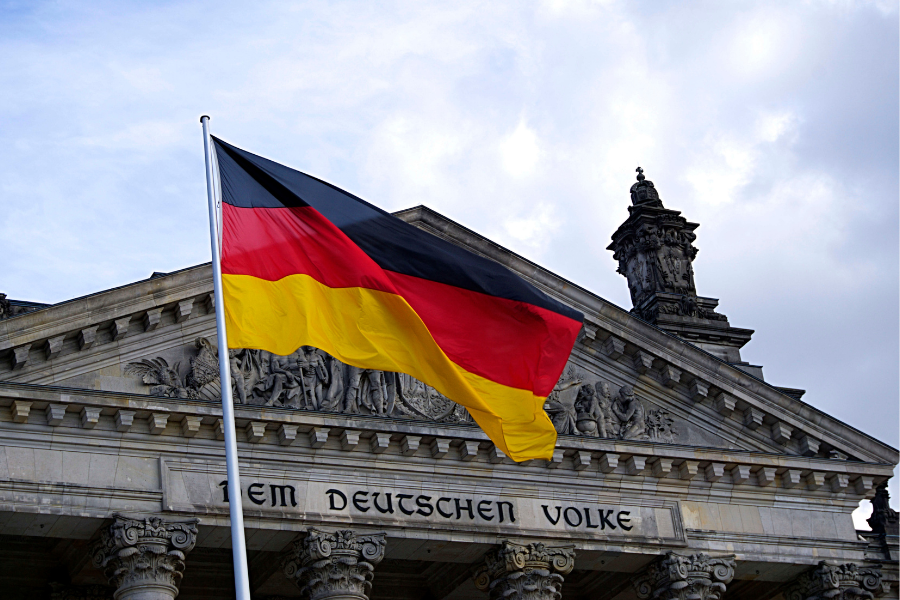
GERMANY | Selected business news for successful international sales

GERMANY | Selected business news for successful international sales

Germany’s economic momentum is fading. The Federal Ministry for Economic Affairs and Energy’s June 2026 report paints a sobering picture: stagnating industrial output, falling retail sales, and a labor market struggling to find its footing. Behind it all lies a single destabilizing force — the ongoing war in the Middle East and the energy price shock it has unleashed. From factory floors in Bavaria to retail streets in Hamburg, Europe’s largest economy is bracing for one of its most uncertain quarters in recent years.

Read here

Germany’s economic data is painting a grim picture. The Federal Ministry for Economic Affairs and Energy’s June 2026 statistical report — the Schlaglichter der Wirtschaftspolitik — lays bare the scale of the slowdown: shrinking industrial output, a rising unemployment rate, cooling business sentiment, and an energy price surge driven by the Middle East conflict. The numbers don’t lie, and right now, Europe’s largest economy is struggling to find its footing.

Read here

The economic situation in the Cologne region remains critically weak, with the overall business climate indicator falling further to just 85 points — well below the neutral threshold of 100 that would signal growth. A turnaround remains nowhere in sight.

Read here

AUSTRIA | Selected business news for successful international sales

AUSTRIA | Selected business news for successful international sales

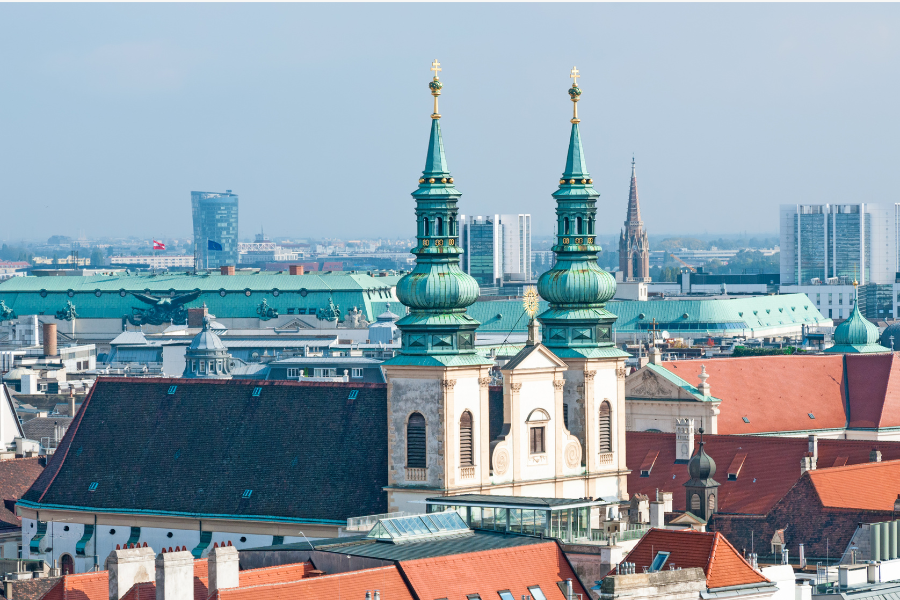
Austria’s economy showed surprising resilience in the first quarter of 2026 despite the outbreak of the Iran conflict in late February — but leading indicators are already flashing warning signs for the months ahead.

Read more

Austria’s economy is set to stagnate in the second quarter of 2026, weighed down by the geopolitical and economic fallout from the Iran war. While a modest recovery remains on the cards for the year as a whole, rising inflation and a deteriorating labor market are complicating the picture significantly.

Read more

Most economic forecasters acknowledge that geopolitical shocks are bad for growth. The Institute for Advanced Studies (IHS) in Vienna has gone a step further: it has calculated exactly how bad. According to the institute’s spring forecast, the Iran War is costing the Austrian economy 0.5 percentage points of GDP growth in 2026 alone — and pushing inflation nearly a full percentage point higher. These are not estimates hedged with uncertainty. They are a precise accounting of what war costs in peacetime economic terms.

Read more

SWITZERLAND | Selected business news for successful international sales

SWITZERLAND | Selected business news for successful international sales

Switzerland’s expert group on economic forecasting has revised its growth projection slightly downward, now expecting GDP growth of just 0.9 percent for 2026 — well below the historical average — followed by a moderate recovery to 1.6 percent in 2027. The Middle East crisis and its energy price consequences are the primary drivers of the downgrade.

Read more

Switzerland’s sport-event-adjusted gross domestic product grew by 0.4 percent in Q1 2026 — an acceleration from the 0.2 percent recorded in the previous quarter. Industry drove the expansion, while the services sector posted only modest gains and domestic final demand remained notably weak.

Read more

Switzerland’s economy is navigating one of its most uncertain environments in years, shaped by the Iran conflict, U.S. trade policy upheaval, and persistently weak global demand. Assuming the conflict’s economic repercussions remain limited, KOF projects real GDP growth of 1.0 percent in 2026 and 1.7 percent in 2027 — a cautious but not catastrophic outlook.

Read more

SWEDEN | Selected business news for successful international sales

SWEDEN | Selected business news for successful international sales

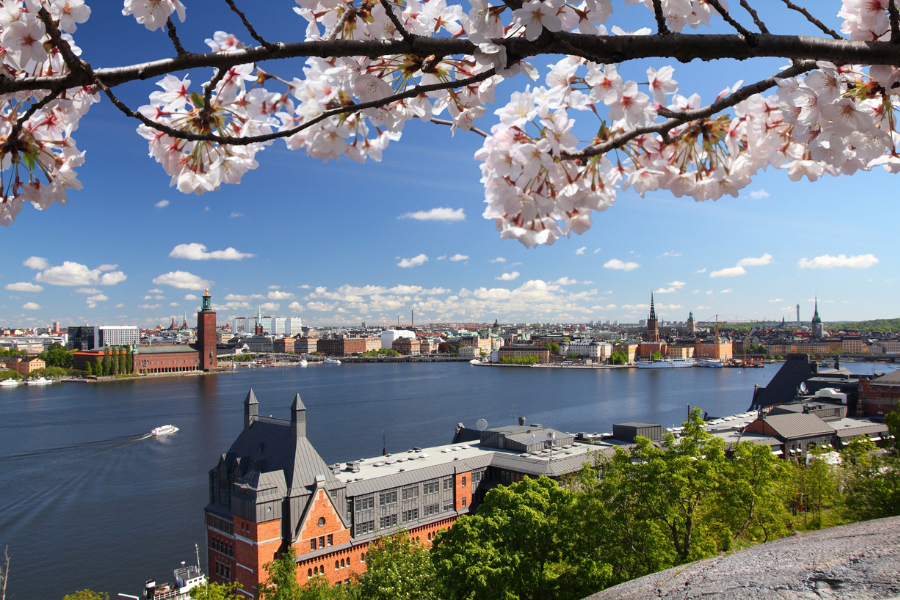
Sweden’s economy has been in a recovery phase since 2025 and resource utilization continues to rise. While the war in the Middle East is having a dampening effect on the global economy and Sweden’s export markets, domestic demand — particularly household consumption — is providing a strong counterweight, with calendar-adjusted GDP growth of 2.0 percent forecast for 2026 and 2.6 percent for 2027.

Read more

The Executive Board voted to leave the policy rate unchanged at 1.75 percent for the sixth consecutive meeting — a decision that came with a notable shift in tone: growing inflation risks from the Middle East conflict are now raising the likelihood of a rate hike before the end of the year.

Read more

Sweden’s largest companies describe the current economic situation as still weak, with the Iran war introducing a fresh wave of uncertainty that threatens to delay an already prolonged recovery — but the impact so far has been more gradual than dramatic.

Read more

NORWAY | Selected business news for successful international sales

NORWAY | Selected business news for successful international sales

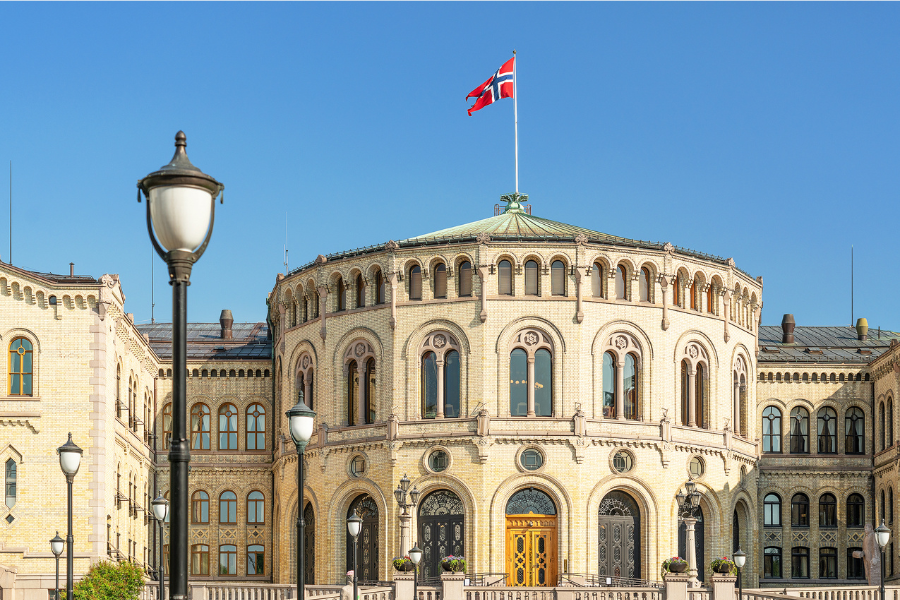
Norway’s policy rate has been kept unchanged at 4.25 percent — but the central bank made clear that this is not the end of the tightening cycle. A further rate increase is expected at one of the forthcoming monetary policy meetings, as inflation remains persistently above target and business cost pressures show no sign of easing quickly.

Read more

Norway faces a prolonged period of above-target inflation driven by the Middle East conflict and continued high wage growth, making a further interest rate hike from Norges Bank all but inevitable before the end of the year. GDP growth is expected to hold at a near-normal pace, but the housing market remains depressed and borrowing costs are set to stay elevated well into 2027.

Read more

Norway remains one of the world’s most prosperous and equal economies — but is facing an unusually high set of challenges that require bold policy action. Growth is slow, inflation remains persistently above the 2 percent target, and the sovereign wealth fund covers an ever-increasing share of budget deficits. While momentum is picking up again, the challenges are unusually high.

Read more

DENMARK | Selected business news for successful international sales

DENMARK | Selected business news for successful international sales

The Danish economy is slowing but remains fundamentally sound. After several years of remarkable growth powered predominantly by pharmaceutical exports, the growth model is shifting — with domestic demand and household consumption now expected to take over as the primary engine of activity.

Read more

Denmark’s economy is set for a meaningful deceleration after several years of exceptional pharmaceutical-driven growth. Geopolitical tensions and the Middle East energy supply shock are weighing on exports and business confidence, while fiscal policy and tax cuts are working to cushion households from the worst of the impact.

Read more

Danish business confidence has pulled back noticeably from its spring peak, with the composite sentiment indicator falling to 101.0 from 104.1 in May. The manufacturing confidence indicator in Denmark fell to 90.8 in June 2026 from 93.5 in the previous month, slipping further below the long-term average of 100. The reading marks the lowest level since December 2025 and reflects a broad softening of expectations across most of the Danish economy — with one notable exception.

Read more

FINLAND | Selected business news for successful international sales

FINLAND | Selected business news for successful international sales

The Finnish economy is showing clear signs of recovery after years of underperformance — but the road ahead remains narrow and uncertain. Growth in the economy will gather pace, despite the difficult international environment. This year, economic growth in Finland will edge up to 0.7%, and will rise to 1.2% and 1.4% in 2027 and 2028, respectively. The turning point in the business cycle that forecasters have long been waiting for appears to have arrived — but the energy shock from the Iran war is taking the edge off what could have been a more confident rebound.

Read more

After years of stagnation, Finland is finally turning a corner — but only just. The Bank of Finland’s December 2025 forecast paints a picture of an economy crawling out of recession rather than bursting back to life. Growth will pick up, wages will rise, and consumption will slowly recover. Yet behind the modest optimism lurks a stubborn problem that refuses to go away: a public deficit that keeps climbing no matter how the rest of the economy performs.

Read more

Finland was supposed to be turning the corner this year. Instead, just as the long-awaited recovery began to take shape, the war in the Middle East delivered a fresh blow. According to the OECD’s latest Economic Outlook, rising energy costs and a worsening terms-of-trade shock are eroding household purchasing power and delaying consumption growth — even as the country’s longer-term prospects in green energy and defence manufacturing remain intact.

Read more

BELGIUM | Selected business news for successful international sales

BELGIUM | Selected business news for successful international sales

Belgium entered 2026 on relatively solid footing — until the war in the Middle East upended the picture. Inflation, which had dipped below 2% at the start of the year, has rebounded sharply since March on the back of surging energy prices. According to the National Bank of Belgium’s latest projections, growth will barely register this year, even as the country’s chronic budget deficit problem refuses to go away.


Read more

Just as Belgium seemed to be finding a steady rhythm, the war in Iran sent a fresh jolt through the economy. According to Governor Pierre Wunsch, who presented the National Bank of Belgium’s latest projections on 12 June, growth is set to nearly grind to a halt in the second quarter before recovering — but the country’s chronic budget problems show no sign of going away. Inflation, purchasing power, and the public finances are all under renewed strain.

Read more

Belgium has weathered plenty of shocks in recent years without falling off course — and the war in the Middle East looks set to be no exception. But according to the European Commission’s latest Country Report, published as part of the Spring Package on 3 June 2026, the country’s deeper structural problem remains stubbornly unresolved: a budget deficit and debt ratio that keep climbing no matter what else happens in the economy.

Read more

NETHERLANDS | Selected business news for successful international sales

NETHERLANDS | Selected business news for successful international sales

The Dutch economy was supposed to coast through 2026 with a familiar, steady rhythm. Instead, the war in the Middle East has knocked growth down a notch and pushed inflation above earlier expectations. According to De Nederlandsche Bank’s Spring Projections, published on 12 June, households are turning cautious, businesses are holding back on investment, and the government’s budget deficit is about to cross a line Brussels watches closely.

Read more

According to De Nederlandsche Bank’s Spring Projections, the Dutch economy is heading into a year defined by higher energy costs, more cautious consumers, and a budget deficit that’s about to cross a red line in Brussels. Yet DNB is careful to frame this as a manageable slowdown rather than anything resembling the shock of 2022. Here are the figures that tell the story.

Read more

The Dutch economy is heading into a year defined by higher energy costs, more cautious consumers, and a budget deficit that’s about to cross a red line in Brussels. Yet DNB is careful to frame this as a manageable slowdown rather than anything resembling the shock of 2022. Here are the figures that tell the story.

Read more

LUXEMBOURG | Selected business news for successful international sales

LUXEMBOURG | Selected business news for successful international sales

Most of Europe is bracing for a slowdown, but Luxembourg’s European Commission country report tells a different story: growth is actually expected to pick up speed in 2026 and 2027. Behind the seemingly counterintuitive forecast lies a familiar pattern for this small, finance-driven economy — services exports doing the heavy lifting while consumers and investors stay cautious.

Read more

According to the OECD’s June 2026 Economic Outlook, Luxembourg’s recovering economy was just regaining its footing when the Middle East conflict hit — sending energy prices, and inflation with them, sharply higher. The country’s outsized financial sector and a wave of defence-related public investment are now doing the work of keeping growth on track, even as households feel the squeeze at the pump and beyond.

Read more

Behind Luxembourg’s headline growth numbers lies a more turbulent story than most country reports tell. According to the European Commission’s Spring 2026 forecast, the country experienced one of the EU’s sharpest confidence collapses in March, as global stock markets briefly plummeted on geopolitical fears — before bouncing back almost as quickly. For an economy this dependent on financial services, that kind of volatility is not just noise; it’s a structural risk worth watching closely.

Read more

USA | Selected business news for successful international sales

USA | Selected business news for successful international sales

According to EY-Parthenon’s June 2026 US Economic Outlook, the American economy remains resilient on the surface — but the engine powering that resilience has become narrower and more fragile. Interest-rate-sensitive sectors are struggling, households are squeezed by inflation outpacing wages, and a new Fed Chair has just taken the reins amid a notably more hawkish tone.

Read more

The optimism President Trump voiced in his February State of the Union — just a week before launching the war in Iran — now looks badly out of step with reality. Inflation has surged, fertilizer prices have spiked, and a Supreme Court ruling has thrown the administration’s signature tariff policy into disarray, all while the federal deficit keeps climbing toward levels that even the White House’s own rosy growth assumptions can’t paper over.

Read more

The US stock market and the US consumer are living in two entirely different economies right now. Equities keep climbing on the back of blockbuster AI-driven earnings, while ordinary households report sentiment readings worse than any seen during a recession in the survey’s 75-year history. Whether that gap can hold through the rest of the year is the central question facing investors.

Read more

CANADA | Selected business news for successful international sales

CANADA | Selected business news for successful international sales

The country’s economy is entering a period of moderating growth and rising deficits, weighed down by persistent US tariffs that the latest projections now treat as a permanent fixture rather than a temporary irritant. Energy prices driven up by the Middle East conflict offer one of the only bright spots in an otherwise cautious outlook — even as they simultaneously complicate the path back to the Bank of Canada’s inflation target.

Read more

Canada finds itself in an unusual position: the same Middle East conflict that’s driving up costs for most energy importers around the world is delivering a genuine windfall to Canadian exporters. It’s one of the few pieces of good news in an economy still working through the scars of last year’s US tariff shock.

Read more

The country’s resource sector may be thriving on higher oil prices, but that strength is masking a labour market in genuine distress. Job losses are mounting at a pace not seen since 2009, Quebec is absorbing the worst of the damage, and the bank’s own analysts argue the Bank of Canada would be unwise to even consider raising rates this year.

Read more

JAPAN | Selected business news for successful international sales

JAPAN | Selected business news for successful international sales

Japan’s economy was riding a moderate recovery wave right up until the Middle East crisis hit. Now firms are scrambling to secure inventories amid sourcing difficulties, growth has slowed to a near-standstill, and households face a fresh wave of price increases just as the autumn approaches. The good news, if there is any: the recovery scenario itself hasn’t collapsed — it’s merely been pushed back.

Read more

Japan’s economy is absorbing a sharper hit from the Middle East crisis than forecasters anticipated just months ago. The institute has cut its FY2026 growth projection following the first preliminary GDP results for January-March, while flagging a genuine risk that a renewed supply shock could push growth down by nearly half a percentage point more. Meanwhile, the Bank of Japan has already moved, lifting rates to their highest level in three decades.

Read more

The country is navigating an unusually delicate transition: emerging from decades of near-zero inflation into a new, higher-price equilibrium, just as an ageing population and a geopolitical energy shock complicate the path forward. The numbers underlying that transition are striking — and the OECD’s prescription is equally direct.

Read more

CHINA | Selected business news for successful international sales

CHINA | Selected business news for successful international sales

The Iran war has barely registered as an economic shock for Beijing — a striking contrast to most of Asia. China’s troubles are entirely homegrown, rooted in a housing crash that refuses to bottom out and a manufacturing sector still producing far more than the domestic economy can absorb. The geopolitics, for once, are the easy part.

Read more

China finds itself in an unusual position relative to most of the world: the energy shock rattling Europe, Japan, and the United States is barely touching Beijing, thanks to lower import dependence and abundant alternative supply. But China’s real challenge remains entirely self-inflicted — a deflationary spiral born of industrial overcapacity that the government’s own “anti-involution” campaign is only now starting to confront.

Read more

The country’s economy maintained steady momentum through the first four months of 2026 — but the official data tells a story of stark internal divergence. Equipment manufacturing and high-tech sectors are roaring ahead at double-digit growth rates, even as real estate investment continues its multi-year collapse and overall fixed asset investment turns negative for the first time in this reporting period.

Read more

Follow us on LinkedIn!

Follow us on LinkedIn!

Schedule an appointment with our experts

Schedule an appointment with our experts