Click on your selected market and read the latest business news from…
USA · Japan · China · Canada · Germany · Austria · Switzerland · Luxembourg · Belgium · Netherlands · Sweden · Norway · Finland · Denmark
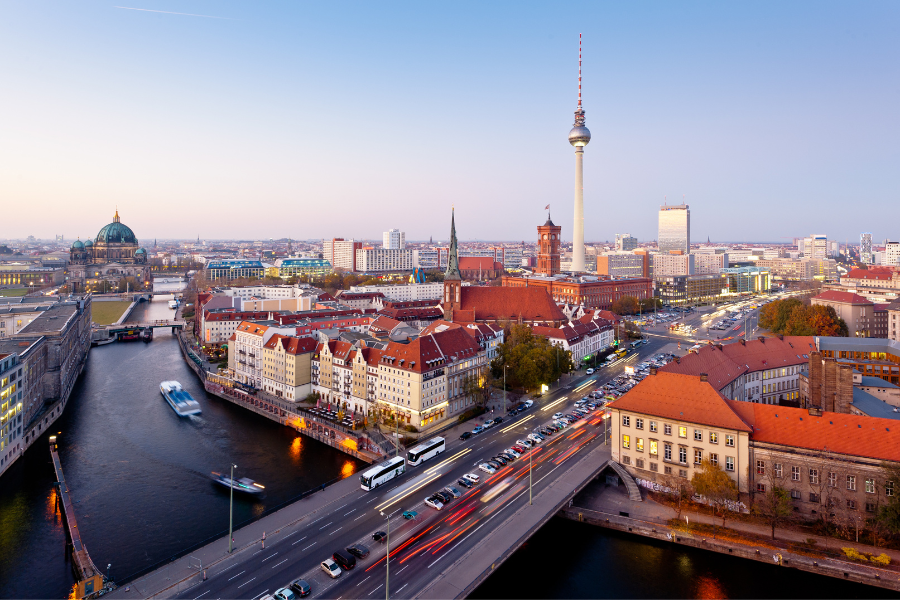
Germany’s economic engine is sputtering. The Federal Ministry for Economic Affairs and Energy’s April 2026 report paints a sobering picture: slowing industrial output, retreating consumer confidence, a surge in inflation driven by energy prices, and a labor market that refuses to recover. At the heart of it all lies a single, destabilizing force — the war in the Middle East. From Munich factory floors to Berlin retail streets, Europe’s largest economy is navigating one of its most turbulent quarters in recent memory.
Germany defied the pessimists at the start of 2026 — but only briefly. The Deutsche Bundesbank’s latest monthly report tells a tale of two quarters: a surprisingly robust opening to the year driven by resilient industry and export momentum, followed by a stark reality check as the Iran War sends energy prices soaring, inflation surging, and consumer confidence into freefall. The picture that emerges is of an economy that proved tougher than expected — and may now be paying the price for it.
When the Federal Ministry for Economic Affairs publishes its monthly economic assessment, the headlines focus on growth figures and geopolitical risk. But behind those numbers lies a set of data points with immediate, practical consequences — for businesses managing cash flow, advisors assessing client risk, and finance professionals planning for the second half of 2026. Germany’s April report tells a story of slowing momentum, surging energy costs, and a rising wave of insolvencies that practitioners ignore at their peril.
Austria did not collapse under the weight of a Middle East war, soaring energy prices, and weakening demand from its most important trading partner. It grew — barely, but it grew. The Austrian Federal Economic Chamber’s latest business cycle monitor paints a picture of an economy that has managed to sustain a fragile recovery even as geoeconomic fault lines widen around it. But the forward indicators are flashing amber. The second quarter, analysts warn, could be a different story altogether.
A geopolitical shock does not have to derail an economy to leave its mark on it. Bank Austria’s latest economic assessment makes precisely this case: the Iran conflict has nudged Austria’s recovery off its earlier trajectory, but not off the rails. Growth forecasts have been trimmed, inflation is heading higher, and the central bank is stepping back to watch. The picture is one of cautious continuity — resilience under constraint, with a watchful eye on the Middle East.
Most economic forecasters acknowledge that geopolitical shocks are bad for growth. The Institute for Advanced Studies (IHS) in Vienna has gone a step further: it has calculated exactly how bad. According to the institute’s spring forecast, the Iran War is costing the Austrian economy 0.5 percentage points of GDP growth in 2026 alone — and pushing inflation nearly a full percentage point higher. These are not estimates hedged with uncertainty. They are a precise accounting of what war costs in peacetime economic terms.
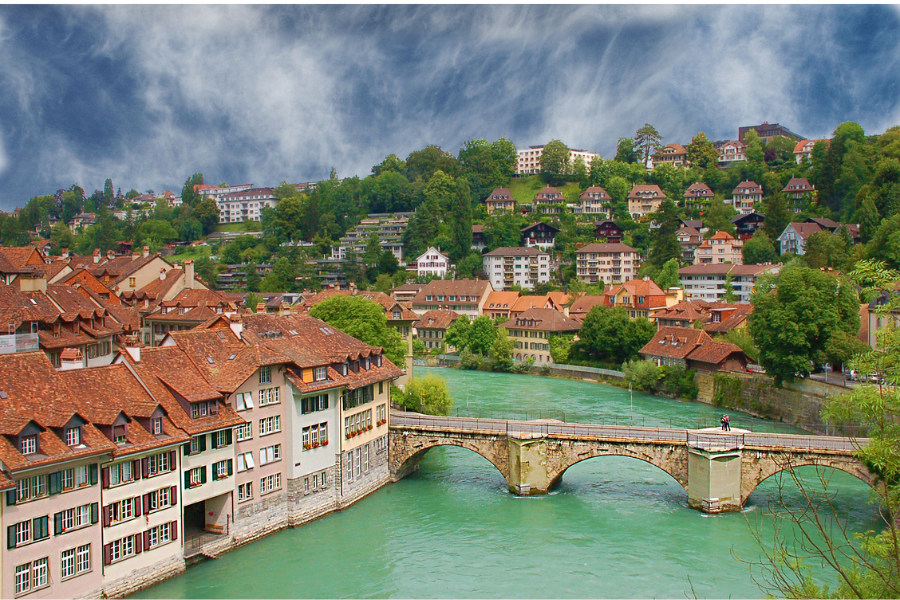
Switzerland’s economy is doing better than it was in March. But it is not doing as well as it was in January — and businesses are increasingly nervous about what comes next. The KOF Konjunkturbarometer’s April reading tells a story of partial recovery from the Iran War shock, with manufacturing bouncing back, retail and services nudging upward, and one sector — hospitality — clearly struggling. The headline number improves. The forward guidance does not.
Switzerland’s State Secretariat for Economic Affairs does not deal in vague warnings. Its spring 2026 forecast comes with two sets of numbers: what the Swiss economy looks like if the Iran conflict stays contained, and what it looks like if it does not. The difference between those two scenarios — measured in growth, inflation, and unemployment — is not catastrophic. But it is real. And the line separating them runs through the Strait of Hormuz.
One percent. That is what Switzerland’s leading economic forecasters are projecting for GDP growth in 2026. It is not a recession. It is not a crisis. But it is below average, and it comes with a caveat that hangs over the entire forecast: if oil prices stay high, that one percent becomes 0.7 percent. The difference sounds small. In economic terms, it is the distance between a sluggish recovery and a year that will feel, for many Swiss households and businesses, like stagnation.
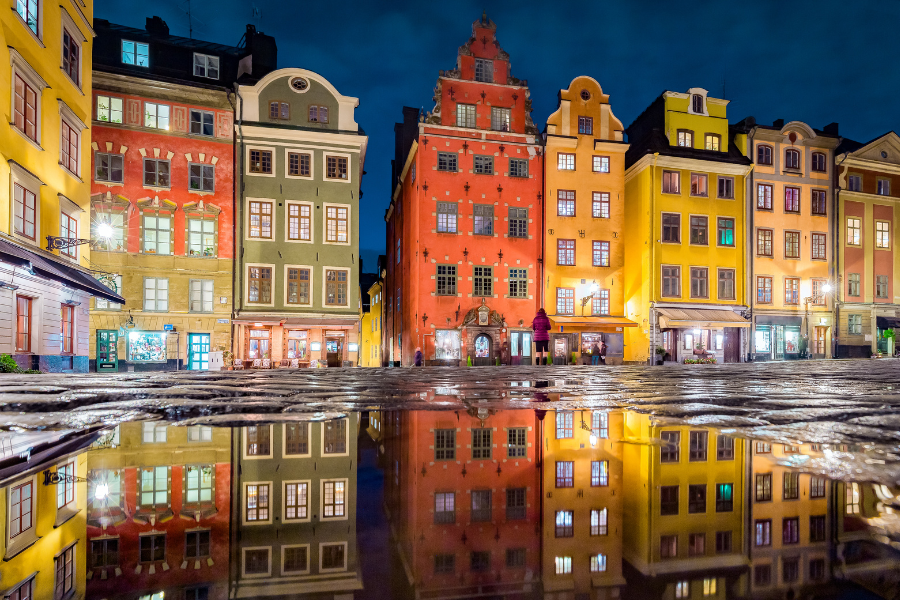
Sweden’s businesses are, broadly speaking, coping. Sweden’s households are not. The Konjunkturinstitutet’s April 2026 barometer captures a country in which the corporate sector has stabilized at roughly normal levels of sentiment while consumers — and male consumers in particular — are turning distinctly gloomier. Between those two worlds lies a story about inflation expectations, wage anxiety, and a housing market that is still making households feel poorer than they did a year ago.
A year ago, Sweden’s economy was in recession by almost any measure — only one of thirteen key indicators was running above its long-term trend. Today, eight of thirteen are above trend. That is genuine progress. But the clock that Statistics Sweden uses to visualise the business cycle also tells a more cautious story: the recovery that gathered pace through 2025 hit a speed bump at the end of the year, and the first months of 2026 have shown very little further movement. Sweden is no longer in recession. It is not yet clearly out of the woods.
Sweden was finally recovering. Two years of weak growth were giving way to something better — businesses investing again, households beginning to spend, the labor market stabilizing. Then the war in the Middle East arrived, and the recovery, in the words of one of Sweden’s most closely watched economists, took a hit. The question is how hard, and whether the damage is temporary or the symptom of something deeper.
Norway’s industrial economy grew strongly in 2025. But the composition of that growth tells a story that has little to do with the country’s traditional economic identity — and a great deal to do with where it is heading. Offshore oil supply chains are contracting. Defence manufacturing is booming. Renewable energy systems are expanding. And across the board, Norwegian industry faces a labour market paradox: nearly five thousand unfilled vacancies even as layoffs are being planned. The country’s leading industrial association has mapped all of this — and the picture it reveals is of an economy in faster transition than most outside Norway realise.
Norway’s economy is growing at roughly its long-run normal pace. Its unemployment rate is falling. Its households are gaining real purchasing power. By most measures, it should be a favourable moment for Norwegian monetary policy to ease. But Statistics Norway’s March 2026 forecast delivers an uncomfortable verdict: inflation will remain elevated throughout the year, the krone’s import-price effect is insufficient to offset the energy shock, and the Norges Bank will almost certainly hold rates steady until 2027. The Middle East war has pushed Norway’s rate-cut timeline back by a full year.
Norway has a secret weapon against wage-price spirals that most economies envy: the Frontfag model, in which the internationally exposed manufacturing sector sets the pace for the entire economy’s wage growth. In 2026, that pace has been set at 4.4 percent — below last year’s headline rate, but well above inflation in many of Norway’s trading partners. It is a number that reflects Norway’s unique economic position: flush with oil revenues, tight on labour, and navigating a global environment that has just handed its central bank a reason to consider raising rates rather than cutting them.
Denmark’s economy grew by 1.9 percent in the first quarter of 2026. Strip out the pharmaceutical industry, and that figure collapses to 0.2 percent. This is not a new phenomenon for Danish statistics — it is the defining structural reality of Denmark’s modern economic data. But the spring 2026 figures make the dependency more visible than ever, while a separate finding from Danmarks Statistik’s business surveys introduces a new and specifically Danish risk: more than 70 percent of industrial firms expect to be affected by the US trade war, and the investment outlook — while cautiously positive — is being shaped by an unusual combination of pharmaceutical confidence and broader uncertainty.
When economists talk about the Danish economy, they talk about pharmaceuticals, energy, shipping, and finance. They talk about Novo Nordisk, Maersk, and Ørsted. What they rarely talk about — despite it being the single largest private employer in the country — is the trade sector: the retail stores, the wholesale distributors, and the supply networks that connect producers to consumers across the Danish economy. Dansk Erhverv’s April 2026 analysis changes that. Its numbers are striking. Its argument is simple: you cannot understand Danish employment, Danish productivity, or Danish consumption without understanding the sector that underpins all three.

Most economic reports tell their story through words. Danmarks Statistik’s “Et overblik over dansk økonomi” tells it through numbers — a live dashboard of twenty indicators covering growth, inflation, employment, housing, public finances, and the green transition. Reading those numbers together, a coherent portrait of the Danish economy emerges: strong fiscal foundations, tight labour market, rising house prices, recovering industry — and a consumer confidence reading of -13.1 that suggests the people living inside this apparently strong economy are not entirely convinced of their own good fortune.

Finland’s economy grew by just 0.2 percent in 2025. Its businesses are doing slightly better than that modest figure suggests — but only slightly. The Confederation of Finnish Industries’ April 2026 barometer captures a picture of cautious improvement: industry recovering, construction still struggling, services barely moving. And running through the entire analysis is a warning that applies with particular force to Finland: if the Iran War pushes central banks toward rapid rate increases, Finland — more dependent on variable-rate debt than most of its peers — will feel the impact more acutely than almost any other European economy.
Finnish technology industry companies are receiving more enquiries than at any point since January 2022. Their order backlog is 18 percent higher than a year ago. Revenue reached 103 billion euros in 2025. And yet: new orders in the first quarter were flat compared to a year earlier in the core machinery and metal products segment, 10,800 workers remain on temporary layoff arrangements, and the mood, while cautiously positive, is shadowed by a question that no one in the sector can answer. How long will the Iran War last — and what will it do to interest rates?
The Iran War has given Finnish policymakers a convenient explanation for the country’s economic difficulties. But Kuntaliitto’s chief economist Minna Punakallio is not buying it. Her April 2026 economic review makes a pointed argument: the obstacles that are really holding Finland back are domestic — weak consumer confidence, a deteriorating labour market, a housing wealth problem, and structural vulnerabilities that predate any Middle East crisis. The ceasefire, when it comes, will not fix any of those things.
Belgium’s business confidence has been unable to find its footing. Month after month, the National Bank’s synthetic barometer fails to recover — and April 2026 is no exception. The overall index edged down further to -14.2, with construction, services, and retail all deteriorating. Manufacturing offered a rare second consecutive improvement, driven largely by lower-than-normal inventory readings. But the smoothed trend curve — the indicator that strips out noise and captures underlying momentum — remains firmly pointed downward. Belgium is not in freefall. It is in a slow, persistent decline that shows no sign of reversing.
Belgium grew by 1.0 percent in 2025. That is the headline. The detail tells a more complicated story: residential investment fell by 8.2 percent — its sharpest decline in more than a decade. Exports contracted for the second consecutive year. Industry barely moved. The economy held together because households kept spending, the government kept investing, and the construction sector (remarkably, given what was happening in housing) posted its strongest growth in years. Behind the stable headline lies an economy whose sources of dynamism are concentrated in a few sectors and whose vulnerabilities are real and growing.
Belgium’s exports fell by 4 percent in 2024 — one percentage point more than the global trade decline of 3 percent. The country now holds a 1.8 percent share of world export markets and has dropped to 19th place in the global exporter rankings. These are the headline findings of the SPF Economie’s first-ever Belgian Competitiveness Overview, published in April 2026 — a new analytical tool that arrives at a moment when Belgium’s competitive position is under pressure from multiple directions simultaneously. The diagnosis is measured rather than alarmist. But the structural vulnerabilities it maps are real, and they are not going away.
In April 2026, the Netherlands recorded one of the sharpest single-month drops in consumer confidence in recent memory: from -30 in March to -44. Simultaneously, the country’s GDP grew by just 0.1 percent in the first quarter, exports contracted, household consumption fell, and 10 of the 13 indicators in Statistics Netherlands’ Business Cycle Clock were performing below their long-term trends. The Dutch economy is not in recession. It is in something almost harder to escape: a sustained, slow decline in confidence and activity that has now been running, with brief interruptions, for nearly four years.
When oil and gas prices rise because a war has closed the Strait of Hormuz, the effects do not stay in the energy sector. They move through chemicals and metals into manufacturing. They move through transport costs into wholesale prices. They move through inflation into consumer purchasing power. They reach the hotel bedroom through a VAT increase that landed on the same day as the energy shock. Rabobank’s March 2026 sector forecasts trace this entire chain — sector by sector, scenario by scenario — and the picture they draw is of a Dutch economy where no commercial sector is untouched and where the difference between a short war and a long one could be worth nearly two billion euros in lost industrial output alone.
The Dutch economy entered an expansion phase in mid-2025. That was the good news. The DNB business cycle indicator — the central bank’s forward-looking tool for predicting where the economy is heading six months out — now carries a more cautious message for 2026: the indicator is flattening, the expansion is losing momentum, and by mid-2026 the indicator will be approaching a turning point toward slowdown. The Netherlands is not heading into recession. But it is heading toward a phase where growth, while still positive, will no longer be accelerating. In an economy already battered by collapsing consumer confidence and an energy shock, that distinction matters more than it might usually.
On 8 April 2026, a ceasefire was announced between the United States, Israel, and Iran. Markets rallied. The Euro Stoxx 50 climbed back toward its pre-war levels. Investors bet on a short conflict. In Luxembourg, STATEC’s April conjoncture flash captured this moment with characteristic precision: the headline reads “markets resist, but uncertainty remains.” That tension — between the financial markets’ optimism and the real economy’s caution — defines Luxembourg’s conjunctural position as spring 2026 turns toward summer. The grand duchy’s GDP grew by just 0.6 percent in 2025. Its consumers are at their lowest confidence in a year. And its cross-border workers from France are arriving in unprecedented numbers while those from Germany continue to leave.
Since 2022, Luxembourg’s GDP has been essentially flat. That single fact — devastating for a country accustomed to growth rates of 2.5 percent per year — is the organising reality of the IDEA Foundation’s 2026 Annual Report. Four years on from the first energy shock, the financial sector has lost its role as economic lifeboat, construction has not restarted, investment and exports remain depressed. Public spending and household consumption have kept the economy’s head above water. And now, before any genuine recovery has taken hold, a new energy crisis — the Iran War — has arrived to threaten what the report calls a recovery “already under threat before it has even begun.”
The seventh edition of IDEA’s Economic Consensus survey is titled “Yesterday.” The word is deliberately chosen: it captures the mood of Luxembourg’s economic expert panel, which in 2026 signals not alarm but something perhaps more troubling — resignation. Confidence has declined from last year. Worries about inflation, interest rates, the construction sector, the labour market, public finances, and climate progress have all intensified. And yet the panel refuses to stop asking. Their demands, directed at both European institutions and Luxembourg’s government, are specific, ambitious, and urgent. The distance between what they ask for and what is currently being delivered is one of the sharpest diagnostic findings in IDEA’s most comprehensive annual report.
The Federal Reserve’s April 2026 Beige Book — a qualitative survey of economic conditions across all twelve Federal Reserve Districts — describes an American economy that is still growing but has adopted the posture of someone walking carefully through a room they suspect may have changed in the dark. Eight Districts reported slight to modest economic growth. Two reported little change. Two reported outright slight to modest declines. The Middle East conflict is named as a major source of uncertainty in virtually every District. Firms are not panicking. But they are not investing, hiring, or pricing with conviction either. The word that appears more than any other in the national summary is “uncertainty.”
The headline number is reassuring: 52.7. The US manufacturing sector grew in April 2026 for the fourth consecutive month, and the reading’s correspondence to a 1.8 percent annualised GDP growth rate is solidly positive. But read the sub-indexes carefully and a more complicated picture emerges. The Prices Index has jumped 25.6 percentage points in three months to reach its highest level since April 2022. Supplier deliveries are slowing for the fifth straight month, with not one industry reporting faster deliveries. Export orders have contracted for the second consecutive month. And employment has been contracting for 31 of the past 40 months. Growth is real. The conditions surrounding it are increasingly turbulent.
The Conference Board’s Leading Economic Index for the United States rose by 0.1 percent in April 2026 — a whisper of improvement after a 0.6 percent decline in March. The headline is technically positive. The context is less reassuring. The six-month trend remains negative. Consumer expectations are weighing heavily on the composite. Higher gasoline and energy costs are eroding purchasing power for lower- and middle-income households. And while AI infrastructure investment is providing genuine support to business spending, it operates in a separate economy from the consumers at food banks that the Fed’s own Beige Book documented just weeks earlier. The Conference Board projects 1.7 percent GDP growth in 2026. Recession is not in the forecast. Fragility is.
April 2026 was an unusually eventful month for the Canadian economy. The federal government froze the fuel excise tax on gasoline and diesel, projected a $65.3 billion deficit, launched a new $25 billion sovereign wealth fund, and revised its GDP growth forecast down to 1.1 percent for the year. WTI crude closed at $105 per barrel. The Canadian dollar recovered to 73.40 US cents. And the private sector announced deals worth tens of billions of dollars across energy, mining, real estate, and logistics — suggesting that whatever uncertainty the global environment is generating, corporate Canada has a longer planning horizon than the headlines imply.
In 2025, Canada lost $29.4 billion in merchandise exports to the United States. It recovered $27.6 billion in shipments to other countries. On paper, the arithmetic almost balances. But behind the numbers lies a story of genuine structural disruption: aluminium output down 19.5 percent, motor vehicle production below pre-tariff levels, youth unemployment at its highest since 2010, and a labour market that had started to recover before losing 109,000 jobs in the first two months of 2026. Canada is rerouting. Whether it can reroute fast enough — and whether the Iran War’s energy shock arrives just as the US trade wound is beginning to close — is the central question of the country’s economic moment.
Canada’s export diversification in 2025 has been called a success story. Exports to the United States fell 3.8 percent. Exports to non-US markets rose 11.2 percent. The US share of total Canadian exports fell to 64.1 percent in Q4 — the lowest quarterly share ever recorded in the data series going back to 1997. But Global Affairs Canada’s Spring 2026 Quarterly Economic and Trade Report adds a crucial asterisk to this narrative: nearly 44 percent of the non-US export gains came from gold. Strip out gold, silver, and platinum group metals, and Canadian exports would have fallen 2.1 percent in 2025. The trade pivot is real in the aggregate. As a structural transformation of Canada’s trade base, it is — so far — mostly gold.
Japan’s business confidence deteriorated sharply for the second consecutive month in April 2026. The TDB Business Conditions Index fell to 41.5 — a decline of 2.8 points over two months that has now pushed the headline figure to its lowest level since the supply chain disruptions of 2022. Nine of ten major industry categories deteriorated. All ten regions deteriorated simultaneously for the first time in over four years. And small enterprises — the engine of Japan’s local economies — fell into the 30s for the first time since August 2022. The culprit is a procurement cost shock that is rising faster than Japanese companies can pass it on to their customers.
The Bank of Japan’s April 2026 Outlook Report is one of the most challenging policy documents the institution has published in years. In a single report, the Policy Board simultaneously halved its fiscal year 2026 GDP growth forecast — from +1.0 to +0.5 percent — and raised its core inflation forecast dramatically — from +1.9 to +2.8 percent. Growth is lower than expected. Prices are higher than expected. And the Bank’s response is to hold its course: rates will continue to rise, but the timing depends on how the Middle East situation unfolds. It is a monetary policy framework under conditions of genuine stagflationary pressure — and Japan is handling it with a precision the rest of the world is watching closely.
The international economic consensus, reflected in the IMF’s April World Economic Outlook, holds that the Iran War’s impact on global growth is limited — a modest 0.3 percentage point reduction in the baseline scenario. Mizuho Research Institute’s weekly analysis of 22 April 2026 accepts the aggregate finding but challenges its distribution: the damage is not evenly spread, and the countries bearing the brunt of it are precisely those least able to absorb it. Meanwhile, a second shock is forming beneath the first: urea fertiliser prices jumped 54 percent in a single month in March, following the disruption of Strait of Hormuz shipping lanes. When fertiliser prices spike, food CPI follows — in the US six months later, in the eurozone thirteen months later, and in Japan nineteen months later.
China’s April 2026 PMI data tells a story of two economies moving in opposite directions. Manufacturing held at 50.3 — stable, in expansion, with production accelerating and export orders crossing above 50 for the first time in over a year. Non-manufacturing fell to 49.4 — below the neutral line, with construction and retail both contracting and new orders weakening. The composite PMI of 50.1, barely positive, captures the sum of these two diverging trends.
China’s Q1 2026 GDP grew 5.0 percent. Its high-technology manufacturing output grew 12.6 percent in the first four months. Its electric vehicle exports grew 49.5 percent. Its new energy vehicle domestic penetration rate exceeded 60 percent for the first time in April. And its producer price index recorded 2.8 percent year-on-year growth in April — the highest reading in 45 months, a milestone that prompted Reuters to ask directly whether this reflects energy-driven cost push or genuine demand strengthening.
China’s industrial production grew 4.1 percent year-on-year in April. Averaged across the first four months, the pace was 5.6 percent. Those are the headlines. The product-level data tells a more granular and more revealing story. Sedans fell 18.8 percent. Cement fell 10.8 percent. Solar panels fell 25.6 percent.