Click on your selected market and read the latest business news from…

Click on your selected market and read the latest business news from…

Sales Magazine ReformBusiness 4-2026

GERMANY | Selected business news for successful international sales

GERMANY | Selected business news for successful international sales

Germany’s economic recovery slowed in early 2026 as industrial weakness and geopolitical risks weighed on the outlook. Despite a stable labor market, falling production levels and renewed energy price volatility have hampered growth. With consumer spending remaining cautious, the country’s path to a sustained rebound remains fragile. As Europe’s largest economy, Germany’s ability to navigate these headwinds will be crucial for the broader regional recovery in the coming months.

Read here

Germany’s economy likely stagnated in the first quarter of 2026, as the recovery lost the momentum seen at the end of last year. According to the Bundesbank, a weakened competitive position in industry and subdued private investment remain the primary drags on growth. While fiscal stimulus and government orders provide some long-term hope, immediate prospects are clouded by low capacity utilization and rising geopolitical risks. As the eurozone’s largest economy, Germany’s continued stagnation remains a key concern for the broader regional recovery throughout 2026.

Read here

Germany’s producer prices fell 0.2% annually in March, but a sharp 2.5% monthly surge signals renewed inflation risks. This jump—the highest since 2022—was driven by soaring oil and energy costs linked to Middle East tensions. While lower gas and electricity prices provided some annual relief, rising industrial input costs suggest new pressure on business margins. The data highlights that geopolitical shocks remain a decisive threat to Germany’s economic stability in 2026.

Read here

AUSTRIA | Selected business news for successful international sales

AUSTRIA | Selected business news for successful international sales

Austria’s inflation surged to 3.1% in March, up from 2.2% in February, driven by a sudden spike in fuel and heating oil prices. This energy shock, linked to Middle East tensions, accompanies a 4.5% rise in service prices, signaling persistent domestic pressure. With Eurozone inflation also climbing to 2.5%, the ECB faces renewed pressure, while Austria’s growth forecast has been downgraded to 0.5%.

Read more

 The IHS has sharply cut Austria’s GDP growth forecast to 0.5% for 2026, citing energy price shocks driven by the Iran conflict. Rising oil and gas costs have pushed inflation expectations back up to 2.9%, weakening both private consumption and investment. While the labor market remains stable, the combination of high prices and sluggish exports suggests a fragile economic path ahead. Austria’s recovery now depends heavily on the stabilization of global commodity markets and geopolitical tensions.

Read more

Austria’s industrial sector faces a fragile recovery as weak demand and rising production costs hamper competitiveness. According to the WKO NÖ, manufacturing labor costs have surged by over 25% since 2020, while high taxes and energy prices further squeeze margins. Despite a stable 5.6% unemployment rate, skilled labor shortages persist, leaving manufacturers in a difficult balancing act. The report warns that structural reforms in taxation and energy costs are essential to restoring industrial momentum and international standing.

Read more

SWITZERLAND | Selected business news for successful international sales

SWITZERLAND | Selected business news for successful international sales

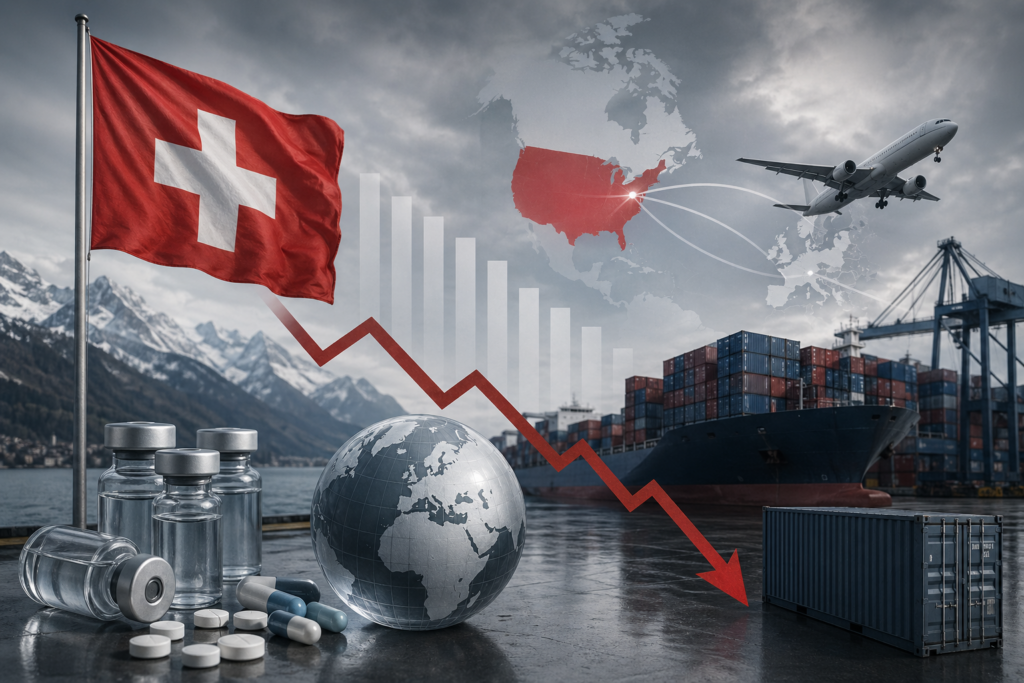
Switzerland’s export sector hit a multi-year low in the first quarter of 2026, with total shipments falling to CHF 66.94 billion. Despite a slight nominal rise in March, real export volumes dropped by 3.4%, driven largely by a sharp decline in the pharmaceutical sector and a nearly 16% collapse in demand from the United States. While a solid trade surplus of CHF 11.10 billion remains a stabilizing factor, the outlook for Swiss trade depends heavily on a recovery in global demand and pharmaceutical momentum.

Read more

Swiss exports to the U.S. plunged 16% in Q1 2026, driven by a slump in pharmaceutical shipments and a strong franc. As American demand weakens and global uncertainty delays orders, Swiss exporters face a challenging year. Recovery now depends on a rebound in high-value sectors and more stable trade conditions.

Read more

Switzerland’s KOF Economic Barometer fell sharply by 7.7 points to 96.1 in March, dropping below its long-term average. This unexpected decline, driven by weakening manufacturing and foreign demand, signals a broader cooling of the Swiss economy. With both production and demand indicators softening, analysts warn of a fragile near-term outlook for the country’s industrial and export sectors.

Read more

SWEDEN | Selected business news for successful international sales

SWEDEN | Selected business news for successful international sales

Sweden’s growth slowed in early 2026 as Middle East tensions pushed oil prices higher, dampening household spending. However, the Konjunkturinstitutet expects a rebound starting in the second quarter, driven by tax cuts, rising real wages, and increased public investment in defense and infrastructure. While the labor market recovery remains slow, falling inflation—aided by a food VAT reduction—is expected to pave the way for a stronger second half of the year.

Read more

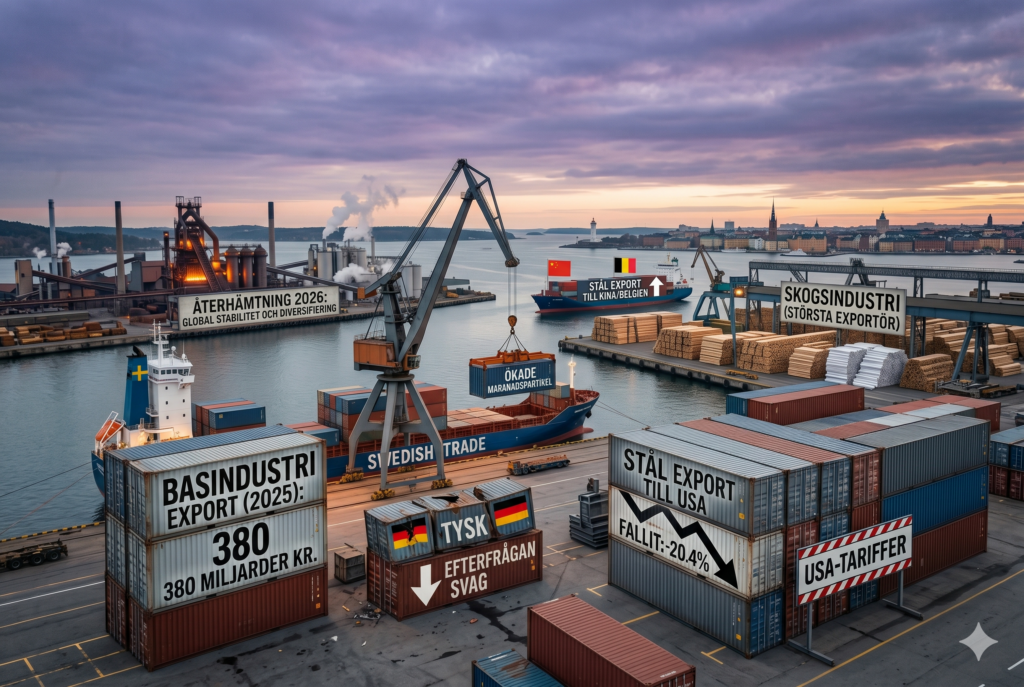
Sweden’s base industry exports reached SEK 380 billion in 2025, but the sector faces growing pressure from weakening German demand and new U.S. tariffs. While the forest industry remains the largest exporter, steel shipments to the U.S. plummeted by 20.4% due to trade barriers. Despite these setbacks, rising metal prices and increasing market shares in China and Belgium offer some relief. Moving into 2026, the industry’s recovery will depend on global trade stability and continued market diversification.

Read more

Sweden’s KPIF inflation fell to 1.6% in March, defying analyst expectations of a 2.2% rise. Core inflation also softened to 1.1%, driven by lower-than-anticipated pressure from energy, food, and housing costs. While transport costs increased, the overall slowdown complicates interest rate expectations for the Riksbank, which must now balance cooling domestic prices against global energy risks. For households, the data offers a positive sign of recovering purchasing power heading into mid-2026.

Read more

NORWAY | Selected business news for successful international sales

NORWAY | Selected business news for successful international sales

Norway’s annual inflation jumped to 3.6% in March, driven by a record monthly surge in fuel prices linked to Middle East tensions. While core inflation remains steady at 3.0%—well above the Norges Bank target—seasonal food discounts around Easter provided only partial relief. This unexpected acceleration has shifted market expectations, with economists now warning of potential interest rate hikes instead of previously anticipated cuts. Households face renewed pressure as purchasing power declines amid volatile energy markets and uncertain borrowing costs.

Read more

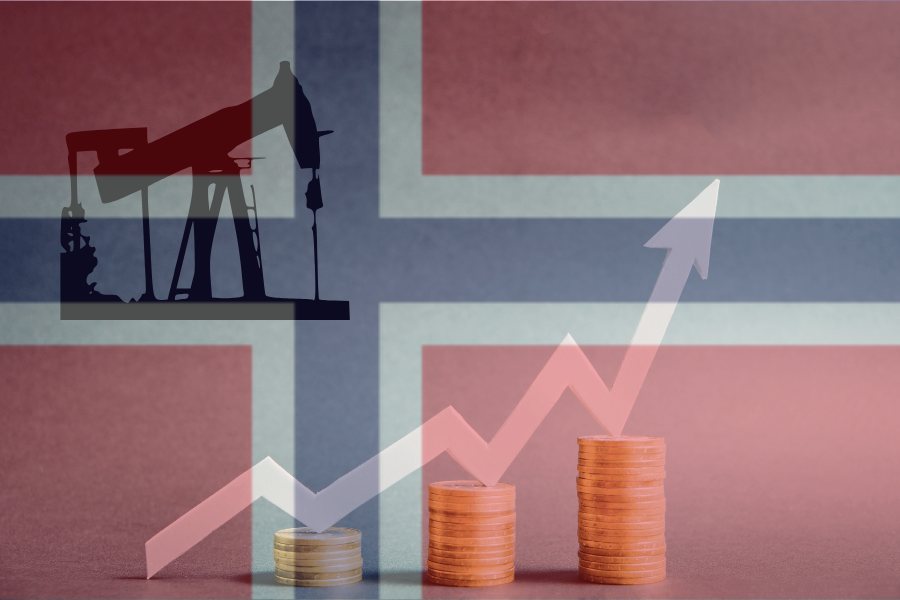
Norway’s trade surplus surged by 65.5% year-on-year to NOK 97.5 billion in March, its highest level since early 2023. This record result was driven by a 28.5% jump in exports, fueled by soaring crude oil revenues (NOK 57.4 billion) and strong natural gas sales (NOK 69.3 billion). While imports rose modestly, the energy-led export boom continues to provide exceptional stability for Norway’s public finances amidst global market volatility.

Read more

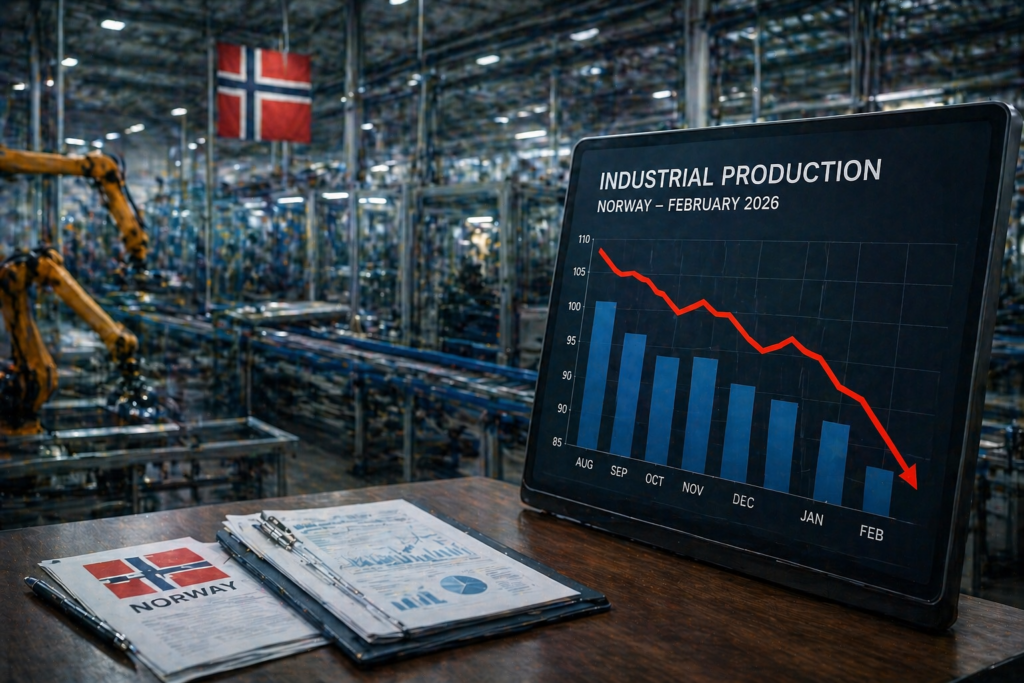
Norway’s industrial production lost momentum in February, driven primarily by a decline in manufacturing output. According to Statistics Norway (SSB), the dip highlights a softer start to the year for the mainland economy, despite strong revenues in the petroleum sector. While monthly volatility is common due to maintenance and shifting order volumes, the weaker reading suggests a period of uncertainty for export-oriented industries. Analysts are now watching for a spring recovery to determine if this slowdown is a temporary setback or a more sustained trend.

Read more

DENMARK | Selected business news for successful international sales

DENMARK | Selected business news for successful international sales

Denmark enters 2026 with strong fundamentals, including record-high employment and a resilient pharmaceutical sector, according to Jyske Bank. While the economy remains robust, growth is expected to moderate as the country shifts toward a more “normal” pace of expansion. Despite rising real wages and solid household finances, consumer sentiment remains unexpectedly pessimistic. As a small, open economy, Denmark’s continued success now hinges on its ability to navigate international trade volatility and global demand shifts.

Read more

Denmark’s robust economic foundation, fueled by record exports and 0.8% inflation, is creating a supportive environment for local businesses in Tønder. With real wages expected to rise by 3.5% and private consumption gaining momentum from tax cuts and high household savings, the focus is shifting toward domestic growth. For Tønder’s retailers and service providers, this strengthened purchasing power and a stable labor market offer a prime opportunity for investment and increased local sales throughout 2026.

Read more

Denmark’s economy remains fundamentally balanced with high employment, yet Danmarks Nationalbank warns of persistent uncertainty due to geopolitical tensions and trade conflicts. While inflation is expected to stay low, rising energy prices from Middle East conflicts pose the primary risk to household and business costs. Despite these external pressures, Denmark’s stable public finances and robust labor market provide a stronger buffer than many European peers, leaving the 2026 outlook heavily dependent on global stability.



Read more

FINLAND | Selected business news for successful international sales

FINLAND | Selected business news for successful international sales

Prime Minister Petteri Orpo’s administration has launched a new fiscal plan to boost Finland’s economy through infrastructure investment, housing support, and entrepreneurship reforms. While the government maintains strict fiscal discipline to meet EU deficit requirements, it is deploying targeted tax cuts to stimulate domestic demand. Despite these growth measures, Finland faces mounting pressure from rising national debt and interest expenses, making economic confidence and structural reform the central themes for the 2026–2030 period.

Read more

Finland faces a challenging start to 2026, characterized by stagnant growth and an unemployment rate exceeding 10%. According to the Industrial Union (Teollisuusliitto), weak consumer confidence and job insecurity continue to suppress domestic demand. While a projected 2% rise in real wages and a potential recovery in exports offer some hope, the outlook remains fragile. Higher energy prices and economic weakness in Germany pose significant risks, meaning a sustained recovery will depend heavily on stabilizing the labor market and restoring household confidence.

Read more

Finland is expected to return to growth in 2026, with GDP projected to expand by 0.9% as investment activity becomes the primary economic engine. While purchasing power is recovering and household savings remain high, consumer confidence continues to lag due to unemployment risks and geopolitical tensions. Analysts warn that prolonged Middle East conflicts could still threaten this fragile recovery through higher energy costs. However, if external risks stabilize, growth is forecast to accelerate further to 1.5% in 2027.

Read more

BELGIUM | Selected business news for successful international sales

BELGIUM | Selected business news for successful international sales

Belgium’s economy remains resilient with growth forecast to stabilize at 1.1% in 2026, driven primarily by strong domestic demand. Despite this stability, the country faces significant structural challenges, including a 3.1% rise in hourly labor costs and a weakening export climate. While the labor market remains tight with 6.5% unemployment, high public debt and budget deficits continue to weigh on the long-term outlook. Belgium enters 2026 as a robust EU economy, but one increasingly in need of structural reforms to maintain international competitiveness.

Read more

S&P Global has lowered Belgium’s long-term credit rating to ‘A’, citing structural budget deficits and a rising public debt burden. The downgrade reflects concerns over political fragmentation, which slows essential fiscal reforms and reduces flexibility against future shocks. While a stable outlook and a wealthy, diversified economy provide some near-term confidence, the move signals an urgent need for Brussels to stabilize public finances and restore medium-term credibility.

Read more

Belgium’s inflation regained momentum in March, reversing the moderating trend seen earlier in the year. Higher consumer prices are putting renewed pressure on household purchasing power and business operating costs, particularly through potential wage demands. As part of the euro area, Belgium’s price fluctuations also influence ECB policy expectations, adding uncertainty to interest rate forecasts for 2026. While domestic demand remains steady, this inflationary rebound highlights the ongoing challenge of balancing price stability with broader structural and competitiveness issues.

Read more

NETHERLANDS | Selected business news for successful international sales

NETHERLANDS | Selected business news for successful international sales

A holland infláció 2,7%-ra gyorsult márciusban az üzemanyagárak drasztikus, 18,7%-os éves emelkedése miatt. Az élelmiszerek és a szolgáltatások drágulása szintén fűti a fogyasztói árakat, így a holland adat (2,6% HICP) már valamivel az eurózóna átlaga (2,5%) felett alakul. A további kilátások továbbra is az energiapiaci stabilitástól függenek.

Read more

Despite a 3% revenue increase in 2025 and a projected 4% growth for 2026, Dutch exporter confidence has cratered to 5.9, its lowest level since the 2009 financial crisis. While Europe has become the primary “safe haven” for two-thirds of trade, firms continue to target global markets like the UAE and Chile. However, internal inefficiencies and supply chain gaps are causing businesses to miss out on a staggering €70 billion in untapped export potential.

Read more

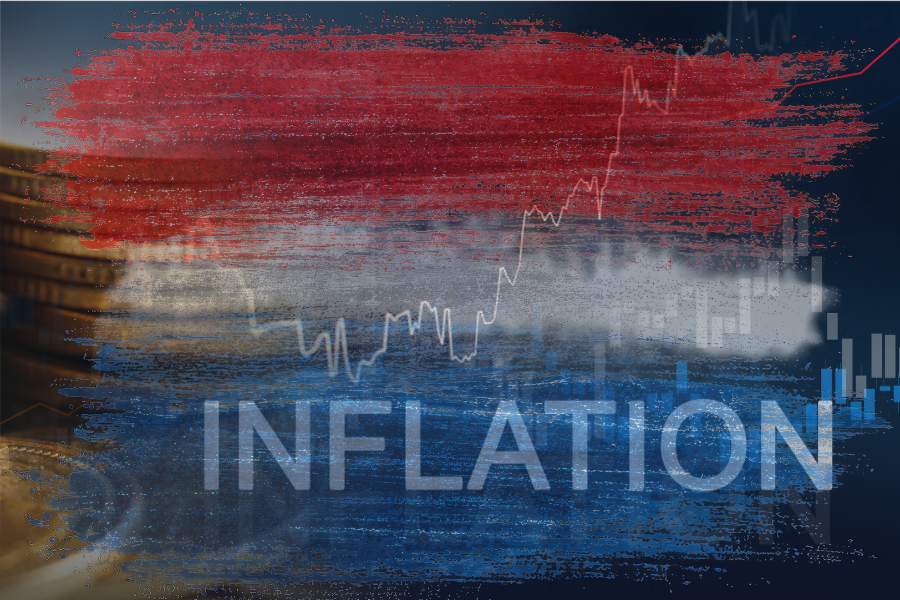
Dutch inflation climbed to 2.7% in March, driven by a near-doubling of oil and gas prices following the conflict in the Middle East. Transport fuels and rising business expenses are the primary catalysts, reversing months of stabilization toward the 2% target. Economists warn that if energy costs remain elevated, the Netherlands faces a fragile period of “stagflationary” risk—higher costs combined with slowing growth—forcing the ECB to reconsider future interest rate cuts.

Read more

LUXEMBOURG | Selected business news for successful international sales

LUXEMBOURG | Selected business news for successful international sales

After three decades at the top, Luxembourg’s status as Europe’s wealthiest country is under immediate threat as Ireland closes the gap to just €500 in GDP per capita. While Luxembourg reached 239% of the EU average in 2025, Ireland’s massive 12.3% growth rate—compared to Luxembourg’s 0.6%—has positioned the Emerald Isle to potentially seize the #1 spot during 2026. Experts note that while both nations’ figures are inflated by cross-border workers and multinational accounting, the shift marks a major symbolic end to Luxembourg’s long-standing economic dominance.

Read more

Luxembourg’s central government revenues grew 4.5% to €7.92 billion in Q1 2026, yet the budget surplus plummeted to just €59 million. While VAT receipts surged by 17% and income tax remained solid, an 8.6% spike in state spending combined with an 11.8% drop in corporate tax eroded the fiscal cushion. This rapid narrowing of the surplus highlights growing pressure on public finances, making fiscal discipline a critical priority for the remainder of the year.

Read more

Luxembourg’s industrial sector is entering a significant expansion phase, with a Fedil survey identifying 3,027 employment plans over the next two years. This includes 1,715 newly created positions, signaling a major turnaround from previous stagnation. While production roles remain the primary driver with 1,518 vacancies, the demand for IT specialists, construction workers, and logistics experts is surging as companies navigate digital and environmental transformations.

Read more

USA | Selected business news for successful international sales

USA | Selected business news for successful international sales

The U.S. economy added 178,000 jobs in March, nearly tripling economist forecasts and signaling a major acceleration in labor market momentum. Highlights include a rare 15,000-job gain in manufacturing—the sector’s first positive Q1 growth in three years—and 26,000 new construction roles. With private-sector earnings up 3.9% and labor participation rates for women at record highs, the report suggests a resilient economy entering the second quarter of 2026.

Read more

The U.S. economy demonstrated resilience in March as payrolls surged by 178,000 jobs, effectively reversing a sharp decline of 133,000 in February. While the unemployment rate remained stable at 4.3%, the report highlights a significant sector-driven recovery, particularly in private-sector services and infrastructure.

Read more

U.S. industrial investment surged in March as manufacturers announced a diverse wave of factory projects across thirteen states. This expansion marks a shift toward high-value, strategic sectors—specifically AI chips, defense, and advanced mobility—rather than traditional mass production.

Read more

CANADA | Selected business news for successful international sales

CANADA | Selected business news for successful international sales

Canadian manufacturing sales rose 3.6% to CAD 71.2 billion in February, driven by a sharp 18.8% recovery in transportation equipment. While machinery and primary metals also posted strong gains, the annual performance remains 1.7% lower than last year. Early data for March suggests a cooling trend, as the manufacturing PMI fell to 50.0, reflecting stagnation amid high prices and U.S. tariff headwinds.

Read more

Canada’s economy lost momentum at the end of the first quarter, with March data signaling fragile growth conditions. Limited job creation and rising unemployment indicate that labor force expansion is outpacing hiring. Additionally, trade tensions with the United States and high living costs are dampening both business confidence and consumer spending, leaving the national outlook subdued heading into the middle of the year.

Read more

Canada’s merchandise trade deficit more than doubled in February, reaching CAD 1.5 billion as exports slumped and imports continued to rise. Total exports fell 5.5% to CAD 64.7 billion, with broad softness led by a decline in energy products. Conversely, imports rose 1.9% to CAD 66.2 billion, creating a significant trade gap that could weigh on GDP growth and industrial activity as the country enters the second quarter.

Read more

JAPAN | Selected business news for successful international sales

JAPAN | Selected business news for successful international sales

Japan’s exports grew 11.7% year-on-year in March, significantly accelerating from the 4.0% growth seen in February. The surge was primarily driven by a rebound in Chinese demand and higher global prices for manufactured goods. While Japan recorded a ¥667 billion trade surplus, rising import costs for energy and raw materials (+10.9%) and ongoing Middle East risks remain key concerns for the months ahead.

Read more

Japanese markets faced a severe shock in March as the Nikkei 225 plummeted 13.2% following the closure of the Strait of Hormuz and oil prices surging above $100 per barrel. Global geopolitical fears turned foreign investors into net sellers after months of buying, hit large exporters particularly hard. While mining and shipping sectors outperformed due to rising commodity prices, the broader market remains vulnerable to energy supply disruptions and volatile international capital flows.

Read more

Japan’s core inflation rose to 1.8% in March, up from 1.6% in February, as rising energy costs from the Middle East conflict began to impact the economy. While the headline figure remains below the Bank of Japan’s 2% target, a deeper measure excluding both food and energy stands at 2.4%, indicating firm underlying price pressure. This creates a policy dilemma for the BOJ, which must now balance rising imported inflation against the risk of slowing growth caused by high fuel costs.

Read more

CHINA | Selected business news for successful international sales

CHINA | Selected business news for successful international sales

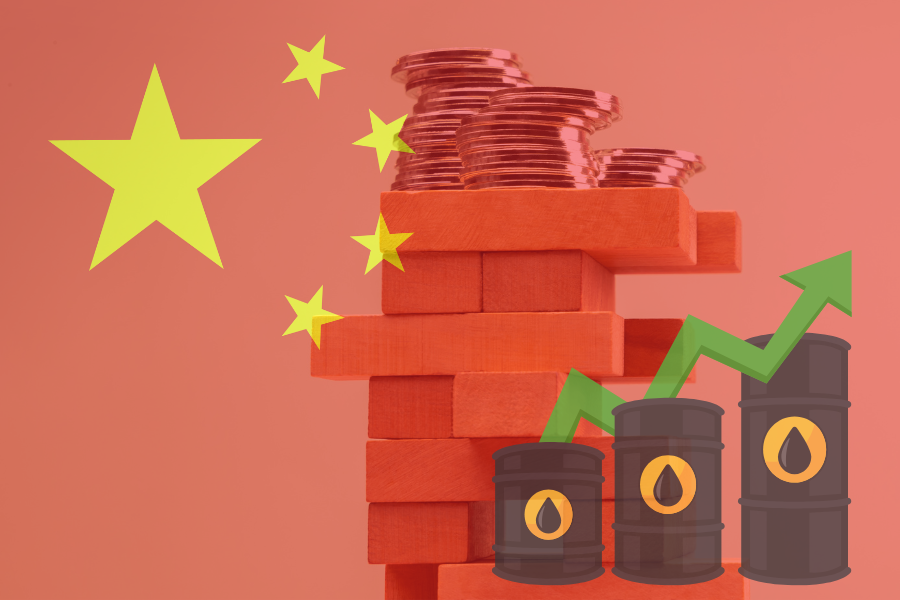
The BBC reports that global economic uncertainty has intensified as 2026 enters its second quarter, fueled by escalating Middle East tensions and a sharp spike in energy prices. With oil prices crossing the $100-per-barrel mark, concerns are mounting that a combination of high inflation and slowing growth—stagflation—could destabilize major economies. Bank of England Deputy Governor Sarah Breeden warned that current stock market valuations may not fully reflect these systemic risks, signaling a potential for significant future “adjustments.”

Read more

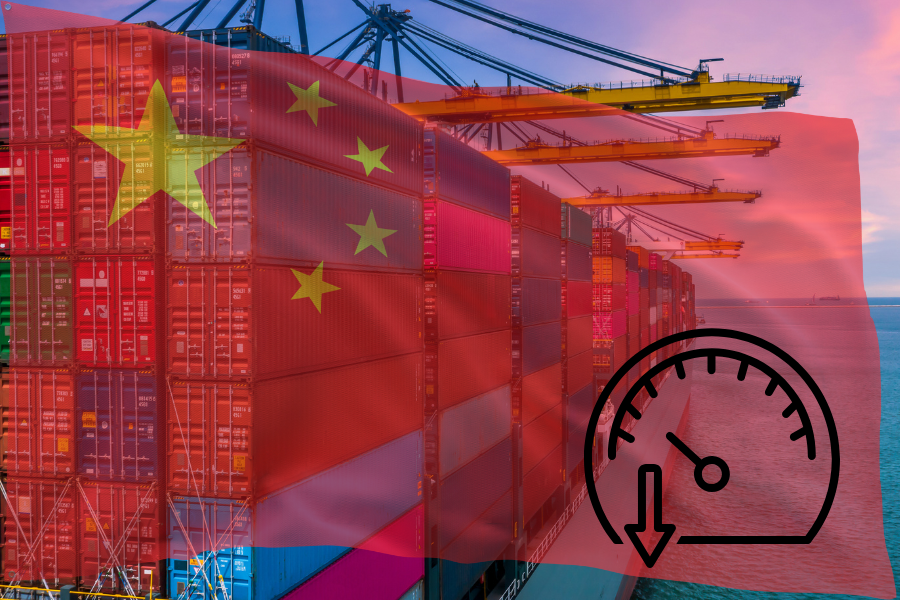
China’s export growth slowed to 2.5% in March, missing forecasts after a strong start to the year. In contrast, imports surged 27.8%—the fastest pace since 2021—driven by high-tech purchases like semiconductors and rising resource costs. As a result, the trade surplus narrowed significantly to $51.1 billion, its lowest level in over a year, amid seasonal distortions and mounting geopolitical tensions.

Read more

China’s solar exports reached a massive 68 GW in March, doubling February’s volume and setting an all-time monthly record. The surge was driven by a global shift away from fossil fuels during the Middle East energy crisis, combined with a rush to buy before a 9% Chinese export tax hike on April 1. Demand was particularly explosive in Asia and Africa, which together accounted for three-quarters of the growth, as countries like India and Nigeria rapidly accelerated their transition to renewable energy.

Read more

Follow us on LinkedIn!

Follow us on LinkedIn!

Schedule an appointment with our experts

Schedule an appointment with our experts