Sweden’s Economy Slows in Early 2026 but Recovery Still Expected
Higher energy prices and weaker consumption weigh on growth, while domestic demand is forecast to improve later this year
Sweden’s Economy Slows in Early 2026 but Recovery Still Expected
Higher energy prices and weaker consumption weigh on growth, while domestic demand is forecast to improve later this year
PUBLISHED April 28, 2026
Growth Loses Momentum in the First Quarter
According to “Konjunkturläget mars 2026” published by Konjunkturinstitutet, growth in the Swedish economy is slowing in the first quarter of 2026. Both public consumption and household spending are expanding at a weaker pace, creating a softer start to the year after previous signs of recovery.
Middle East Conflict Adds New Pressure
The report states that the war in the Middle East is having a dampening effect on the economic outlook. One of the most important transmission channels is higher oil prices, which are increasing inflationary pressure and reducing purchasing power for households while raising production costs for companies.
Inflation Remains Contained
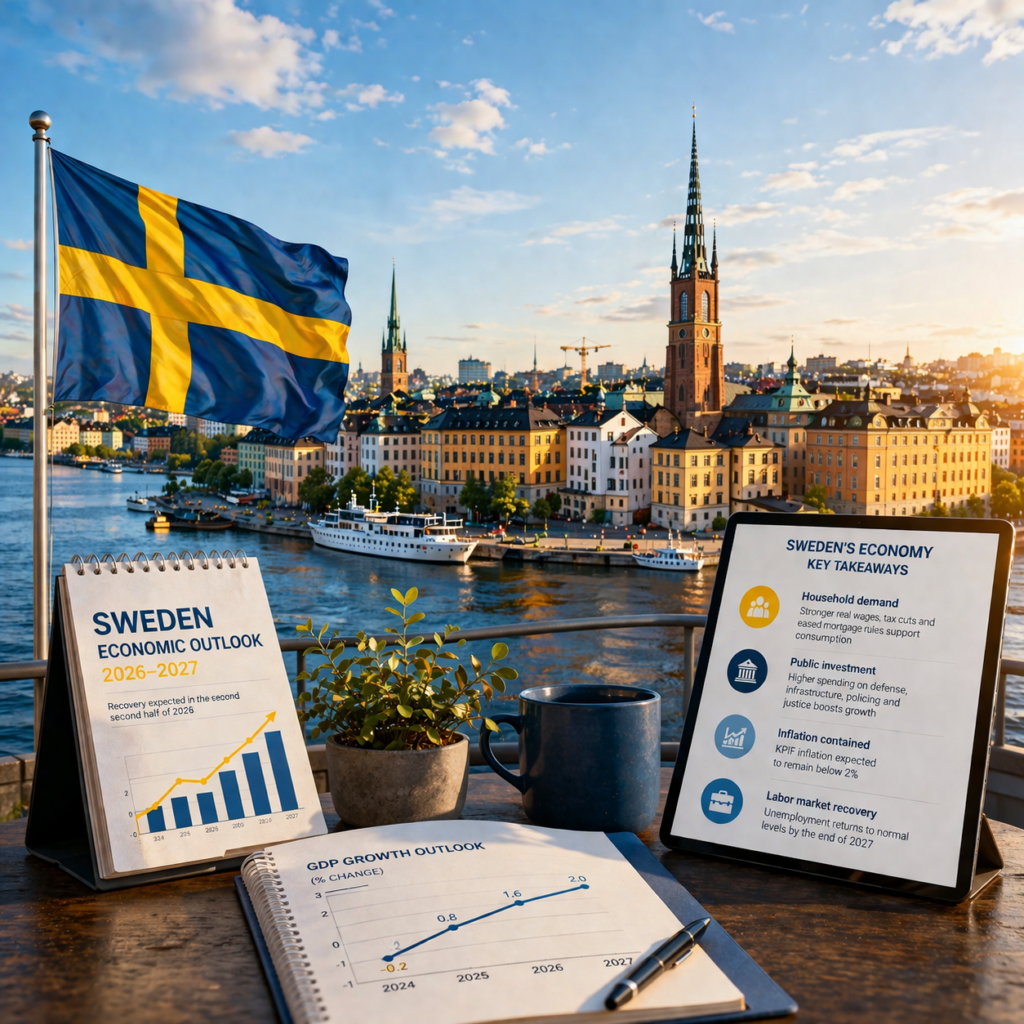
Despite rising energy costs, inflation is still expected to remain relatively moderate. Konjunkturinstitutet noted that the VAT reduction on food introduced in April is working in the opposite direction and helping to offset some price pressure. As a result, KPIF inflation is forecast to stay slightly below the 2% target this year and next year.
Household Demand Seen as Key Driver
The institute expects household consumption to accelerate from the second quarter onward. Rising real wages, tax reductions, and easing mortgage regulations are expected to improve purchasing power. Consumer demand is therefore projected to become one of the most important drivers of Sweden’s recovery during 2026 and 2027.
Growth Loses Momentum in the First Quarter
According to “Konjunkturläget mars 2026” published by Konjunkturinstitutet, growth in the Swedish economy is slowing in the first quarter of 2026. Both public consumption and household spending are expanding at a weaker pace, creating a softer start to the year after previous signs of recovery.
Middle East Conflict Adds New Pressure
The report states that the war in the Middle East is having a dampening effect on the economic outlook. One of the most important transmission channels is higher oil prices, which are increasing inflationary pressure and reducing purchasing power for households while raising production costs for companies.
Inflation Remains Contained
Despite rising energy costs, inflation is still expected to remain relatively moderate. Konjunkturinstitutet noted that the VAT reduction on food introduced in April is working in the opposite direction and helping to offset some price pressure. As a result, KPIF inflation is forecast to stay slightly below the 2% target this year and next year.
Household Demand Seen as Key Driver
The institute expects household consumption to accelerate from the second quarter onward. Rising real wages, tax reductions, and easing mortgage regulations are expected to improve purchasing power. Consumer demand is therefore projected to become one of the most important drivers of Sweden’s recovery during 2026 and 2027.
Public Spending Supports Growth
Government policy is also expected to contribute to stronger activity. The report highlights higher public consumption and increased public investment, particularly linked to defense expansion, infrastructure, policing, and the justice system. These measures are forecast to provide additional support to GDP growth.
Labor Market Recovery Will Take Longer
While the broader economy is expected to improve, the labor market is recovering more slowly. Konjunkturinstitutet said it may take until the end of 2027 before unemployment returns to a more normal level, indicating that employment conditions are likely to lag behind output growth.
Sweden Expects a Better Second Half
Overall, the report suggests that Sweden’s slowdown in early 2026 may be temporary. As the macroeconomic effects of the Middle East conflict gradually fade and domestic demand strengthens, GDP growth is expected to gain pace after summer, with the downturn ending toward the close of the year.
Public Spending Supports Growth
Government policy is also expected to contribute to stronger activity. The report highlights higher public consumption and increased public investment, particularly linked to defense expansion, infrastructure, policing, and the justice system. These measures are forecast to provide additional support to GDP growth.
Labor Market Recovery Will Take Longer
While the broader economy is expected to improve, the labor market is recovering more slowly. Konjunkturinstitutet said it may take until the end of 2027 before unemployment returns to a more normal level, indicating that employment conditions are likely to lag behind output growth.
Sweden Expects a Better Second Half
Overall, the report suggests that Sweden’s slowdown in early 2026 may be temporary. As the macroeconomic effects of the Middle East conflict gradually fade and domestic demand strengthens, GDP growth is expected to gain pace after summer, with the downturn ending toward the close of the year.
Follow us on LinkedIn!
Follow us on LinkedIn!
Would you like to sell your products or services worldwide?
Schedule an appointment with our international sales team
Would you like to sell your products or services worldwide?
Schedule an appointment with our international sales team