Bundesbank warns that weak industry, low investment, and global risks continue to weigh on growth prospects
Germany’s Economy Stalls in Early 2026
Bundesbank warns that weak industry, low investment, and global risks continue to weigh on growth prospects
PUBLISHED April 28, 2026
A Flat Start to the Year
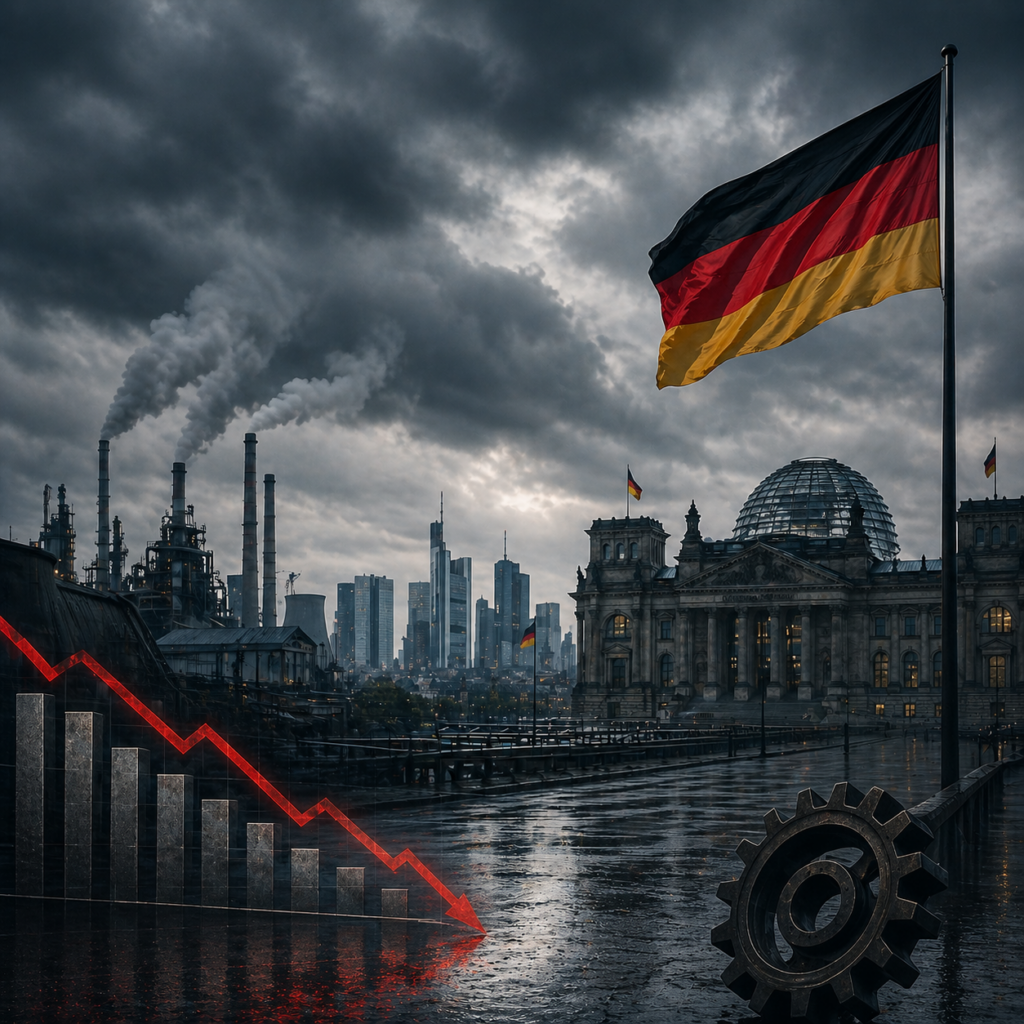
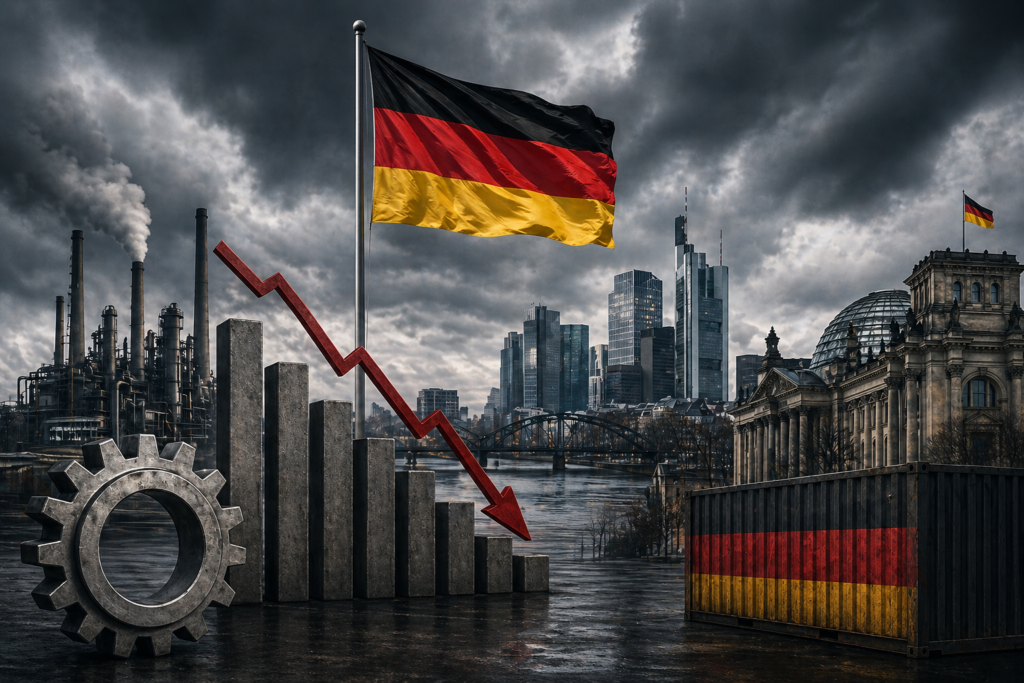
According to “Monatsbericht: Deutsche Wirtschaft im ersten Quartal 2026 schwunglos” published by the Deutsche Bundesbank, Germany’s economy likely stagnated in the first quarter of 2026 after a stronger finish to the previous quarter. The central bank indicated that real GDP probably remained largely unchanged on a seasonally adjusted basis, signaling that the recovery has lost momentum.
Industry Remains the Weak Spot
Germany’s industrial sector continues to face significant challenges. The Bundesbank highlighted that manufacturers are benefiting only to a limited extent from the recovery in global trade due to the country’s weakened competitive position. Low industrial capacity utilization is also reducing incentives for companies to expand production or invest in new projects.
Investment Activity Still Muted
Private investment remains subdued, another important reason for the weak economic performance. Businesses appear cautious in committing capital amid uncertain demand conditions and rising external risks. This hesitation is particularly relevant for Germany, where industrial modernization and productivity growth are closely tied to long-term investment cycles.
Government Support Needs More Time
The Bundesbank noted that looser fiscal policy and public spending measures are expected to support growth later in the year, but their effects are not immediate. Major government orders, especially in defense-related industries, may eventually stimulate production, yet there is often a delay before such contracts translate into measurable output.
Government Support Needs More Time
The Bundesbank noted that looser fiscal policy and public spending measures are expected to support growth later in the year, but their effects are not immediate. Major government orders, especially in defense-related industries, may eventually stimulate production, yet there is often a delay before such contracts translate into measurable output.
Global Risks Add Fresh Pressure
External uncertainty remains another key concern. The report warned that geopolitical tensions, especially in the Middle East, could create additional headwinds through weaker global demand, market uncertainty, and higher energy costs. For Germany’s export-oriented economy, such developments can quickly affect sentiment and production plans.
Why Europe Is Paying Attention
Germany’s economic trajectory is closely watched across Europe. As the eurozone’s largest economy, Germany plays a central role in regional manufacturing, trade flows, and investor confidence. If growth remains weak for longer, the broader European recovery could also lose pace.
The Outlook for the Rest of 2026
Despite the sluggish start, the Bundesbank still sees the potential for improvement later in the year if fiscal stimulus gains traction and global conditions stabilize. However, stronger growth will depend on renewed industrial competitiveness, higher investment activity, and easing geopolitical pressures. For now, Germany remains in a holding pattern rather than a full recovery.
Global Risks Add Fresh Pressure
External uncertainty remains another key concern. The report warned that geopolitical tensions, especially in the Middle East, could create additional headwinds through weaker global demand, market uncertainty, and higher energy costs. For Germany’s export-oriented economy, such developments can quickly affect sentiment and production plans.
Why Europe Is Paying Attention
Germany’s economic trajectory is closely watched across Europe. As the eurozone’s largest economy, Germany plays a central role in regional manufacturing, trade flows, and investor confidence. If growth remains weak for longer, the broader European recovery could also lose pace.
The Outlook for the Rest of 2026
Despite the sluggish start, the Bundesbank still sees the potential for improvement later in the year if fiscal stimulus gains traction and global conditions stabilize. However, stronger growth will depend on renewed industrial competitiveness, higher investment activity, and easing geopolitical pressures. For now, Germany remains in a holding pattern rather than a full recovery.
Follow us on LinkedIn!
Follow us on LinkedIn!
Would you like to sell your products or services worldwide?
Schedule an appointment with our international sales team
Would you like to sell your products or services worldwide?
Schedule an appointment with our international sales team