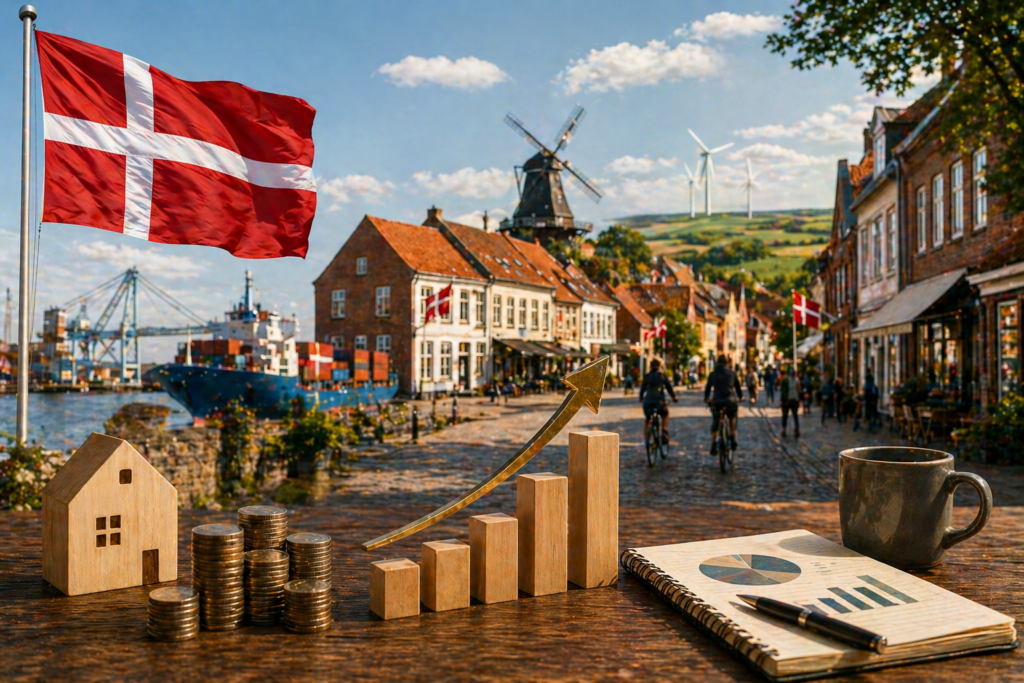
Strong Danish Economy in 2026 – What It Means for Businesses in Tønder Municipality
Rising consumer spending, higher wages, and stable growth could create new opportunities for local companies
Strong Danish Economy in 2026 – What It Means for Businesses in Tønder Municipality
Rising consumer spending, higher wages, and stable growth could create new opportunities for local companies
PUBLISHED April 28, 2026
Denmark Builds on Strong Growth
According to “Stærk dansk økonomi i 2026 – hvad betyder udviklingen for virksomheder i Tønder Kommune?” published by Tønder Erhvervsråd, Denmark’s economy grew strongly in 2025, driven mainly by robust exports, especially from the pharmaceutical industry. New forecasts now suggest that growth in the coming years will rely more on domestic economic activity.
Consumer Spending Expected to Rise
Economists cited in the report expect private consumption to increase during 2026. This is supported by higher wages, lower inflation, tax reductions, and food-related payments to around two million Danish citizens. Together, these factors are expected to strengthen household purchasing power.
Better Conditions for Local Businesses
For companies in Tønder Municipality, stronger household finances may create improved conditions for sales, investment, and general business activity. When consumers feel financially stronger, local retailers, service providers, and small businesses often benefit first.
Labor Market Remains Stable
The report also highlights a stable labor market with rising employment and a growing labor supply. Wages are expected to increase by around 3.5% annually in the coming years, which may translate into meaningful real wage growth if inflation remains contained.
Labor Market Remains Stable
The report also highlights a stable labor market with rising employment and a growing labor supply. Wages are expected to increase by around 3.5% annually in the coming years, which may translate into meaningful real wage growth if inflation remains contained.
Inflation Has Fallen Sharply
Inflation has eased significantly and stood at around 0.8% at the beginning of the year, partly due to the near-complete abolition of electricity taxes. Inflation for 2026 is expected to remain around 1%, before rising to just below 2% in 2027. This lower inflation environment could help restore confidence after a period of caution.
Housing Market and Savings Support Demand
The Danish housing market continues to perform strongly. National home prices rose 7.5% last year, while owner-occupied apartments increased 16.5%. The report also notes that many Danish households still hold significant savings, which could be spent as confidence improves.
Strong Outlook with Export Support
Denmark’s export sector remains a major strength. In 2025, the country’s current account surplus reached a record DKK 390.6 billion, equal to 12.8% of GDP, driven mainly by goods exports. Combined with stronger domestic demand, this gives Danish businesses—including those in Tønder—a supportive environment for 2026.
Inflation Has Fallen Sharply
Inflation has eased significantly and stood at around 0.8% at the beginning of the year, partly due to the near-complete abolition of electricity taxes. Inflation for 2026 is expected to remain around 1%, before rising to just below 2% in 2027. This lower inflation environment could help restore confidence after a period of caution.
Housing Market and Savings Support Demand
The Danish housing market continues to perform strongly. National home prices rose 7.5% last year, while owner-occupied apartments increased 16.5%. The report also notes that many Danish households still hold significant savings, which could be spent as confidence improves.
Strong Outlook with Export Support
Denmark’s export sector remains a major strength. In 2025, the country’s current account surplus reached a record DKK 390.6 billion, equal to 12.8% of GDP, driven mainly by goods exports. Combined with stronger domestic demand, this gives Danish businesses—including those in Tønder—a supportive environment for 2026.
Follow us on LinkedIn!
Follow us on LinkedIn!
Would you like to sell your products or services worldwide?
Schedule an appointment with our international sales team
Would you like to sell your products or services worldwide?
Schedule an appointment with our international sales team