IHS cuts growth forecasts as war-driven energy prices raise inflation and weaken confidence
Austria’s Recovery Hit by New Global Shock
IHS cuts growth forecasts as war-driven energy prices raise inflation and weaken confidence
PUBLISHED April 28, 2026
Growth Outlook Revised Lower
According to “Spring Forecast of the Austrian Economy 2026–2027” published by the Institute for Advanced Studies (IHS), Austria’s expected economic recovery has weakened sharply. The institute reduced its GDP growth forecast to 0.5% for 2026 and 0.8% for 2027, citing the economic disruptions linked to the Iran war and the resulting energy price shock.
Energy Prices Return as a Major Threat
IHS said rising oil and gas prices have become the central risk to Austria’s near-term outlook. Brent crude is expected to average around 92.5 USD per barrel in 2026, while gas prices are forecast to remain elevated for longer. Higher energy costs are putting fresh pressure on households, businesses, and industrial competitiveness.
Inflation Climbs Above Target Again
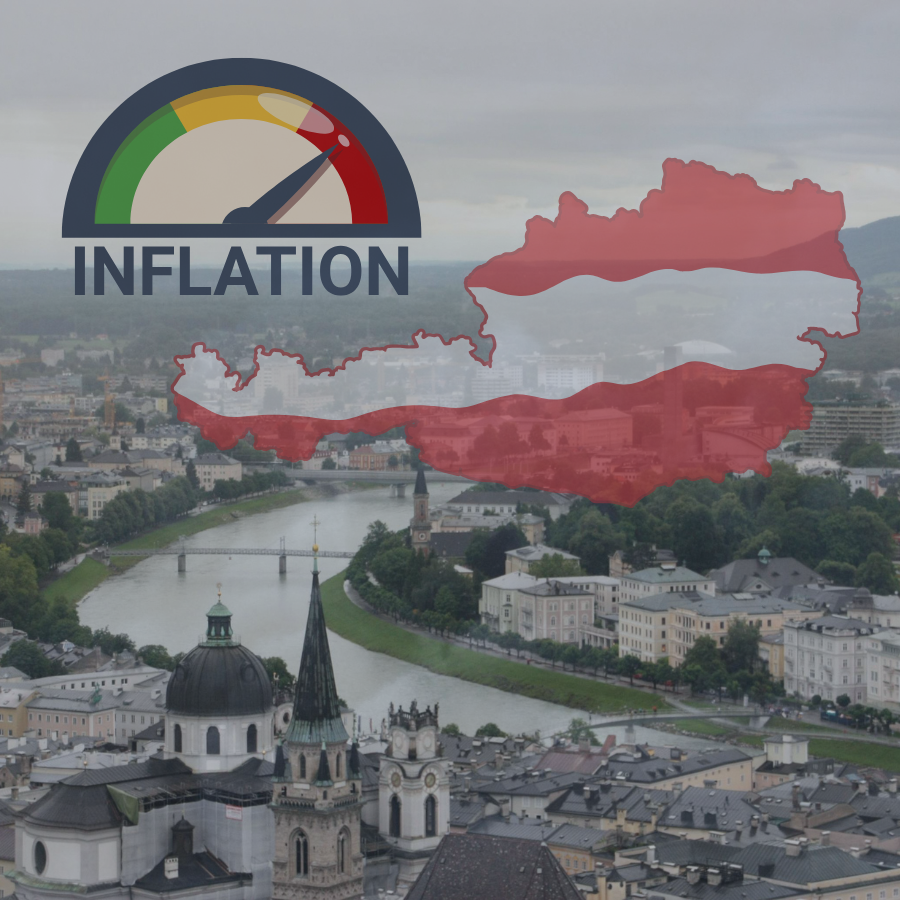
After beginning the year near 2.0%, inflation is now expected to average 2.9% in 2026 and 2.4% in 2027, remaining above the European Central Bank’s 2% target. IHS estimates that without the Iran conflict, inflation would be significantly lower. This means Austria may face slower growth while prices remain stubbornly high.
Consumers and Investment Lose Momentum
Private consumption is expected to rise by only 0.5% this year, while gross fixed investment is forecast to remain flat. Businesses are becoming more cautious due to uncertainty, weaker global demand, and less favorable financing conditions. Construction activity is also expected to decline again, particularly in residential building.
Consumers and Investment Lose Momentum
Private consumption is expected to rise by only 0.5% this year, while gross fixed investment is forecast to remain flat. Businesses are becoming more cautious due to uncertainty, weaker global demand, and less favorable financing conditions. Construction activity is also expected to decline again, particularly in residential building.
Exports Face a Difficult Environment
Austria’s export sector is projected to grow modestly, but risks remain elevated. IHS expects goods exports to increase by only 0.6% in 2026, as weak international demand and geopolitical instability weigh on trade flows. For an open economy like Austria, export softness can quickly affect employment and investment confidence.
Labor Market Holds Relatively Steady
Despite slower growth, the labor market is expected to remain stable. IHS forecasts unemployment at 7.5% in 2026 and 7.4% in 2027, suggesting companies are still holding onto workers despite weaker conditions. This could help prevent a deeper downturn in domestic demand.
A More Fragile Year Ahead
Austria now enters the rest of 2026 with a more uncertain economic path. If energy prices ease and geopolitical tensions calm, growth could improve in 2027. But if commodity markets remain volatile, Austria may continue facing the difficult combination of weak expansion, cautious consumers, and persistent inflation.
Exports Face a Difficult Environment
Austria’s export sector is projected to grow modestly, but risks remain elevated. IHS expects goods exports to increase by only 0.6% in 2026, as weak international demand and geopolitical instability weigh on trade flows. For an open economy like Austria, export softness can quickly affect employment and investment confidence.
Labor Market Holds Relatively Steady
Despite slower growth, the labor market is expected to remain stable. IHS forecasts unemployment at 7.5% in 2026 and 7.4% in 2027, suggesting companies are still holding onto workers despite weaker conditions. This could help prevent a deeper downturn in domestic demand.
A More Fragile Year Ahead
Austria now enters the rest of 2026 with a more uncertain economic path. If energy prices ease and geopolitical tensions calm, growth could improve in 2027. But if commodity markets remain volatile, Austria may continue facing the difficult combination of weak expansion, cautious consumers, and persistent inflation.
Follow us on LinkedIn!
Follow us on LinkedIn!
Would you like to sell your products or services worldwide?
Schedule an appointment with our international sales team
Would you like to sell your products or services worldwide?
Schedule an appointment with our international sales team