Click on your selected market and read the latest business news from…
USA · Japan · China · Canada · Germany · Austria · Switzerland · Luxembourg · Belgium · Netherlands · Sweden · Norway · Finland · Denmark
ermany entered 2026 with a spring in its step, buoyed by artificial-intelligence investment, cheaper financing and easing trade tensions. That momentum has since collided with a harder reality. The Federal Ministry for Economic Affairs and Energy’s June report describes an economy pulling in two directions at once — a goods-producing sector edging back to life even as the conflict in the Middle East threatens to choke off the export recovery just as it was gaining traction.
For months, German households watched energy costs climb relentlessly as the war in the Middle East pushed oil markets into turmoil. In June, that pressure finally eased. The Federal Statistical Office’s latest reading shows headline inflation slowing for a second straight month — but a closer look at the numbers reveals just how uneven the relief has been, and how fragile the improvement could prove.
Three years of crisis. Just two quarters of growth. A wave of corporate insolvencies that refuses to fully recede. Germany’s recent economic history, as KPMG’s ongoing analysis lays it out, has been a story of resilience without momentum. Now, cautious optimism is creeping back in — but the professional-services giant’s own verdict is blunt: without deeper reform, the upswing will remain modest at best.
At first glance, Austria’s wholesale price data for June looks like good news: growth slowed for a second straight month. But pull back the curtain on the sector-by-sector breakdown, and a far more uneven picture emerges — one where falling fuel costs are masking a startling surge in plastics and rubber prices that manufacturers further down the supply chain will soon have to reckon with.
Austria has high living standards, strong institutions and a well-educated workforce — and it has just come through its longest recession since the end of the Second World War. The OECD’s latest survey finds growth finally returning, but warns that the fiscal deficit left behind by the downturn will not close on its own. The recovery, in other words, may be the easy part.
Just as Middle East tensions flared anew, Austria’s economists were quietly revising their inflation forecasts downward. Bank Austria’s latest market commentary describes an economy absorbing a European Central Bank rate hike and a fresh round of geopolitical escalation without losing its footing — a resilience that, if it holds, would mark a rare piece of good news in an otherwise turbulent year.
Switzerland has built a reputation for economic steadiness that other European economies can only envy. So when the first-quarter growth figures were quietly revised lower, it barely made headlines outside the financial press. But the details behind the revision — stalling consumer demand, a drop in investment — hint at cracks in a growth model that had, until recently, seemed almost immune to the turbulence sweeping the rest of the continent.

For eight straight months, Switzerland’s inflation rate had been quietly climbing. In July, that streak broke. The retreat lines up almost exactly with what economists had predicted — a rare case of a forecast playing out precisely as expected, and a signal that the disinflationary effects of falling oil prices are finally working their way through even one of Europe’s most insulated economies.
Switzerland does not import much oil directly from the Persian Gulf, and its economy is famously insulated from many of the shocks that batter its neighbours. Yet even here, the Federal Government’s own forecasters have found it necessary to lower their growth projections — a small but telling sign that no economy, however diversified, is entirely immune to a geopolitical crisis playing out on the other side of the world.
Most central banks would celebrate falling inflation without hesitation. Sweden’s Riksbank has more complicated feelings. The latest flash estimate from Statistics Sweden shows consumer prices cooling for a second straight month — pushing the inflation-targeting measure further from, not closer to, the 2 percent goal the bank is trying to hit from below, a genuinely unusual policy predicament in a European landscape otherwise preoccupied with inflation running too hot rather than too cold.
Every European government is currently making the same argument in one form or another: our economy is better positioned than most to withstand what’s coming from the Middle East. Sweden’s government has a genuinely strong case to make. According to its own press release, the country is set to have the lowest inflation in the entire European Union in 2026 — a claim that, if it holds, would make Sweden something of an outlier in this year’s difficult European economic landscape.
Forecasting has rarely felt as uncertain as it does in mid-2026. Rather than commit to a single projection, the OECD’s latest Economic Outlook lays out two distinct paths for the global economy — and, by extension, for Sweden — depending entirely on how quickly energy production in the Gulf recovers from the ongoing conflict. It is an unusually candid admission of just how much a single geopolitical variable now dominates every other forecasting assumption.
It takes a particular kind of economic report to warn a country as wealthy as Norway that it needs to change course. Yet that is precisely what the OECD’s newly launched Economic Survey does — presented directly to Norway’s Finance Minister, Jens Stoltenberg, at a press conference in Oslo. The message beneath the diplomatic language: prosperity built on oil and gas revenues cannot substitute indefinitely for productivity growth that has quietly stalled.
Central banks like clean stories: inflation is either too high or under control, growth is either too strong or too weak. Norway’s central bank had neither luxury in June. Capacity utilisation was drifting down even as inflation risk lingered — a genuinely ambiguous picture that led Norges Bank to do the one thing central banks are often most comfortable doing when the signals conflict: nothing.
Timing, in central banking, is everything. Just days before Norges Bank’s June rate decision, a closely watched survey of business sentiment landed with a thud — not a collapse, but enough of a cooling to give policymakers the cover they needed to leave rates unchanged. The survey’s real message wasn’t about the present so much as the months ahead: calmer conditions, businesses said, than anyone had expected back in March.
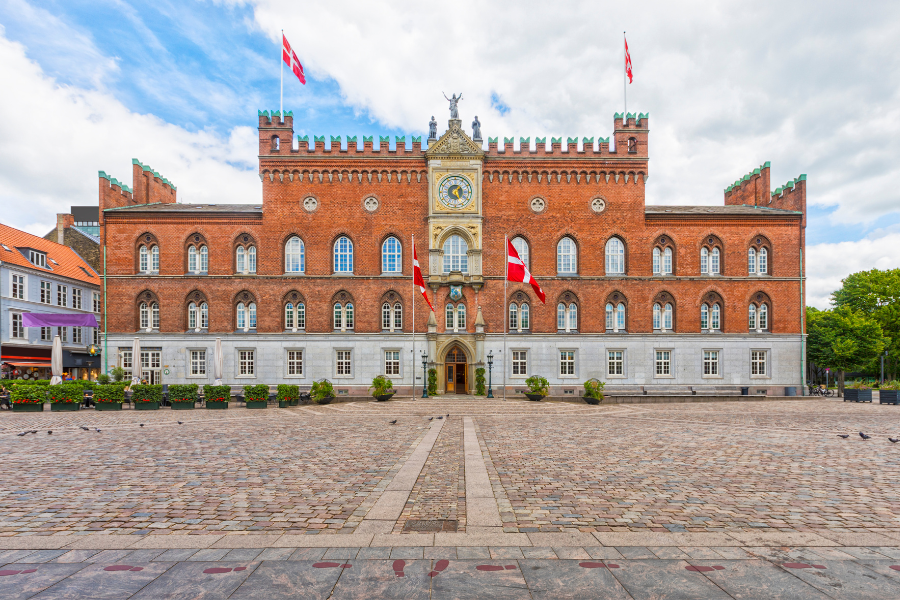
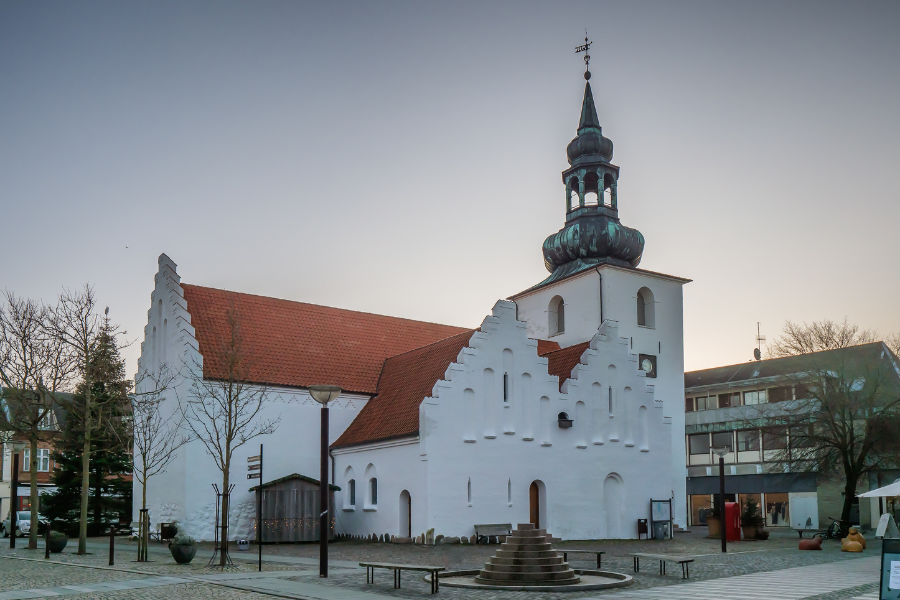
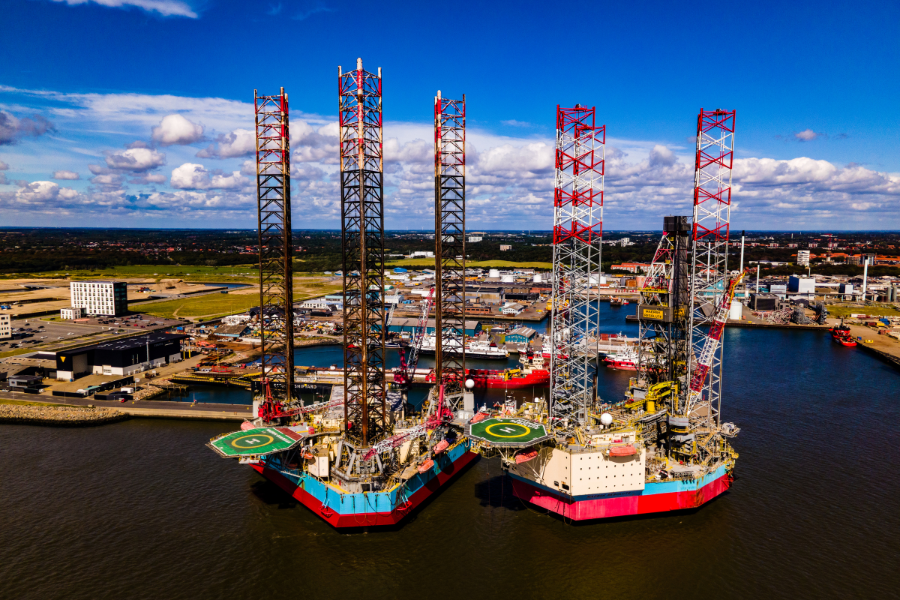
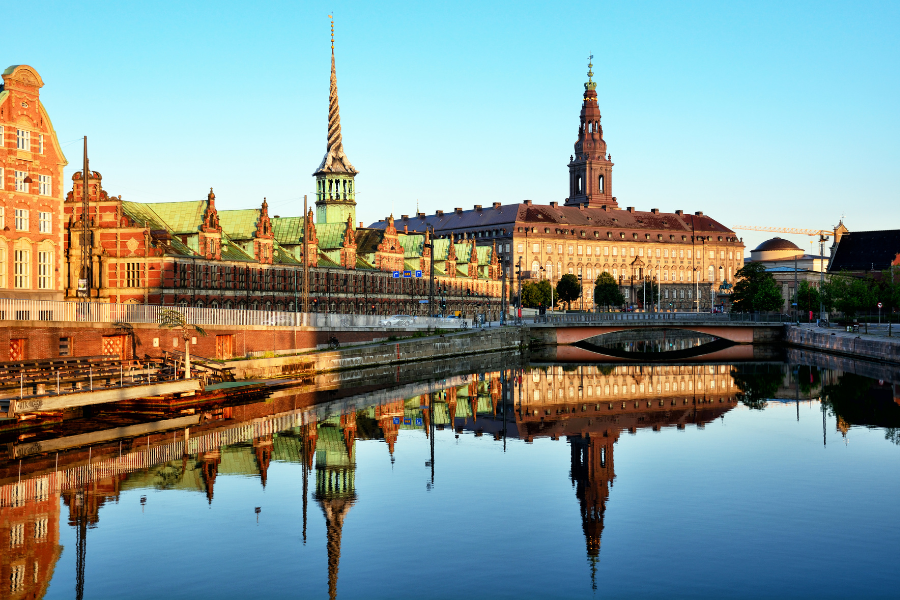
It is not every year that a single pharmaceutical company can single-handedly move a national growth forecast. But that is essentially what is happening in Denmark, where Danske Bank has raised its 2026 growth projection twice in six months — each time citing the same underlying driver. For a small, open economy, this kind of concentration is either a remarkable stroke of fortune or a warning sign about what happens if that one engine stalls.
Denmark checks nearly every box economists look for: a growth-friendly business environment, a strong labour market, sound public finances. Yet the OECD’s latest survey identifies a persistent fault line running through the country’s success story — one where headline growth, driven overwhelmingly by multinational firms, masks a domestic economy that has struggled to keep pace.
A six-month low is not the kind of benchmark most economies want to be measured against — but for Denmark’s households in May, that was the reality. June brought a genuine improvement, with confidence indicators moving in a more encouraging direction across the board. Whether this is the start of a sustained recovery in sentiment, or simply a bounce off an unusually weak base, is the question the data leaves open.
After a stretch of stagnation that tested the patience of policymakers and households alike, Finland’s central bank is finally ready to use the word “turning point.” Growth is picking up, exports and investment are rising, and private consumption is showing its first signs of life in years. But the Bank of Finland’s own forecast comes wrapped in a caveat that has become almost universal across Europe in 2026: none of it is guaranteed if the Middle East conflict drags on.
Good news and bad news rarely arrive on the same day with such symmetry. Finland’s central bank lifted its 2026 growth outlook in June, ending two years of stagnation — a genuine cause for relief in Helsinki. But the same announcement carried an unwelcome companion: public debt is now projected to climb toward levels that will sharpen an already difficult fiscal debate facing the government.

Finland’s economic struggles did not begin with the Middle East conflict, and the OECD’s latest snapshot makes that clear from its opening lines. Beneath the near-term forecast numbers lies a decade-long story of underperformance — weakening productivity, a persistent gap in output per hour worked relative to peers — that the current recovery, however welcome, does little to resolve on its own.
Long-range economic forecasts rarely make for dramatic reading, but Belgium’s latest five-year outlook contains a genuinely striking contrast: hundreds of thousands of new jobs projected through the end of the decade, alongside a government deficit trajectory that keeps climbing rather than stabilising. The Federal Planning Bureau’s own numbers suggest Belgium is set to get more prosperous and less fiscally sound, simultaneously.
Not every European economy is equally exposed to the disruption radiating out from the Middle East. Belgium, according to the OECD’s latest global outlook, sits closer to the more vulnerable end of that spectrum — its heavily fossil-fuel-dependent industrial base leaving it more exposed than many neighbours to the specific risk of physical shortages, not just higher prices.
A growth rate cut nearly in half would normally be treated as unambiguous bad news. The National Bank of Belgium’s latest macroeconomic projections frame it differently — as a temporary dip on the way to a labour market that, by 2028, will have added tens of thousands of jobs. Whether that framing holds up will depend on how “temporary” the current slowdown actually turns out to be.
Central banks are often criticised for hedging their language to the point of meaninglessness. De Nederlandsche Bank did not do that in June. Its forecast cut came with a specific, named cause — disrupted global trade linked directly to the Iran conflict — and a reassuring historical comparison that Dutch households and businesses may find at least somewhat comforting.
The same month De Nederlandsche Bank was cutting its growth forecast, Statistics Netherlands published a business cycle tracker showing genuine improvement across consumer and producer sentiment. Both readings can be true simultaneously — and together, they capture a Dutch economy that is neither collapsing nor thriving, but adjusting in real time to a difficult external environment while still finding pockets of resilience.

Most economic forecasts are built on a single, most-likely path. De Nederlandsche Bank’s Spring Projections take the unusual step of adding two additional scenarios — not because the central bank expects them, but because it wants Dutch policymakers and businesses to understand exactly what is at stake if oil and gas prices stay elevated for longer than currently assumed, or climb even higher.
There is a particular kind of irony in a survey revealing record-low confidence in the national economy during the very year the government had branded “the year of competitiveness.” Luxembourg’s Chamber of Commerce delivered exactly that irony in its fifteenth Economy Barometer — a survey that found companies broadly confident in their own individual futures, even as their collective faith in the country’s trajectory reached its weakest point since the measure began.
Luxembourg has long been able to rely on its financial sector’s resilience and its historically low public debt to weather periods of broader economic softness. The IMF’s latest Article IV consultation confirms those buffers remain intact — but the underlying diagnosis is more sobering than the country’s reputation for financial stability might suggest, with growth lagging peers and a public sector playing an outsized role in an economy that has yet to regain its previous momentum.
A stagnant GDP reading rarely counts as encouraging news, but Statec’s latest Conjoncture Flash makes the case that Luxembourg’s flat first-quarter performance actually compares favourably with much of the eurozone once the details are properly unpacked — and that the real test still lies ahead, as tensions linked to the Strait of Hormuz threaten to weigh on the second quarter regardless of how it eventually resolves.
A falling unemployment rate usually reads as good news. Not this time. Behind the headline decline lies a labour force shrinking faster than jobs are being created — a distinction that changes the entire meaning of America’s June employment report, and one that economists parsing the details were quick to flag.
There is a subtle but important distinction buried in the Mercatus Center’s latest economic analysis: it is not the existence of tariffs that manufacturers cite as their top concern, but the unpredictability of what comes next. Living with a known tariff regime is one thing, the report suggests — living with genuine uncertainty about the next policy shift entirely is another, and considerably more damaging to long-term investment decisions.


There’s a phrase in U.S. Bank’s June economic outlook that deserves to be unpacked carefully: “defensive stability.” It sounds reassuring, almost by design. But the underlying description is anything but comforting — an economy where consumer spending strength is becoming more tightly tied to household wealth even as real income shrinks, a combination the bank’s own economists describe as rising fragility with a narrowing margin for error.
Recession talk has a way of feeding on itself — one weak quarter becomes a narrative, and the narrative starts shaping forecasts for the rest of the year. That’s roughly what happened to Canada’s 2026 growth outlook in June, as a surprise contraction to start the year forced economists into a round of downgrades severe enough to produce the weakest full-year growth pace in over a decade outside the pandemic itself.
Economic narratives can shift remarkably fast. Barely four days after Bloomberg reported economists slashing Canada’s full-year growth forecast, the same news organisation was describing a second-quarter rebound already underway — powered by exactly the kind of resource-sector strength that has long defined Canada’s growth cycles. The two stories aren’t necessarily contradictory, but together they capture just how quickly the narrative around Canada’s economy has been moving in 2026.
Eighteen thousand new jobs sounds like solid news for any economy. But the composition of those jobs — concentrated in part-time work and lower-wage service sectors — combined with a candid assessment from bank economists about what’s really driving the falling unemployment rate, tells a considerably more nuanced story than the headline figure alone suggests.
Tokyo’s inflation data has long served as an early signal for where Japan’s national figures are headed — and June’s reading gave the Bank of Japan little reason to change course. With prices excluding fresh food climbing at a pace that keeps the central bank’s tightening bias firmly intact, the capital’s numbers offer one more data point supporting Japan’s slow, deliberate exit from decades of ultra-loose monetary policy.
Global demand for artificial intelligence-related goods has been one of the few consistently bright spots in an otherwise turbulent 2026 for the world economy. Japan is benefiting from that demand — but according to the Daiwa Institute of Research, not nearly as much as it could be. The gap between opportunity and capture, the report suggests, comes down to a familiar and long-diagnosed Japanese weakness: insufficient domestic investment.
Two consecutive quarters of positive growth had given Japan genuine reason for optimism heading into 2026 — a moderate but real recovery, gaining traction after years of uneven performance. The Daiichi Life Research Institute’s latest outlook confirms that momentum was real, even as it forecasts a sharp near-term deceleration driven by the same Middle East disruption reshaping forecasts across the globe.
Trade tensions between the world’s two largest economies have dominated headlines for years, making it all the more notable when a rebound in shipments to the United States becomes the primary force lifting China’s economic momentum. That’s precisely the story the latest China Beige Book survey tells — a second quarter that ended on a considerably more positive note than it began, even as one closely watched category, tourism spending, kept lagging behind.
Rarely does an economy post its weakest growth in years while simultaneously recording its strongest export performance since 2021. China managed exactly that combination in the second quarter of 2026 — a split-screen economy where booming shipments abroad, fuelled by the global AI boom, could not offset a deepening collapse in domestic fixed-asset investment.
For an economy that set itself a growth target of 4.5 to 5 percent for the entire year, a second-quarter reading of 4.3 percent already sits below the floor of the government’s own ambitions. NPR’s coverage of the release captures a Chinese economy undergoing what one analyst described as a “significant transition” — one where the traditional export-manufacturing engine is still running, even as the consumer side of the ledger continues to lag noticeably behind.