

BUSINESS NEWS FROM NORWAY

BUSINESS NEWS FROM NORWAY

Norway's Economy at the End of 2025

Norway’s Trade Surplus Hits Four-Year Low as Oil Revenues Fall

Sales Magazine powered by ReformBusiness, your external sales partner

Norway's Economy at the End of 2025

Norway’s Trade Surplus Hits Four-Year Low as Oil Revenues Fall

Sales Magazine powered by ReformBusiness, your external sales partner

PUBLISHED January 16, 2026

According to “Handelsoverskuddet i 2025 på det laveste nivået på fire år” from Statistisk sentralbyrå (SSB), Norway’s foreign trade results for 2025 point to a clear turning point after several exceptionally strong years. The country’s trade surplus, long supported by booming energy exports, has fallen to its lowest level in four years.
Although Norway remains one of Europe’s most important suppliers of oil, gas and seafood, the overall balance between exports and imports has become less favorable. Global market conditions shifted during the year, reducing income from key commodities. At the same time, domestic demand for foreign goods remained solid. This combination gradually narrowed the gap between what Norway sells abroad and what it buys from other countries. For policymakers and investors alike, the figures signal a more complex and less predictable trade environment. They also underline how closely Norway’s external position is tied to developments beyond its borders.
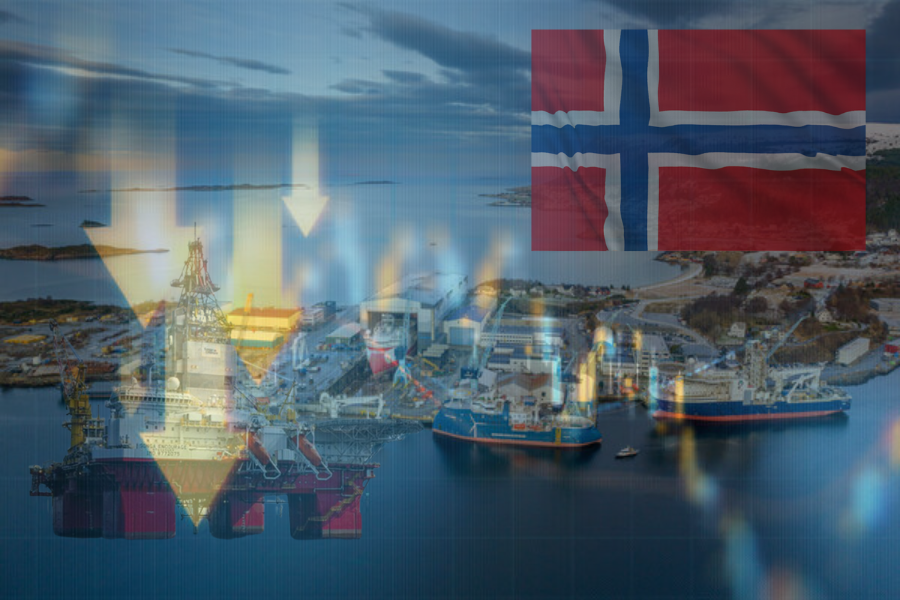

Energy exports have traditionally been the backbone of Norway’s trade surplus, but 2025 proved more challenging. Crude oil prices were noticeably lower on average than in the previous year, directly reducing export revenues. Natural gas markets also cooled after the extreme volatility seen earlier in the decade. European storage levels were high, and alternative suppliers eased pressure on demand for Norwegian gas. Even stable production volumes could not fully compensate for softer prices. As a result, total export income from petroleum products declined. This marked a contrast to the record-breaking years following the energy crisis in Europe. The shift revealed how vulnerable national trade figures remain to global energy cycles.
While exports weakened, imports moved in the opposite direction during 2025. Norwegian households and businesses increased their purchases of vehicles, electronics and industrial equipment from abroad. Technological upgrades and investments in infrastructure boosted demand for specialized machinery. At the same time, a stronger Norwegian krone made foreign products relatively cheaper. This encouraged companies to source more goods internationally. Consumer confidence also remained stable, supporting steady import growth. Together, these trends added pressure to the trade balance. They reinforced the downward movement of the surplus observed throughout the year.

Weaker Export Value and Energy Prices

In 2025, Norway exported goods worth NOK 1,775 billion — a 1.8 % decrease compared with 2024. This was the first annual drop in total export value since the peak of petroleum exports in 2022. Much of this decline can be traced to the oil market: although the volume of crude oil exported edged up slightly, its value fell sharply as global prices weakened over the year. Production increases among OPEC+ countries and the United States, combined with softer demand, created a supply surplus that weighed on prices. Natural gas presented a mixed picture. Higher average prices early in 2025 helped lift its export value, but prices waned later in the year due to abundant supply in European markets and strong LNG imports, contributing to overall weaker energy export income. Despite these challenges, Norway’s gas exports remained substantial, with over 115 billion standard cubic meters shipped in 2025, though this volume was modestly below the prior year.

Weaker Export Value and Energy Prices

In 2025, Norway exported goods worth NOK 1,775 billion — a 1.8 % decrease compared with 2024. This was the first annual drop in total export value since the peak of petroleum exports in 2022. Much of this decline can be traced to the oil market: although the volume of crude oil exported edged up slightly, its value fell sharply as global prices weakened over the year. Production increases among OPEC+ countries and the United States, combined with softer demand, created a supply surplus that weighed on prices. Natural gas presented a mixed picture. Higher average prices early in 2025 helped lift its export value, but prices waned later in the year due to abundant supply in European markets and strong LNG imports, contributing to overall weaker energy export income. Despite these challenges, Norway’s gas exports remained substantial, with over 115 billion standard cubic meters shipped in 2025, though this volume was modestly below the prior year.

Mainland Exports and Other Sectors

Outside of oil and gas, Norway’s mainland exports continued to perform well. Total mainland export value reached NOK 765.6 billion in 2025, up 7.7 % compared with 2024, supported by strong demand for Norwegian fish products. Fish exports, in particular, reached nearly NOK 174 billion, driven by growth in aquaculture and rising prices for species such as crab and wild-caught fish, offsetting declining volumes in some categories. Farmed salmon accounted for the majority of the value, with significant increases in both volume and total export value. Other export gains included a more than twofold increase in electrical machinery and equipment, largely due to large contracts related to offshore wind and energy infrastructure projects.

Rising Imports and Trade Balance Impact

Norway’s imports rose to NOK 1,112 billion in 2025, an increase of 2.2 % compared with the previous year. Much of this growth stemmed from the import of passenger vehicles, which reached their highest value in three years, and from continued strong demand for computer and data-center equipment. The stronger Norwegian krone also played a role, making foreign goods relatively cheaper and encouraging higher import activity. Meanwhile, higher import volumes of liquid natural gas and other consumer goods contributed to the overall import increase. As a result of weaker exports and stronger imports, Norway’s trade surplus declined by 7.9 %, ending the year at NOK 663 billion — its lowest level since 2021.
Sales Magazine powered by ReformBusiness, your external sales partner

A Shift in Norway’s Trade Dynamics

While Norway continues to maintain a substantial trade surplus, 2025’s figures mark a notable departure from the higher levels seen in recent years. Lower oil revenues and rising imports have reshaped the trade balance, underscoring the economy’s sensitivity to global energy markets and currency movements. At the same time, robust performance in mainland exports — particularly seafood and industrial machinery — highlights the diversified nature of Norway’s trade portfolio. Continued monitoring of energy prices and import trends will be crucial in assessing future prospects for the trade account.

Mainland Exports and Other Sectors

Outside of oil and gas, Norway’s mainland exports continued to perform well. Total mainland export value reached NOK 765.6 billion in 2025, up 7.7 % compared with 2024, supported by strong demand for Norwegian fish products. Fish exports, in particular, reached nearly NOK 174 billion, driven by growth in aquaculture and rising prices for species such as crab and wild-caught fish, offsetting declining volumes in some categories. Farmed salmon accounted for the majority of the value, with significant increases in both volume and total export value. Other export gains included a more than twofold increase in electrical machinery and equipment, largely due to large contracts related to offshore wind and energy infrastructure projects.

Rising Imports and Trade Balance Impact

Norway’s imports rose to NOK 1,112 billion in 2025, an increase of 2.2 % compared with the previous year. Much of this growth stemmed from the import of passenger vehicles, which reached their highest value in three years, and from continued strong demand for computer and data-center equipment. The stronger Norwegian krone also played a role, making foreign goods relatively cheaper and encouraging higher import activity. Meanwhile, higher import volumes of liquid natural gas and other consumer goods contributed to the overall import increase. As a result of weaker exports and stronger imports, Norway’s trade surplus declined by 7.9 %, ending the year at NOK 663 billion — its lowest level since 2021.
Sales Magazine powered by ReformBusiness, your external sales partner

A Shift in Norway’s Trade Dynamics

While Norway continues to maintain a substantial trade surplus, 2025’s figures mark a notable departure from the higher levels seen in recent years. Lower oil revenues and rising imports have reshaped the trade balance, underscoring the economy’s sensitivity to global energy markets and currency movements. At the same time, robust performance in mainland exports — particularly seafood and industrial machinery — highlights the diversified nature of Norway’s trade portfolio. Continued monitoring of energy prices and import trends will be crucial in assessing future prospects for the trade account.

Follow us on LinkedIn!

Follow us on LinkedIn!

Would you like to sell your products or services worldwide?

Schedule an appointment with our international sales team

Would you like to sell your products or services worldwide?

Schedule an appointment with our international sales team