

BUSINESS NEWS FROM NORWAY

BUSINESS NEWS FROM NORWAY

Norway's Economy at the End of 2025

Norway’s Price Growth Tops Forecast as Consumer Costs Lift in December

Sales Magazine powered by ReformBusiness, your external sales partner

Norway's Economy at the End of 2025

Norway’s Price Growth Tops Forecast as Consumer Costs Lift in December

Sales Magazine powered by ReformBusiness, your external sales partner

PUBLISHED January 16, 2026

According to “Prisveksten høyere enn forventet i desember” — an article on Nettavisen.no, Norway ended 2025 with consumer prices rising faster than economists had anticipated. According to Statistics Norway (SSB), the annual consumer price index (CPI) in December climbed by 3.2 % compared with the same month a year earlier — slightly above the market forecasts. This acceleration was unexpected given subdued inflation trends earlier in the year, and underscored that price pressures have remained resilient despite tighter monetary policy. Rising costs have broad implications for households, particularly on everyday goods and services. The higher-than-expected rate suggests inflation is not yet easing as quickly as central bankers and analysts had hoped. Financial markets and policymakers now face fresh questions about the timing of interest-rate cuts. Both consumers and businesses are keeping a close watch on how inflation shapes economic behavior in 2026.

The increase in December was influenced by a mix of factors, but food prices were among the most significant drivers. Prices of groceries and non-alcoholic beverages rose more noticeably than in previous months, reflecting broader cost pressures from supply chain and commodity markets. Transport costs also contributed to the headline inflation, as did energy prices that declined less than expected. Typically, December sees some price moderation due to seasonal discounts, but in 2025 that effect was weaker than usual, keeping the year-on-year figure elevated. Underlying core inflation — which strips out volatile energy and tax effects — also came in slightly above expectations at about 3.1 %. These components paint a picture of an inflation rate that is not only persistent but also broadly based across categories of consumer spending.
The stronger inflation reading has implications for Norway’s central bank and monetary policy. Market expectations had leaned toward multiple interest rate cuts in 2026, but higher inflation could delay that process or reduce the number of cuts. Economists have noted that inflation in Norway has been “stubborn,” with core prices staying elevated for an extended period. Central bankers typically target an inflation rate closer to 2 %, meaning a 3 %+ outcome signals continued cost pressures in the economy. For households, persistent inflation means that real purchasing power may grow only slowly, even if wages rise. For businesses, the outlook for borrowing costs and investment conditions becomes more uncertain. Overall, the data underline that inflation dynamics remain an important watch-point as Norway navigates its post-pandemic economic path.

Headline Inflation Surpasses Expectations

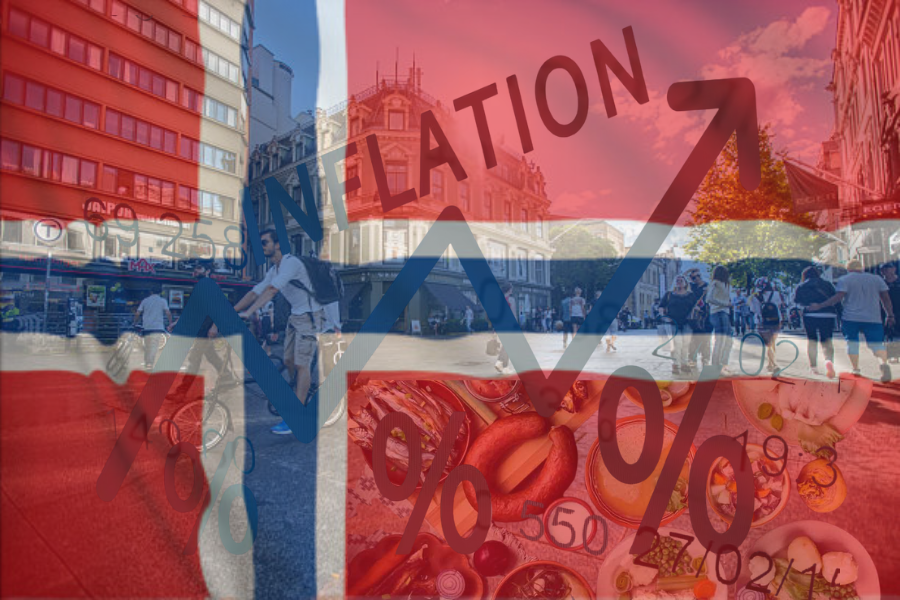
December 2025’s inflation rate of 3.2 % year-on-year was higher than the consensus forecast of around 2.9 %, surprising many economists and analysts. This outcome marked a continued trend of inflation hovering above the central bank’s long-term target of 2 %. The small monthly increase of 0.1 % from November to December reinforced that price pressures were still in play despite seasonal discounts that usually temper year-end prices. The sectors with notable price increases included food and non-alcoholic beverages, which rose more than the average CPI, and transport costs that edged up compared with the prior year, partly reflecting higher fuel and travel expenses. Some energy price components also declined less than in past Decembers, contributing to the elevated headline figure. Taken together, these data show that inflation persists across a range of consumer goods and services, signaling that the underlying price environment remains firmer than many anticipated.
Headline Inflation Surpasses Expectations

December 2025’s inflation rate of 3.2 % year-on-year was higher than the consensus forecast of around 2.9 %, surprising many economists and analysts. This outcome marked a continued trend of inflation hovering above the central bank’s long-term target of 2 %. The small monthly increase of 0.1 % from November to December reinforced that price pressures were still in play despite seasonal discounts that usually temper year-end prices. The sectors with notable price increases included food and non-alcoholic beverages, which rose more than the average CPI, and transport costs that edged up compared with the prior year, partly reflecting higher fuel and travel expenses. Some energy price components also declined less than in past Decembers, contributing to the elevated headline figure. Taken together, these data show that inflation persists across a range of consumer goods and services, signaling that the underlying price environment remains firmer than many anticipated.

Core Inflation Trends and Interpretation

Beyond the headline figure, the underlying core inflation measure — which excludes volatile energy prices and certain taxes — also surprised on the upside, coming in at around 3.1 %. Central banks focus on core inflation because it better reflects price trends that are less affected by temporary price swings. A core rate above expectations suggests that price increases are widespread and not solely driven by energy costs. Economists have described this persistence as a sign that inflation expectations may be becoming entrenched, making price stability goals harder to reach. Despite the central bank’s efforts to curb inflation through higher interest rates in previous quarters, the stickiness of core prices indicates that monetary policy may need to remain cautious. Wage growth and service-sector pricing are two channels that can sustain core inflation even when energy prices moderate. Financial markets are paying close attention to these trends as they reassess interest rate outlooks for 2026.

Economic Impacts and Outlook

The persistence of higher inflation has direct implications for both households and policymakers. For consumers, elevated prices on everyday goods such as food and transport mean that real purchasing power grows more slowly even if nominal wages rise. Rising costs can dampen consumer sentiment and discretionary spending, which in turn affects retail and service sectors. For businesses, uncertainty about future interest rate moves and cost pressures complicates planning and investment decisions. Policymakers including Norges Bank must balance the objective of price stability with the need to support broader economic growth. There is ongoing debate about whether the central bank should delay rate cuts until inflation shows clearer signs of easing. How inflation evolves in early 2026 — and how quickly prices respond to monetary policy shifts — will shape economic performance over the coming year. Overall, the landscape remains one of cautious optimism tempered by persistent price pressures.
Sales Magazine powered by ReformBusiness, your external sales partner

Persistent Prices Test Policy

December 2025’s inflation data underscore the resilience of price growth in Norway, with headline and core rates both topping expectations. The persistence of inflation across multiple categories suggests that the economy has yet to fully adjust to tighter money conditions. For households and businesses alike, the inflation environment in early 2026 may continue to influence spending, saving and investment decisions. Central banks face a delicate task in navigating the path toward lower inflation without stifling growth. Continued monitoring of price trends and wage developments will be key to understanding how inflation evolves throughout the year.
Core Inflation Trends and Interpretation

Beyond the headline figure, the underlying core inflation measure — which excludes volatile energy prices and certain taxes — also surprised on the upside, coming in at around 3.1 %. Central banks focus on core inflation because it better reflects price trends that are less affected by temporary price swings. A core rate above expectations suggests that price increases are widespread and not solely driven by energy costs. Economists have described this persistence as a sign that inflation expectations may be becoming entrenched, making price stability goals harder to reach. Despite the central bank’s efforts to curb inflation through higher interest rates in previous quarters, the stickiness of core prices indicates that monetary policy may need to remain cautious. Wage growth and service-sector pricing are two channels that can sustain core inflation even when energy prices moderate. Financial markets are paying close attention to these trends as they reassess interest rate outlooks for 2026.

Economic Impacts and Outlook

The persistence of higher inflation has direct implications for both households and policymakers. For consumers, elevated prices on everyday goods such as food and transport mean that real purchasing power grows more slowly even if nominal wages rise. Rising costs can dampen consumer sentiment and discretionary spending, which in turn affects retail and service sectors. For businesses, uncertainty about future interest rate moves and cost pressures complicates planning and investment decisions. Policymakers including Norges Bank must balance the objective of price stability with the need to support broader economic growth. There is ongoing debate about whether the central bank should delay rate cuts until inflation shows clearer signs of easing. How inflation evolves in early 2026 — and how quickly prices respond to monetary policy shifts — will shape economic performance over the coming year. Overall, the landscape remains one of cautious optimism tempered by persistent price pressures.
Sales Magazine powered by ReformBusiness, your external sales partner

Persistent Prices Test Policy

December 2025’s inflation data underscore the resilience of price growth in Norway, with headline and core rates both topping expectations. The persistence of inflation across multiple categories suggests that the economy has yet to fully adjust to tighter money conditions. For households and businesses alike, the inflation environment in early 2026 may continue to influence spending, saving and investment decisions. Central banks face a delicate task in navigating the path toward lower inflation without stifling growth. Continued monitoring of price trends and wage developments will be key to understanding how inflation evolves throughout the year.

Follow us on LinkedIn!

Follow us on LinkedIn!

Would you like to sell your products or services worldwide?

Schedule an appointment with our international sales team

Would you like to sell your products or services worldwide?

Schedule an appointment with our international sales team