
BUSINESS NEWS FROM DENMARK

BUSINESS NEWS FROM DENMARK

Denmark's Economy at the End of 2025

Government Lifts Growth Forecast, Danish Economy Seen Stronger Than Expected

Sales Magazine powered by ReformBusiness, your external sales partner

Denmark's Economy at the End of 2025

Government Lifts Growth Forecast, Danish Economy Seen Stronger Than Expected

Sales Magazine powered by ReformBusiness, your external sales partner

PUBLISHED January 19, 2026

According to “Kommentar: Regeringen skruer op for vækstskønnet for dansk økonomi” from Danskerhverv.dk, on December 4, 2025, Denmark’s government unveiled the final Economic Policy Report of the year, offering fresh projections for the country’s economy through 2026. The headline change was a substantial upward revision of the GDP growth forecast for 2025, reflecting stronger-than-anticipated momentum in recent quarters. Economists now expect economic expansion this year to reach 2.6%, compared with earlier estimates of 1.4%. This adjustment largely results from unexpectedly robust performance in exports and domestic consumption. Export growth has remained vigorous, even in the face of weakening consumer confidence and rising geopolitical uncertainty. Private consumer demand has held up well, supporting overall output in key sectors. According to the report, these trends signal renewed economic confidence.

The government’s revised projections extend into 2026, with GDP growth expected to reach around 2.2%. Policy measures such as tax cuts and lower excise duties are projected to boost household purchasing power. This improvement in disposable income is expected to support private consumption next year and beyond. Continued progress in foreign markets should also support export performance. According to government economists, these factors form a solid basis for continued expansion. The forecast assumes that trade conditions and global demand remain favorable. However, uncertainty remains, particularly regarding external economic conditions.

Business groups broadly share the government’s optimistic outlook, though they highlight key constraints. One central concern is the availability of labor; firms must secure adequate staff to maintain the pace of growth. This includes attracting foreign workers and retaining experienced older workers approaching retirement. Without a sufficient labor supply, some companies risk hitting capacity limits. Policymakers are urged to focus on increasing workforce participation. Enhanced immigration policies and labor market incentives are seen as crucial. Business leaders argue that these reforms would help sustain long-term growth.

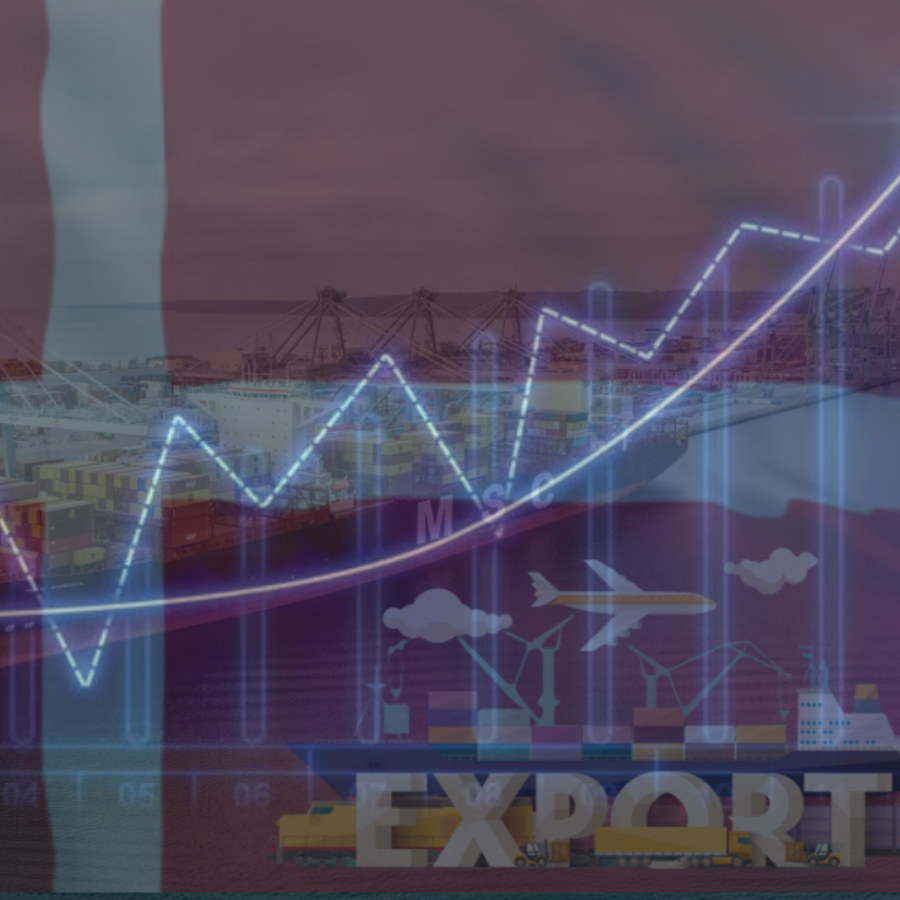
Revised Growth Forecasts for 2025–2026

The government’s latest Economic Policy Report reflects significantly higher growth expectations for the Danish economy in 2025. GDP is now projected to grow by around 2.6%, a noteworthy upward adjustment from earlier estimates. For 2026, the forecast anticipates growth near 2.2%, supported by stronger domestic consumption and continued export expansion. These upward revisions highlight recent resilience in key economic indicators and suggest more sustained momentum than previously assumed.
Revised Growth Forecasts for 2025–2026

The government’s latest Economic Policy Report reflects significantly higher growth expectations for the Danish economy in 2025. GDP is now projected to grow by around 2.6%, a noteworthy upward adjustment from earlier estimates. For 2026, the forecast anticipates growth near 2.2%, supported by stronger domestic consumption and continued export expansion. These upward revisions highlight recent resilience in key economic indicators and suggest more sustained momentum than previously assumed.

Drivers of the Economic Upswing

Exports remain the central pillar of Denmark’s improved growth outlook. Danish companies have continued to perform strongly in international markets, particularly in high-value sectors such as pharmaceuticals, industrial goods, and advanced manufacturing. This export resilience has helped offset weaker demand in some parts of Europe and has provided a stable source of income for the national economy. At the same time, private consumption has proven more robust than expected. Despite earlier concerns about inflation and rising interest rates, households have maintained a relatively steady level of spending. Tax cuts and lower excise duties introduced by the government are expected to further strengthen purchasing power, giving consumers more room to spend on both everyday goods and larger purchases. Together, these factors create a more balanced growth profile than earlier in the year, with both foreign demand and domestic activity contributing to expansion. This combination reduces Denmark’s vulnerability to external shocks and supports a more sustainable economic trajectory.

Labor Supply: A Critical Constraint

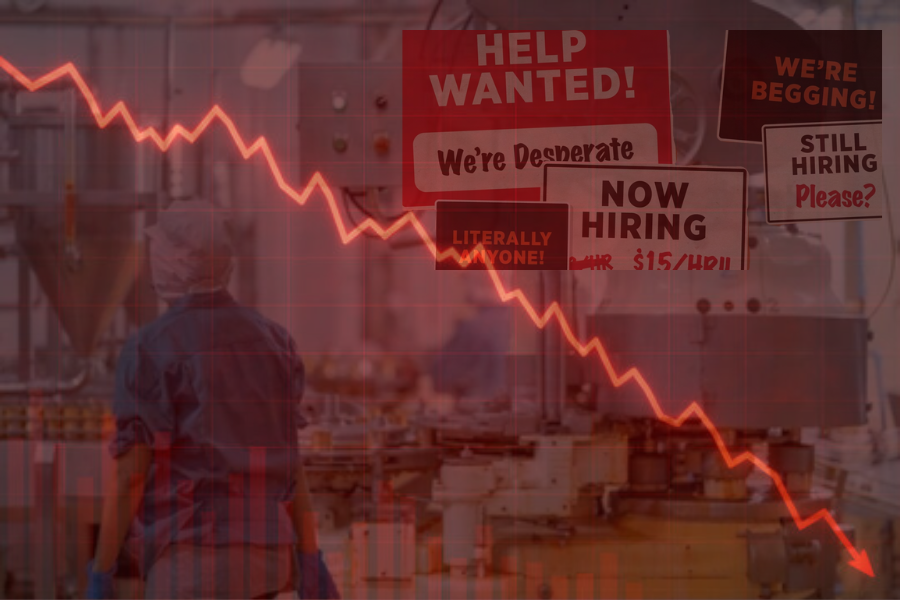
While the growth forecasts paint an optimistic picture, business organizations warn that labor shortages could become the main obstacle to continued expansion. Many companies already report difficulties in recruiting qualified workers, particularly in technical professions, healthcare, construction, and parts of the service sector. To address this, business leaders argue that Denmark must make it easier to attract foreign workers and encourage higher participation among older employees who are nearing retirement. Extending working lives, improving incentives for delayed retirement, and simplifying work permit procedures are frequently mentioned as necessary steps. Without progress on these issues, firms may struggle to increase production even if demand remains strong. In that case, economic growth could slow not because of weak markets, but because of limited capacity. Ensuring a sufficient and flexible labor supply is therefore seen as essential for turning the government’s optimistic forecasts into long-term reality.
Sales Magazine powered by ReformBusiness, your external sales partner

Stronger Growth Outlook, But Challenges Remain

Denmark’s government has significantly raised its economic growth forecasts for 2025 and 2026, reflecting unexpectedly strong performance in exports and private consumption. While business leaders share the optimism, they stress that continued expansion depends on improving labor availability. Policy efforts aimed at boosting workforce participation and attracting foreign talent are likely to be central to sustaining this momentum.
Drivers of the Economic Upswing

Exports remain the central pillar of Denmark’s improved growth outlook. Danish companies have continued to perform strongly in international markets, particularly in high-value sectors such as pharmaceuticals, industrial goods, and advanced manufacturing. This export resilience has helped offset weaker demand in some parts of Europe and has provided a stable source of income for the national economy. At the same time, private consumption has proven more robust than expected. Despite earlier concerns about inflation and rising interest rates, households have maintained a relatively steady level of spending. Tax cuts and lower excise duties introduced by the government are expected to further strengthen purchasing power, giving consumers more room to spend on both everyday goods and larger purchases. Together, these factors create a more balanced growth profile than earlier in the year, with both foreign demand and domestic activity contributing to expansion. This combination reduces Denmark’s vulnerability to external shocks and supports a more sustainable economic trajectory.

Labor Supply: A Critical Constraint

While the growth forecasts paint an optimistic picture, business organizations warn that labor shortages could become the main obstacle to continued expansion. Many companies already report difficulties in recruiting qualified workers, particularly in technical professions, healthcare, construction, and parts of the service sector. To address this, business leaders argue that Denmark must make it easier to attract foreign workers and encourage higher participation among older employees who are nearing retirement. Extending working lives, improving incentives for delayed retirement, and simplifying work permit procedures are frequently mentioned as necessary steps. Without progress on these issues, firms may struggle to increase production even if demand remains strong. In that case, economic growth could slow not because of weak markets, but because of limited capacity. Ensuring a sufficient and flexible labor supply is therefore seen as essential for turning the government’s optimistic forecasts into long-term reality.
Sales Magazine powered by ReformBusiness, your external sales partner

Stronger Growth Outlook, But Challenges Remain

Denmark’s government has significantly raised its economic growth forecasts for 2025 and 2026, reflecting unexpectedly strong performance in exports and private consumption. While business leaders share the optimism, they stress that continued expansion depends on improving labor availability.
Policy efforts aimed at boosting workforce participation and attracting foreign talent are likely to be central to sustaining this momentum.

Follow us on LinkedIn!

Follow us on LinkedIn!

Would you like to sell your products or services worldwide?

Schedule an appointment with our international sales team

Would you like to sell your products or services worldwide?

Schedule an appointment with our international sales team