BUSINESS NEWS FROM AUSTRIA

BUSINESS NEWS FROM AUSTRIA

Austria's Economy at the End of 2025

From Global to Regional: Trade’s New Reality

Sales Magazine powered by ReformBusiness, your external sales partner

Austria's Economy at the End of 2025

From Global to Regional: Trade’s New Reality

Sales Magazine powered by ReformBusiness, your external sales partner

PUBLISHED January 15, 2026

According to “Freihandel am Scheideweg – Warum der Megatrend Globalisierung an Bedeutung verliert” from Wirtschafts-Nachrichten.at, for decades, globalization and free trade were widely regarded as the backbone of economic growth, technological progress, and rising living standards across much of the world. Open markets enabled companies to expand internationally, lowered production costs through global supply chains, and offered consumers unprecedented access to affordable goods. Export-oriented economies in particular built their prosperity on the assumption that trade barriers would continue to fall and cross-border cooperation would deepen.
Behind these numbers lies a delicate balance between improving domestic activity and persistent challenges in international markets. Although certain sectors are slowly gaining momentum, others continue to struggle under the weight of external factors, leaving the overall outlook mixed rather than uniformly optimistic.

Today, that assumption is increasingly being challenged. International trade is growing more slowly, multinational production networks are being restructured, and political considerations now play a far greater role in economic decision-making. Trade disputes, sanctions, industrial policy, and national security concerns have reshaped how governments and corporations assess risks and opportunities. The result is not a sudden collapse of globalization, but a gradual shift toward a more fragmented and cautious form of global integration — often described as “slowbalisation.” However, the rebound in spending and investment is far from robust. Many firms remain cautious, limiting hiring and expansion until global uncertainties and structural bottlenecks become clearer or more predictable.
This transformation has significant consequences for countries whose economic models depend heavily on exports and foreign investment. While global markets remain essential, they are becoming more complex and less predictable. Companies must navigate new regulatory environments, diversify supply chains, and rethink long-standing business strategies. At the same time, policymakers are under pressure to strengthen domestic industries and regional partnerships without abandoning the benefits of international trade altogether. The question is no longer whether globalization will continue, but what shape it will take in the years ahead.

Changing Dynamics of Global Trade

Global trade is no longer driven by the same optimism and openness that defined the previous decades. While international commerce continues, its growth has slowed markedly and its structure is becoming more fragmented. Multilateral trade agreements are losing influence, while bilateral deals and regional blocs are gaining importance. At the same time, governments are intervening more actively in economic affairs. Strategic industries, such as energy, semiconductors, and critical raw materials, are increasingly protected or subsidized. This marks a clear departure from the long-standing belief that markets should regulate themselves with minimal political interference.

Changing Dynamics of Global Trade​

Global trade is no longer driven by the same optimism and openness that defined the previous decades. While international commerce continues, its growth has slowed markedly and its structure is becoming more fragmented. Multilateral trade agreements are losing influence, while bilateral deals and regional blocs are gaining importance. At the same time, governments are intervening more actively in economic affairs. Strategic industries, such as energy, semiconductors, and critical raw materials, are increasingly protected or subsidized. This marks a clear departure from the long-standing belief that markets should regulate themselves with minimal political interference.

Growing Pressure on Export-Oriented Economies

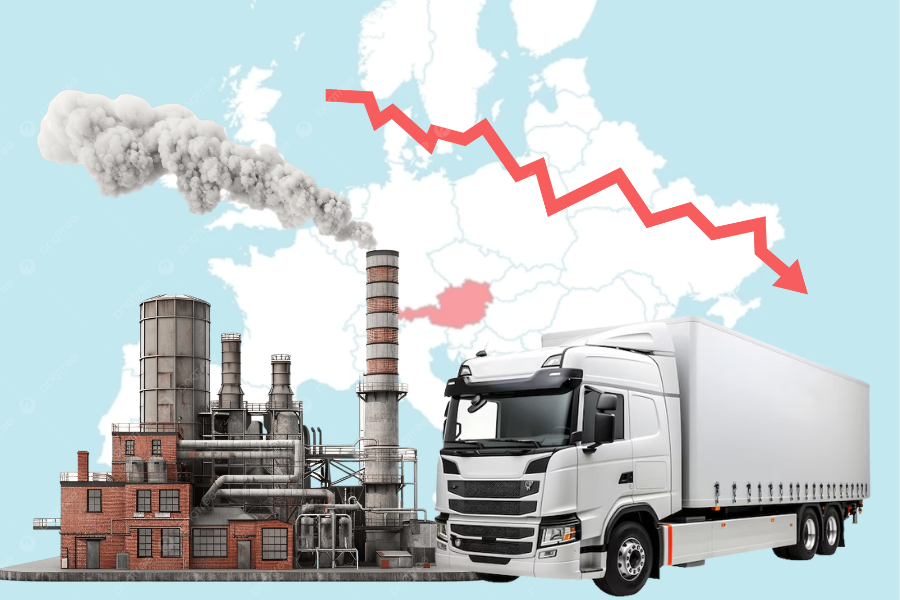
For export-driven economies, the changing trade environment poses serious challenges. Countries that once relied on stable global demand and predictable supply chains now face rising uncertainty. Production costs have increased due to higher energy prices, stricter regulations, and the need to diversify suppliers away from geopolitically sensitive regions. European economies are particularly affected, as their industrial sectors are deeply embedded in international value chains. Manufacturing companies must adapt to slower foreign demand while absorbing higher compliance costs and trade-related bureaucracy. Small and medium-sized exporters, which often lack the financial buffer of multinational corporations, are especially vulnerable to sudden market disruptions. In response, many governments are rethinking their economic strategies. Export promotion is increasingly combined with industrial policy aimed at strengthening domestic production capacities. Instead of maximizing efficiency at any cost, resilience and security of supply have become key priorities. This shift reflects a broader reassessment of what economic stability means in a world shaped by political tensions and recurring crises.

Adapting to a New Era of “Slowbalisation”

Rather than disappearing, globalization is evolving into a more cautious and selective system. Companies are redesigning their supply chains to reduce dependence on single countries or distant production hubs. Concepts such as “nearshoring” and “friend-shoring” are gaining ground, favoring suppliers located in politically stable or geographically closer regions. At the policy level, governments are investing in strategic industries, digital infrastructure, and energy independence. Trade agreements are no longer judged solely by their economic benefits but also by their geopolitical implications. As a result, economic cooperation is increasingly aligned with foreign policy objectives. This transformation requires a delicate balance. Excessive protectionism could undermine innovation and reduce competitiveness, while full liberalization may expose economies to unacceptable risks. The emerging model aims to combine openness with safeguards — maintaining access to global markets while limiting vulnerability to external shocks. For businesses and policymakers alike, the challenge is to remain competitive without relying on the assumptions of the past. Success in this new environment will depend on flexibility, technological adaptation, and the ability to operate within a more fragmented and politically sensitive global system.

Sales Magazine powered by ReformBusiness, your external sales partner

Where Global Trade Is Heading

Global trade is no longer advancing at the breakneck pace seen in the late 20th and early 21st centuries. A rise in protectionist policies, geopolitical tensions and a reassessment of global supply chains have reduced the dynamism of free trade. For economies that traditionally relied on open markets, such as Austria’s export-oriented industries, these shifts present challenges and require adaptation. Policymakers are increasingly focusing on regional partnerships and resilience strategies rather than purely liberalized trade. While globalization remains an important economic force, it is being reshaped into a more complex, region-driven system of commerce.

Growing Pressure on Export-Oriented Economies

For export-driven economies, the changing trade environment poses serious challenges. Countries that once relied on stable global demand and predictable supply chains now face rising uncertainty. Production costs have increased due to higher energy prices, stricter regulations, and the need to diversify suppliers away from geopolitically sensitive regions. European economies are particularly affected, as their industrial sectors are deeply embedded in international value chains. Manufacturing companies must adapt to slower foreign demand while absorbing higher compliance costs and trade-related bureaucracy. Small and medium-sized exporters, which often lack the financial buffer of multinational corporations, are especially vulnerable to sudden market disruptions. In response, many governments are rethinking their economic strategies. Export promotion is increasingly combined with industrial policy aimed at strengthening domestic production capacities. Instead of maximizing efficiency at any cost, resilience and security of supply have become key priorities. This shift reflects a broader reassessment of what economic stability means in a world shaped by political tensions and recurring crises.

Adapting to a New Era of “Slowbalisation”

Rather than disappearing, globalization is evolving into a more cautious and selective system. Companies are redesigning their supply chains to reduce dependence on single countries or distant production hubs. Concepts such as “nearshoring” and “friend-shoring” are gaining ground, favoring suppliers located in politically stable or geographically closer regions. At the policy level, governments are investing in strategic industries, digital infrastructure, and energy independence. Trade agreements are no longer judged solely by their economic benefits but also by their geopolitical implications. As a result, economic cooperation is increasingly aligned with foreign policy objectives. This transformation requires a delicate balance. Excessive protectionism could undermine innovation and reduce competitiveness, while full liberalization may expose economies to unacceptable risks. The emerging model aims to combine openness with safeguards — maintaining access to global markets while limiting vulnerability to external shocks. For businesses and policymakers alike, the challenge is to remain competitive without relying on the assumptions of the past. Success in this new environment will depend on flexibility, technological adaptation, and the ability to operate within a more fragmented and politically sensitive global system.
Sales Magazine powered by ReformBusiness, your external sales partner

Where Global Trade Is Heading

Global trade is no longer advancing at the breakneck pace seen in the late 20th and early 21st centuries. A rise in protectionist policies, geopolitical tensions and a reassessment of global supply chains have reduced the dynamism of free trade. For economies that traditionally relied on open markets, such as Austria’s export-oriented industries, these shifts present challenges and require adaptation. Policymakers are increasingly focusing on regional partnerships and resilience strategies rather than purely liberalized trade. While globalization remains an important economic force, it is being reshaped into a more complex, region-driven system of commerce.

Follow us on LinkedIn!

Follow us on LinkedIn!

Would you like to sell your products or services worldwide?

Schedule an appointment with our international sales team

Would you like to sell your products or services worldwide?

Schedule an appointment with our international sales team