
PUBLISHED January 19, 2026
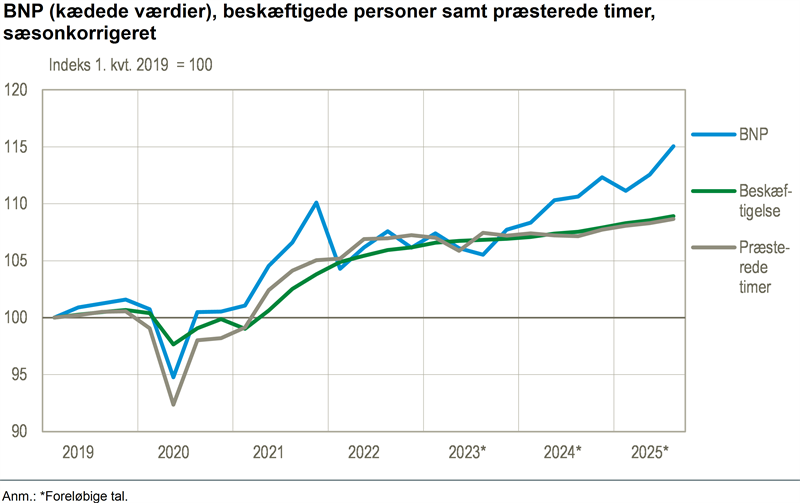
According to “Betydelig fremgang i dansk økonomi i 3. kvartal” from Danmarks Statistik, in the third quarter of 2025, Denmark’s economy continued its steady recovery with real GDP rising by 2.2%, seasonally adjusted, compared to the second quarter. This growth reflects a broad improvement in economic activity following mixed results earlier in the year. Industrial output, especially in pharmaceuticals, was a key driver, offsetting weaker contributions from other sectors. The data provide an updated picture based on finalized national accounts, incorporating firm-level sales and purchases. Revisions to previous quarters also influenced the overall pattern of growth. These figures give policymakers and businesses a clearer sense of recent economic momentum. The Statistics Denmark release was published on 22 December 2025.
A notable feature of the quarter was a 0.3% increase in employment, indicating that labor demand strengthened alongside output. Total hours worked also rose modestly, suggesting gradual improvement in labor utilization. Exports contributed positively to GDP, with goods and services exports expanding during the quarter. Import volumes showed mixed dynamics, reflecting both global trade patterns and domestic demand. Private consumption rose as households spent more on goods and services. This increase was particularly visible in purchases such as vehicles and clothing. The services sector also showed growth, contributing to overall economic expansion.
While industrial performance was strong, some areas like real estate investment lagged behind. Construction and investment in machinery and transport equipment showed mixed results. Tourism-related activities had both positive and negative impacts on certain subcomponents of the accounts. Public sector consumption remained steady, contributing modestly to growth. Revisions to inventory contributions added complexity to interpreting quarterly performance. Despite these nuances, the overall trend pointed toward more stable expansion. The comprehensive dataset from Statistics Denmark helps clarify underlying economic patterns.