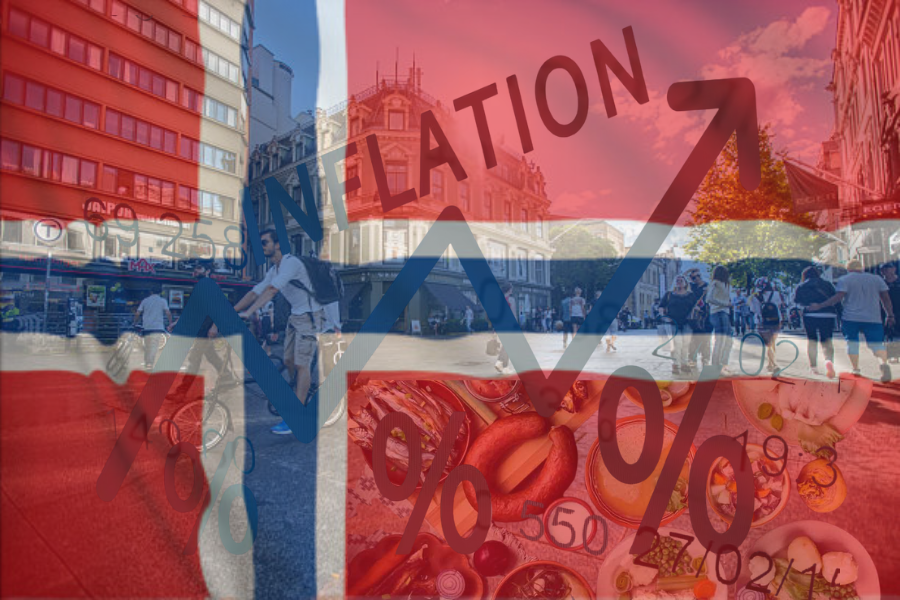
According to “Norsk økonomi tilbake til normal vekst” published by Byggfakta Nyheter, Norway’s economy is gradually returning to a more normal growth path, supported by stronger household consumption and moderate investment activity, even as inflation remains elevated.
The latest figures show that household consumption grew by 2.7% from 2024 to 2025 in real terms, marking a clear improvement compared with the previous two years. This rebound in consumer demand is emerging as one of the key pillars supporting overall economic momentum.
Business investment is also contributing, albeit more modestly. Gross investment in mainland enterprises increased by 1.9%, while combined consumption and investment by central and local government rose by 1.2% in 2025. Taken together, the data suggest an economy that is stabilising rather than overheating.
Inflation Remains Elevated
Despite the improving activity picture, price growth continues to pose a challenge. The consumer price index (CPI) rose 3.6% year-on-year in January 2026, with twelve-month inflation increasing by 0.4 percentage points from December. Core inflation also edged higher, reaching 3.4%, indicating that underlying price pressures remain persistent.
The report highlights that rising rents, along with higher prices for cars and electricity, were among the main drivers behind the latest increase in inflation. At the same time, food and beverage price growth eased to 4.2%, down notably from the previous month.
For policymakers and markets alike, the message is mixed: inflation has cooled from earlier peaks but remains above the comfort zone.
Inflation Remains Elevated
Despite the improving activity picture, price growth continues to pose a challenge. The consumer price index (CPI) rose 3.6% year-on-year in January 2026, with twelve-month inflation increasing by 0.4 percentage points from December. Core inflation also edged higher, reaching 3.4%, indicating that underlying price pressures remain persistent.
The report highlights that rising rents, along with higher prices for cars and electricity, were among the main drivers behind the latest increase in inflation. At the same time, food and beverage price growth eased to 4.2%, down notably from the previous month.
For policymakers and markets alike, the message is mixed: inflation has cooled from earlier peaks but remains above the comfort zone.
Rate-Cut Expectations Face Uncertainty
The continued strength in price growth is already influencing the interest-rate outlook. Several economists cited in the report warn that persistently high inflation could complicate the prospects for interest rate cuts in 2026.
This creates a delicate balancing act for Norges Bank. On one hand, domestic demand indicators are improving; on the other, inflation has not yet fallen sufficiently to guarantee monetary easing. The trajectory of price growth in the coming months will therefore be crucial for policy expectations.
Economy Moving Back to “Normal”
Overall, the emerging picture is one of normalisation rather than acceleration. After a period marked by unusually high inflation and uneven growth dynamics, Norway appears to be settling into a more typical economic rhythm.
Consumption is strengthening, investments are expanding modestly and public demand remains supportive. However, the still-elevated inflation environment means the recovery is unfolding under tighter financial conditions than in previous cycles.
Outlook: Stable Growth, But Inflation Still Key
Looking ahead, Norway’s near-term outlook will depend heavily on the path of inflation. If price growth continues to moderate, the economy could move into a more comfortable expansion phase. If not, monetary policy may need to remain restrictive for longer.
For now, the data point to an economy that is growing steadily but not without constraints. The recovery is real, but it remains closely tied to the disinflation process.
Bottom line: Norway is returning to more normal economic growth in 2026, supported by stronger consumption and investment. However, persistently elevated inflation remains the key risk that could shape the pace of the recovery in the months ahead.
Rate-Cut Expectations Face Uncertainty
The continued strength in price growth is already influencing the interest-rate outlook. Several economists cited in the report warn that persistently high inflation could complicate the prospects for interest rate cuts in 2026.
This creates a delicate balancing act for Norges Bank. On one hand, domestic demand indicators are improving; on the other, inflation has not yet fallen sufficiently to guarantee monetary easing. The trajectory of price growth in the coming months will therefore be crucial for policy expectations.
Economy Moving Back to “Normal”
Overall, the emerging picture is one of normalisation rather than acceleration. After a period marked by unusually high inflation and uneven growth dynamics, Norway appears to be settling into a more typical economic rhythm.
Consumption is strengthening, investments are expanding modestly and public demand remains supportive. However, the still-elevated inflation environment means the recovery is unfolding under tighter financial conditions than in previous cycles.
Outlook: Stable Growth, But Inflation Still Key
Looking ahead, Norway’s near-term outlook will depend heavily on the path of inflation. If price growth continues to moderate, the economy could move into a more comfortable expansion phase. If not, monetary policy may need to remain restrictive for longer.
For now, the data point to an economy that is growing steadily but not without constraints. The recovery is real, but it remains closely tied to the disinflation process.
Bottom line: Norway is returning to more normal economic growth in 2026, supported by stronger consumption and investment. However, persistently elevated inflation remains the key risk that could shape the pace of the recovery in the months ahead.
Follow us on LinkedIn!
Follow us on LinkedIn!
Would you like to sell your products or services worldwide?
Schedule an appointment with our international sales team
Would you like to sell your products or services worldwide?
Schedule an appointment with our international sales team