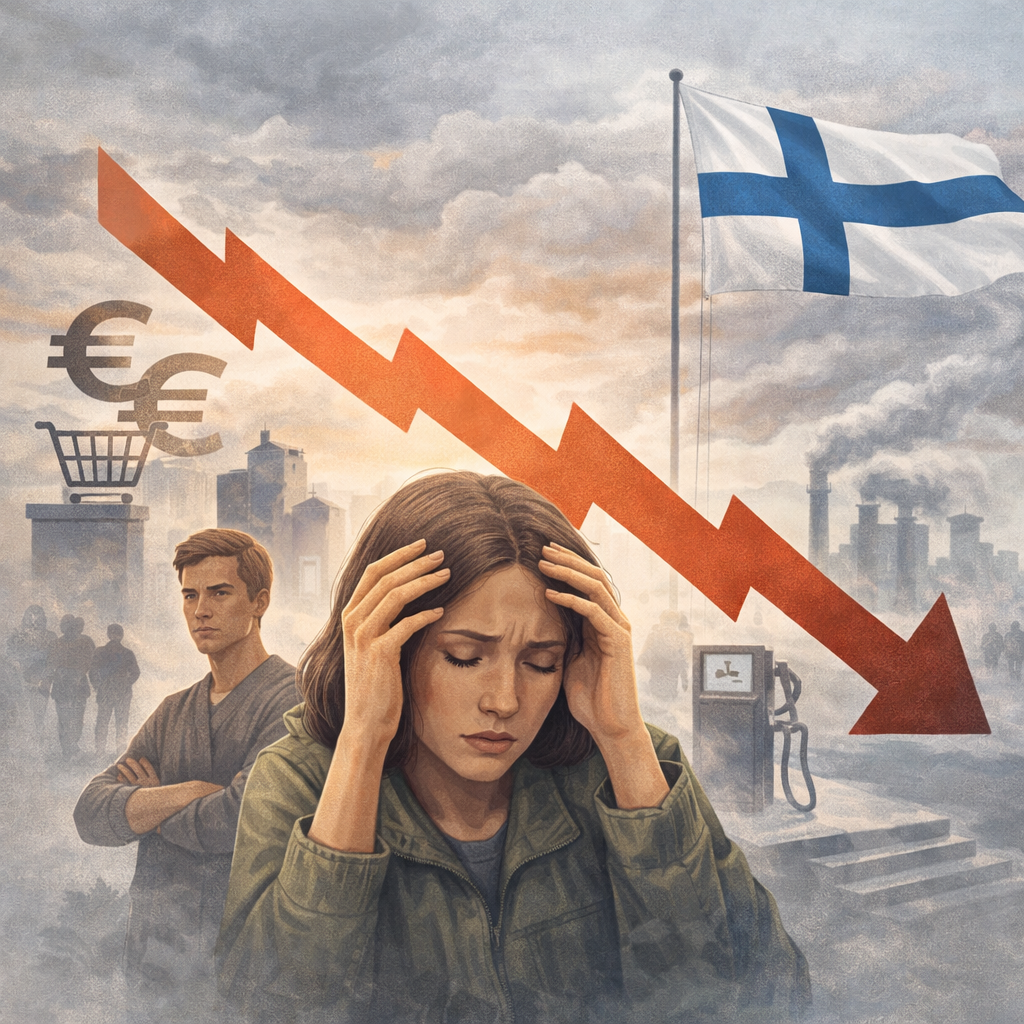
Finnish Consumer Confidence Declines Further in February 2026
Rising Inflation Expectations and Weak Economic Outlook Weigh on Sentiment
Finnish Consumer Confidence Declines Further in February 2026
Rising Inflation Expectations and Weak Economic Outlook Weigh on Sentiment
PUBLISHED March 27, 2026
Consumer Confidence Continues to Deteriorate
According to data published by Statistics Finland, consumer confidence in Finland weakened further in February 2026, continuing a downward trend observed in previous months. The consumer confidence indicator fell to -10.5, compared to -8.7 in January and -7.3 in December, indicating a clear decline in sentiment.
Perceptions of the Economy Remain Negative
The data shows that consumers’ views on both the current economic situation and future expectations remain highly pessimistic.
Assessments of both personal finances and the overall national economy were described as weak, with expectations for the coming year also deteriorating compared to earlier periods.
Rising Inflation Expectations Add Pressure
A notable development in the survey is the increase in inflation expectations. Consumers estimated that prices had risen by 4.6% over the past year and expected further increases of around 4.0% in the coming year.
This rise in perceived and expected inflation contributes to the overall decline in confidence and affects household financial planning.
Households Become More Cautious with Spending
The weakening outlook is reflected in consumer behaviour, particularly in spending intentions. The timing was widely seen as unfavourable for making major purchases, and plans for durable goods consumption remained limited. Consumers also showed reduced willingness to take out loans, highlighting a cautious approach to financial decisions.
Labour Market Concerns Remain Elevated
Expectations regarding unemployment continue to be relatively pessimistic. A majority of respondents believe that unemployment will increase in the coming year, and many individuals perceive a significant personal risk of job loss. These concerns further contribute to the overall cautious sentiment among consumers.
Labour Market Concerns Remain Elevated
Expectations regarding unemployment continue to be relatively pessimistic. A majority of respondents believe that unemployment will increase in the coming year, and many individuals perceive a significant personal risk of job loss. These concerns further contribute to the overall cautious sentiment among consumers.
Mixed Signals in Savings and Financial Situation
While many households reported having some capacity to save, overall assessments of personal financial situations were slightly weaker than average. Expectations regarding future savings opportunities also declined, indicating that financial confidence is under pressure even among those with stable income.
Regional and Social Differences in Confidence
The survey also revealed notable differences across regions and population groups. Confidence levels were higher in northern parts of Finland and lower in the capital region, while socio-economic factors also influenced perceptions. For example, unemployed individuals expressed significantly more negative views than other groups.
Outlook: Continued Weak Sentiment in the Near Term
Overall, the February data points to a continued weakening of consumer confidence in Finland, driven by pessimistic economic expectations, rising inflation concerns, and cautious financial behaviour. The findings suggest that household sentiment is likely to remain subdued in the near term, potentially affecting broader economic activity.
Mixed Signals in Savings and Financial Situation
While many households reported having some capacity to save, overall assessments of personal financial situations were slightly weaker than average. Expectations regarding future savings opportunities also declined, indicating that financial confidence is under pressure even among those with stable income.
Regional and Social Differences in Confidence
The survey also revealed notable differences across regions and population groups. Confidence levels were higher in northern parts of Finland and lower in the capital region, while socio-economic factors also influenced perceptions. For example, unemployed individuals expressed significantly more negative views than other groups.
Outlook: Continued Weak Sentiment in the Near Term
Overall, the February data points to a continued weakening of consumer confidence in Finland, driven by pessimistic economic expectations, rising inflation concerns, and cautious financial behaviour. The findings suggest that household sentiment is likely to remain subdued in the near term, potentially affecting broader economic activity.
Follow us on LinkedIn!
Follow us on LinkedIn!
Would you like to sell your products or services worldwide?
Schedule an appointment with our international sales team
Would you like to sell your products or services worldwide?
Schedule an appointment with our international sales team