

PUBLISHED February 28, 2026
According to “German construction activity returns to contraction in January” published by Investing.com, Germany’s construction industry has started 2026 on weaker footing, with survey data showing the sector slipping back into decline after a brief improvement at the end of last year.
The latest HCOB Germany Construction PMI revealed that the Total Activity Index dropped to 44.7 in January from 50.3 in December, falling below the neutral 50-point threshold that separates growth from contraction. The decline marked the fastest contraction in three months, underscoring the fragility of the sector’s recovery.
Housing and Commercial Building Drive the Weakness
The renewed downturn was primarily caused by accelerating declines in both residential and commercial construction, the report noted. Housing activity deteriorated at the quicker pace after nearly stabilising in December, highlighting the ongoing structural pressures facing Germany’s residential market.
Commercial construction also moved deeper into contraction, reflecting subdued investment appetite and continued caution among developers and corporate clients.
The data suggest that weak demand remains the central challenge for the private construction segment.
For companies supplying building materials, equipment or construction services, the message is clear: private-sector construction demand in Germany remains under significant pressure at the start of 2026.
Despite the broader downturn, the survey pointed to one area of resilience. Civil engineering activity continued to expand for the third consecutive month, although the pace of growth eased slightly from December’s near 15-year high. This divergence highlights an increasingly two-speed construction market. Public infrastructure and engineering projects are currently providing the main support to overall activity, partially offsetting the slump in residential and commercial building.
For B2B sales teams, this shift suggests that exposure to infrastructure, utilities and publicly funded projects may offer better near-term opportunities than reliance on private development alone.
Despite the broader downturn, the survey pointed to one area of resilience. Civil engineering activity continued to expand for the third consecutive month, although the pace of growth eased slightly from December’s near 15-year high. This divergence highlights an increasingly two-speed construction market. Public infrastructure and engineering projects are currently providing the main support to overall activity, partially offsetting the slump in residential and commercial building.
For B2B sales teams, this shift suggests that exposure to infrastructure, utilities and publicly funded projects may offer better near-term opportunities than reliance on private development alone.
Forward-looking indicators remain weak. New business volumes declined further in January, with construction firms widely citing a lack of demand for housing and commercial projects as well as reduced orders from local government. Importantly, the rate of decline in new orders reaccelerated after easing to a four-year low in December, indicating that the late-2025 stabilisation has not yet turned into a sustained recovery.
For commercial teams, shrinking order books typically translate into longer sales cycles, more aggressive price competition and increased pressure on pipeline quality throughout 2026.
January’s setback is particularly notable because December had marked the first time the index rose above 50 since March 2022, briefly raising hopes that the sector might be turning a corner.
The return to contraction suggests the recovery path will likely be uneven rather than linear. Germany’s construction market appears to be stabilising only gradually after a prolonged downturn.
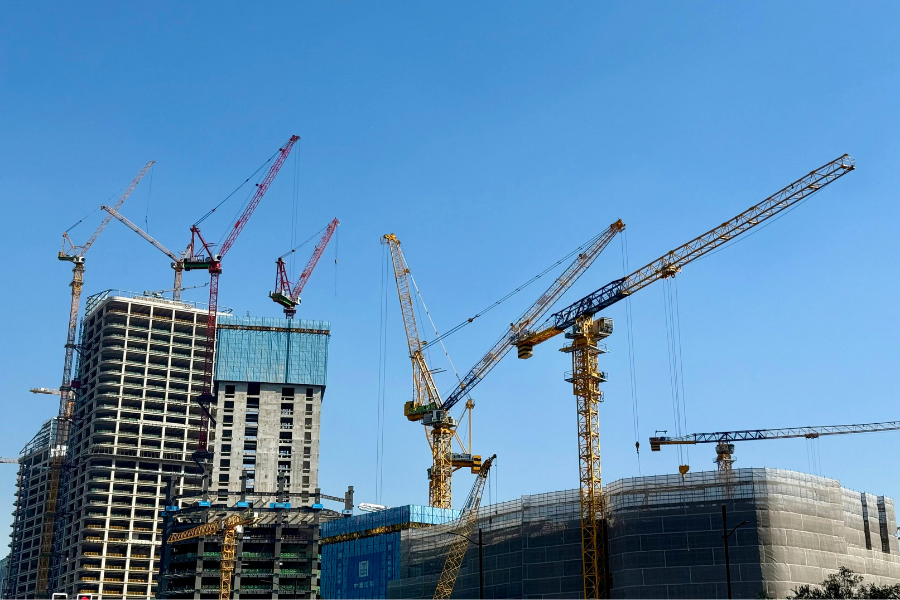
While current activity remains weak, the underlying picture is not uniformly negative. The continued growth in civil engineering indicates that parts of the market retain momentum, especially where public investment is involved. For sales leaders and market strategists, the implication is clear: 2026 will likely reward selective focus rather than broad market exposure. Companies aligned with infrastructure and engineering projects may still find growth pockets, while those heavily dependent on residential construction should prepare for a more challenging demand environment.
Bottom line: Germany’s construction sector has not yet secured a durable recovery. The market is stabilising in parts but remains fragile overall, requiring disciplined pipeline management and careful segment prioritisation in the months ahead.
Forward-looking indicators remain weak. New business volumes declined further in January, with construction firms widely citing a lack of demand for housing and commercial projects as well as reduced orders from local government. Importantly, the rate of decline in new orders reaccelerated after easing to a four-year low in December, indicating that the late-2025 stabilisation has not yet turned into a sustained recovery.
For commercial teams, shrinking order books typically translate into longer sales cycles, more aggressive price competition and increased pressure on pipeline quality throughout 2026.
January’s setback is particularly notable because December had marked the first time the index rose above 50 since March 2022, briefly raising hopes that the sector might be turning a corner.
The return to contraction suggests the recovery path will likely be uneven rather than linear. Germany’s construction market appears to be stabilising only gradually after a prolonged downturn.
While current activity remains weak, the underlying picture is not uniformly negative. The continued growth in civil engineering indicates that parts of the market retain momentum, especially where public investment is involved. For sales leaders and market strategists, the implication is clear: 2026 will likely reward selective focus rather than broad market exposure. Companies aligned with infrastructure and engineering projects may still find growth pockets, while those heavily dependent on residential construction should prepare for a more challenging demand environment.
Bottom line: Germany’s construction sector has not yet secured a durable recovery. The market is stabilising in parts but remains fragile overall, requiring disciplined pipeline management and careful segment prioritisation in the months ahead.

Reform PRODUCTS & SERVICES Group
Szentendrei út 87.
1033 Budapest
Hungary