
BUSINESS NEWS FROM GERMANY

BUSINESS NEWS FROM GERMANY

Germany’s Economy at the End of 2025

Germany’s Economy Faces Modest Recovery

Sales Magazine powered by ReformBusiness, your external sales partner

Germany’s Economy at the End of 2025

Germany’s Economy Faces Modest Recovery​

Sales Magazine powered by ReformBusiness, your external sales partner

PUBLISHED January 15, 2026

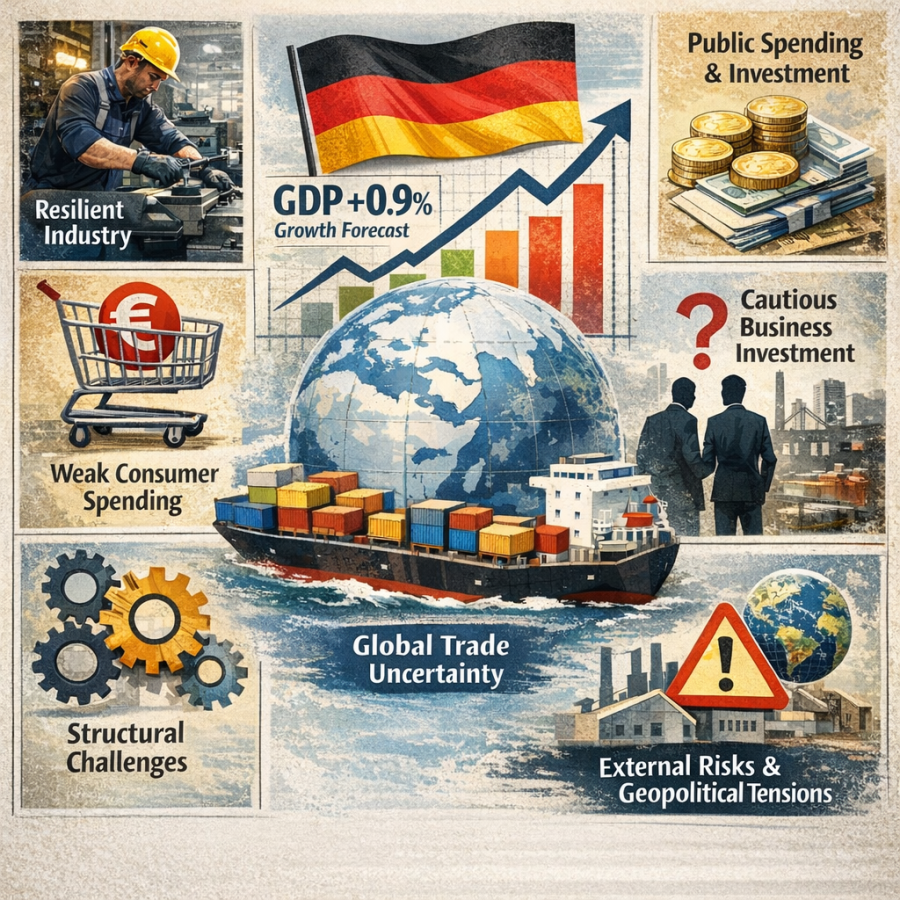
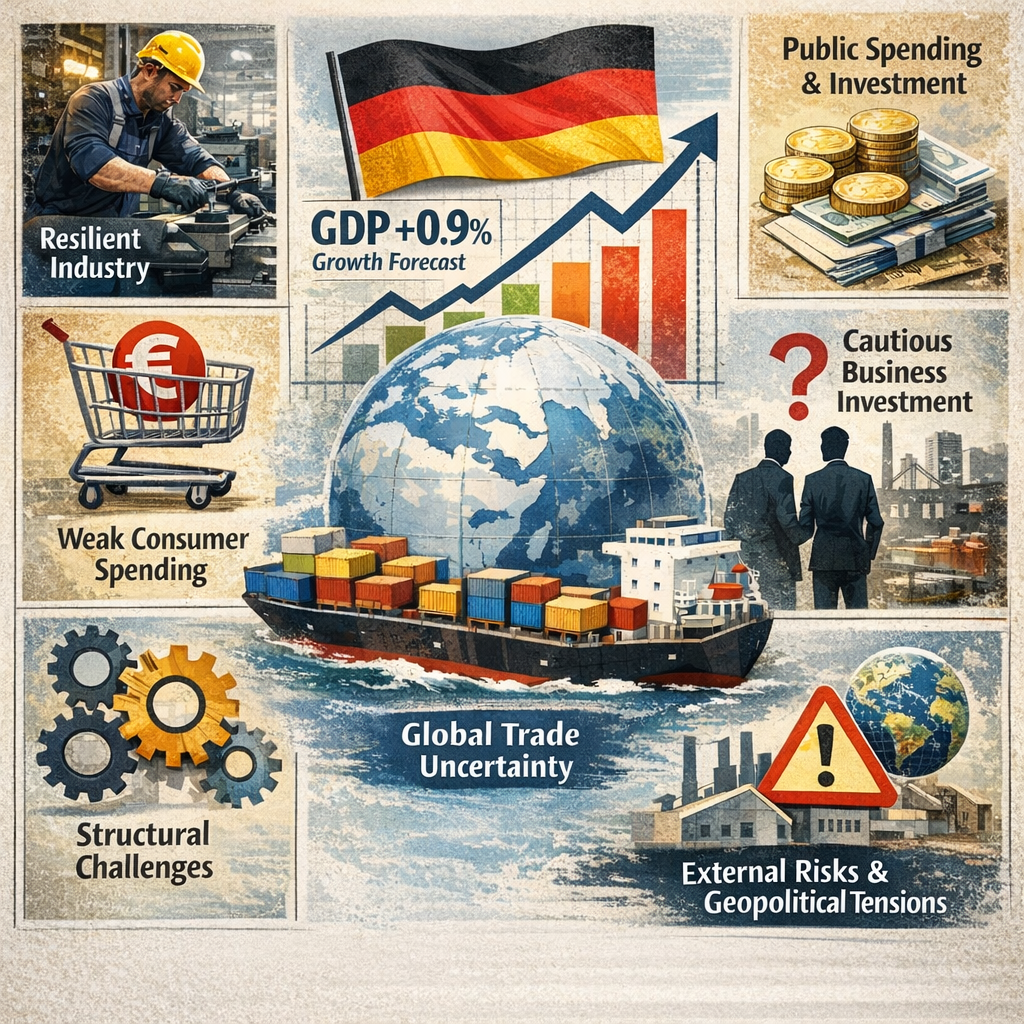
According to “IW-Konjunkturprognose: Die deutsche Wirtschaft wächst wieder leicht – Wirtschaft trotzt den Risiken” from iwd.de, Germany enters 2026 with an economy that is stable but far from dynamic. After facing a period of global uncertainty, supply chain disruptions, and energy market volatility, the country has managed to maintain a steady course. Public spending, targeted investment programs, and a resilient manufacturing sector are helping to cushion the economy against external shocks. Nevertheless, growth remains moderate, with private sector caution limiting more vigorous expansion.
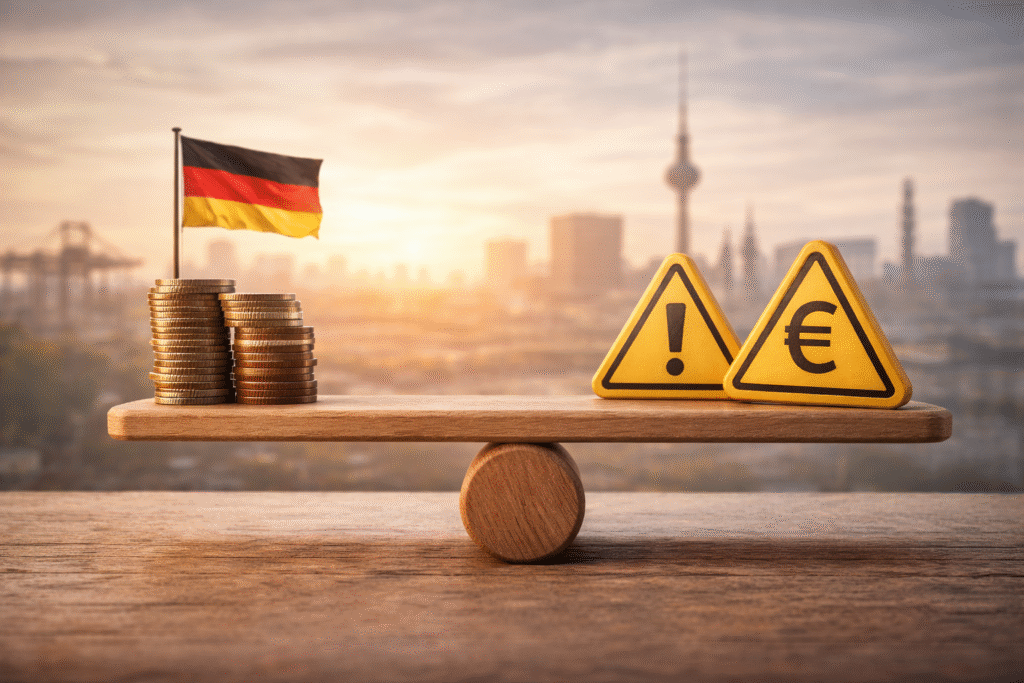
Consumer confidence has begun to recover, though spending patterns are still influenced by lingering inflationary pressures. Businesses are gradually resuming investment, yet uncertainties related to international trade and geopolitical risks weigh heavily on decision-making. The labor market shows signs of stability, but demographic challenges and sectoral shifts continue to shape long-term prospects. Overall, Germany’s economy reflects careful management rather than rapid momentum.
Despite these challenges, experts remain cautiously optimistic that a combination of fiscal support, technological innovation, and renewed global demand can provide a foundation for modest growth. Policymakers are emphasizing the importance of structural reforms, energy transition initiatives, and strategic partnerships to secure competitiveness. While 2026 is unlikely to deliver strong headline growth figures, the outlook points to resilience and the capacity to adapt to ongoing global changes.

Modest Growth Forecast and Its Drivers

According to the latest economic prognosis from the German Economic Institute (IW), all major leading indicators for 2026 are expected to show at least slight upward movement, marking a departure from the flat or marginal performance seen in recent years. The institute projects that real Gross Domestic Product (GDP) will grow by approximately 0.9 percent in 2026, outpacing the near‑stagnant performance of 2025. Several factors are contributing to this anticipated uptick. Public spending, particularly by the government, continues to play a stabilizing role, supporting overall demand where private consumption remains hesitant. Businesses are also expected to gradually increase investment activity, especially in areas such as construction and equipment, which have shown signs of renewed confidence. Yet while these developments point in a positive direction, they are often incremental rather than transformative, meaning the broader recovery is likely to unfold slowly and unevenly.

Modest Growth Forecast and Its Drivers

According to the latest economic prognosis from the German Economic Institute (IW), all major leading indicators for 2026 are expected to show at least slight upward movement, marking a departure from the flat or marginal performance seen in recent years. The institute projects that real Gross Domestic Product (GDP) will grow by approximately 0.9 percent in 2026, outpacing the near‑stagnant performance of 2025. Several factors are contributing to this anticipated uptick. Public spending, particularly by the government, continues to play a stabilizing role, supporting overall demand where private consumption remains hesitant. Businesses are also expected to gradually increase investment activity, especially in areas such as construction and equipment, which have shown signs of renewed confidence. Yet while these developments point in a positive direction, they are often incremental rather than transformative, meaning the broader recovery is likely to unfold slowly and unevenly.

Persistent Risks from External and Internal Challenges

Despite these modest gains, Germany’s economy faces a range of structural and external risks that are far from resolved. On the international front, global trade conditions remain weak, and German exporters continue to contend with competitive pressures and trade policy uncertainty — a situation that could dampen export growth in the months ahead. Domestically, sustained weakness in private investment underscores lingering caution among firms, who may delay or scale back expansion plans in the face of economic and political uncertainty. Household consumption, while stable, has not yet returned to a robust growth path, with consumers showing restraint in discretionary spending. In addition, labour market dynamics are unlikely to drive significant gains, as employment levels are expected to remain broadly flat in 2026.

Outlook and Policy Implications

The 2026 economic forecast for Germany paints a picture of fragile but emerging recovery, with positive momentum tempered by real vulnerabilities. Growth is expected to be driven as much by policy support and structural adjustments as by improvements in private sector activity. This underscores the importance of continued fiscal and economic reform efforts that can reinforce confidence, bolster investment, and strengthen the resilience of the German economy in the face of future shocks. In this transition phase, the role of government — both in stimulating demand and in creating a business environment conducive to long‑term growth — will be particularly significant. While a substantial rebound remains uncertain, the current outlook suggests that with resolved risks and effective policy responses, Germany could gradually build a more durable foundation for expansion beyond the tentative gains expected in 2026.
Sales Magazine powered by ReformBusiness, your external sales partner

Germany’s Economy Hits the Brakes

Germany’s economic outlook points to stabilization rather than strong growth. Although major risks are being managed, weak global demand and cautious investment continue to weigh on the recovery. Public spending helps to support activity, but private consumption and exports remain subdued. Structural challenges and external uncertainties limit short-term momentum. Overall, the economy appears resilient, yet lacks the dynamism needed for a faster rebound in the near future.
Persistent Risks from External and Internal Challenges

Despite these modest gains, Germany’s economy faces a range of structural and external risks that are far from resolved. On the international front, global trade conditions remain weak, and German exporters continue to contend with competitive pressures and trade policy uncertainty — a situation that could dampen export growth in the months ahead. Domestically, sustained weakness in private investment underscores lingering caution among firms, who may delay or scale back expansion plans in the face of economic and political uncertainty. Household consumption, while stable, has not yet returned to a robust growth path, with consumers showing restraint in discretionary spending. In addition, labour market dynamics are unlikely to drive significant gains, as employment levels are expected to remain broadly flat in 2026.

Outlook and Policy Implications

The 2026 economic forecast for Germany paints a picture of fragile but emerging recovery, with positive momentum tempered by real vulnerabilities. Growth is expected to be driven as much by policy support and structural adjustments as by improvements in private sector activity. This underscores the importance of continued fiscal and economic reform efforts that can reinforce confidence, bolster investment, and strengthen the resilience of the German economy in the face of future shocks. In this transition phase, the role of government — both in stimulating demand and in creating a business environment conducive to long‑term growth — will be particularly significant. While a substantial rebound remains uncertain, the current outlook suggests that with resolved risks and effective policy responses, Germany could gradually build a more durable foundation for expansion beyond the tentative gains expected in 2026.
Sales Magazine powered by ReformBusiness, your external sales partner

Germany’s Economy Hits the Brakes

Germany’s economic outlook points to stabilization rather than strong growth. Although major risks are being managed, weak global demand and cautious investment continue to weigh on the recovery. Public spending helps to support activity, but private consumption and exports remain subdued. Structural challenges and external uncertainties limit short-term momentum. Overall, the economy appears resilient, yet lacks the dynamism needed for a faster rebound in the near future.

Follow us on LinkedIn!

Follow us on LinkedIn!

Would you like to sell your products or services worldwide?

Schedule an appointment with our international sales team

Would you like to sell your products or services worldwide?

Schedule an appointment with our international sales team