

PUBLISHED January 19, 2026
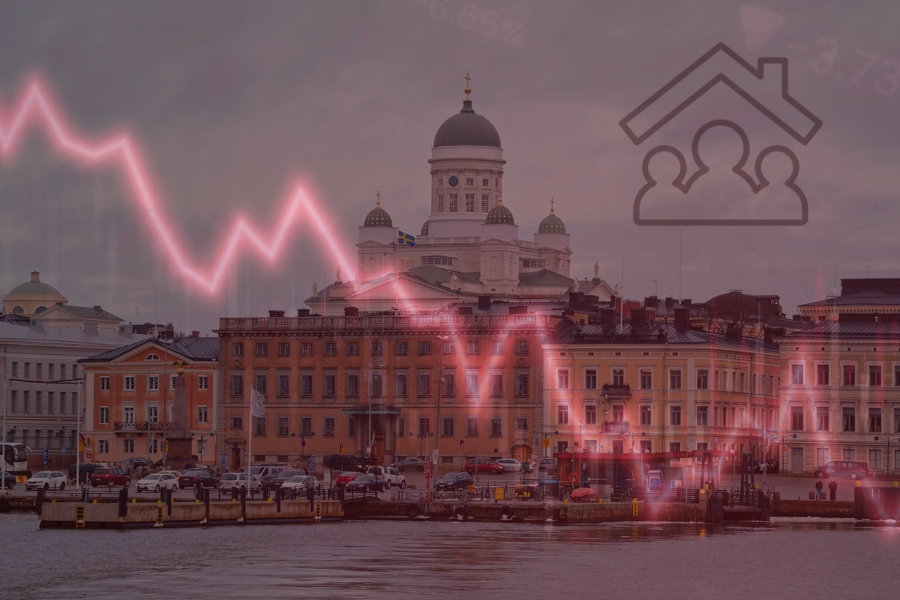
According to an article published on Iltalehti.fi, Finland’s economy showed encouraging momentum through most of 2024, expanding steadily until the third quarter. However, the recovery proved fragile. By the final months of the year, economic activity began to decline once again. As 2025 progressed, the contraction deepened. Officials now confirm that the country has re-entered recession. The sudden reversal has surprised policymakers and analysts alike. The key question: what stopped the recovery so abruptly?
Senior officials at the Ministry of Finance admit that the slowdown has been sharper than anticipated. In the preface to the government’s Winter 2025 Economic Review, they describe a combination of structural and psychological factors. Economic fundamentals alone do not fully explain the renewed weakness. Instead, growing caution among households appears to be playing a central role. Despite rising incomes, spending has remained subdued. Confidence has eroded over an extended period. This hesitation has become a major drag on growth.
Authorities also point to long-term challenges that continue to limit Finland’s economic potential. An aging population is reducing labor supply and productivity growth. Educational outcomes are slipping compared to international competitors.
Geopolitical risks on Finland’s eastern border add to uncertainty. Meanwhile, strained public finances are encouraging households to save rather than spend. Together, these factors have created a climate of caution. Growth, officials warn, may remain structurally modest for years.
According to the Ministry of Finance, several forces converged to halt the recovery. Higher interest rates continue to burden Finnish households more than those in many other euro-area countries. At the same time, housing prices have kept falling, reducing household wealth and reinforcing caution in consumption decisions. Unemployment has also risen rapidly in statistical terms, which has intensified fears of job loss even though the actual risk of unemployment has not increased proportionally. Officials now acknowledge that they underestimated how strongly anxiety and uncertainty affect consumer behavior. In addition, job creation has lagged behind expectations. Many new labor market entrants face weaker employment prospects, while companies increasingly invest in automation and labor-saving technologies. This combination has slowed hiring and weakened confidence further, reinforcing the downturn.
According to the Ministry of Finance, several forces converged to halt the recovery. Higher interest rates continue to burden Finnish households more than those in many other euro-area countries. At the same time, housing prices have kept falling, reducing household wealth and reinforcing caution in consumption decisions. Unemployment has also risen rapidly in statistical terms, which has intensified fears of job loss even though the actual risk of unemployment has not increased proportionally. Officials now acknowledge that they underestimated how strongly anxiety and uncertainty affect consumer behavior. In addition, job creation has lagged behind expectations. Many new labor market entrants face weaker employment prospects, while companies increasingly invest in automation and labor-saving technologies. This combination has slowed hiring and weakened confidence further, reinforcing the downturn.
The government now expects GDP to grow by just 0.2 percent in 2025, followed by 1.1 percent in 2026 and 1.7 percent in 2027—a significant downgrade from earlier forecasts. Domestic demand remains the main bottleneck: household consumption has barely increased despite higher wages. Construction activity, especially in housing, is still depressed and will only recover once the property market stabilizes more clearly. Consumer confidence has been dampened by labor-market uncertainty, geopolitical risks, and expectations of fiscal tightening, prompting many households to delay major purchases. Looking ahead, purchasing power is expected to improve in 2026 as employment rises, wages continue to grow, and income taxes are eased. Inflation remains moderate and below the euro-area average, which should support real incomes. Investments are believed to have bottomed out, with future growth driven by energy-transition projects, electricity infrastructure, and rising defense spending.
Although unemployment has risen, the increase largely reflects a growing labor force rather than job losses, driven by immigration and government employment programs. Employment has already begun to edge upward and is forecast to grow by nearly one percent annually between 2026 and 2028. The unemployment rate is expected to decline gradually from 9.6 percent to 8.5 percent by 2028. Public finances, however, remain under heavy strain. The government deficit is projected at 3.9 percent of GDP this year and will widen again in 2026 due to delayed fighter-jet purchases. Even in the longer term, deficits are expected to stay above 3.5 percent of GDP. Public debt is rising rapidly and is forecast to exceed 96 percent of GDP by 2030. This trajectory means that one of the government’s key objectives—halting the growth of public debt by 2027—is unlikely to be achieved.
Finland’s renewed recession highlights how fragile economic recoveries can be when household confidence collapses. Structural challenges, weak domestic demand, and growing fiscal pressure have combined to stall growth just as the economy seemed to regain momentum. While forecasts point to gradual improvement from 2026 onward, officials acknowledge that uncertainty and caution remain powerful obstacles. Without stronger confidence and sustained job creation, Finland’s recovery is likely to remain slow and uneven.
The government now expects GDP to grow by just 0.2 percent in 2025, followed by 1.1 percent in 2026 and 1.7 percent in 2027—a significant downgrade from earlier forecasts. Domestic demand remains the main bottleneck: household consumption has barely increased despite higher wages. Construction activity, especially in housing, is still depressed and will only recover once the property market stabilizes more clearly. Consumer confidence has been dampened by labor-market uncertainty, geopolitical risks, and expectations of fiscal tightening, prompting many households to delay major purchases. Looking ahead, purchasing power is expected to improve in 2026 as employment rises, wages continue to grow, and income taxes are eased. Inflation remains moderate and below the euro-area average, which should support real incomes. Investments are believed to have bottomed out, with future growth driven by energy-transition projects, electricity infrastructure, and rising defense spending.
Although unemployment has risen, the increase largely reflects a growing labor force rather than job losses, driven by immigration and government employment programs. Employment has already begun to edge upward and is forecast to grow by nearly one percent annually between 2026 and 2028. The unemployment rate is expected to decline gradually from 9.6 percent to 8.5 percent by 2028. Public finances, however, remain under heavy strain. The government deficit is projected at 3.9 percent of GDP this year and will widen again in 2026 due to delayed fighter-jet purchases. Even in the longer term, deficits are expected to stay above 3.5 percent of GDP. Public debt is rising rapidly and is forecast to exceed 96 percent of GDP by 2030. This trajectory means that one of the government’s key objectives—halting the growth of public debt by 2027—is unlikely to be achieved.
Finland’s renewed recession highlights how fragile economic recoveries can be when household confidence collapses. Structural challenges, weak domestic demand, and growing fiscal pressure have combined to stall growth just as the economy seemed to regain momentum. While forecasts point to gradual improvement from 2026 onward, officials acknowledge that uncertainty and caution remain powerful obstacles. Without stronger confidence and sustained job creation, Finland’s recovery is likely to remain slow and uneven.
Reform PRODUCTS & SERVICES Group
Szentendrei út 87.
1033 Budapest
Hungary