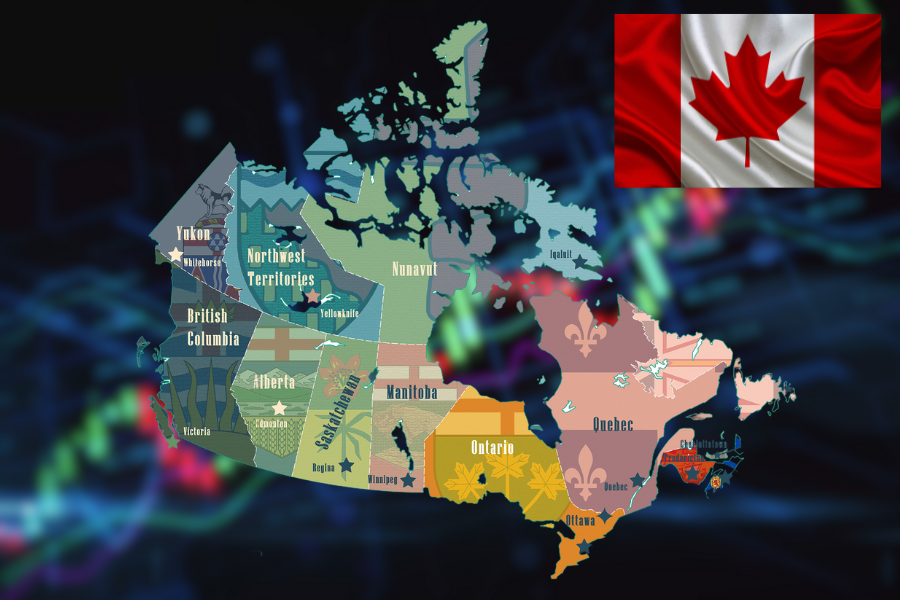
Labour Market Softens as Inflation Continues to Ease
Canada’s Economy at the Start of 2026
Labour Market Softens as Inflation Continues to Ease
PUBLISHED February 28, 2026
According to the January 2026 economic releases published by Statistics Canada, Canada began the year with a mixed macro picture: inflation continued to moderate toward target, while labour-market momentum showed early signs of cooling.
The data suggest an economy that remains fundamentally stable but is gradually shifting into a more moderate growth phase.
Employment Edges Lower
Statistics Canada reports that employment showed a slight pullback in January. The employment rate fell 0.1 percentage points to 60.8%, marking the first decline since August 2025.
At the same time, the number of private-sector employees declined by 52,000, partially offsetting gains recorded in the final months of 2025.
The figures indicate that hiring momentum has cooled somewhat, though not abruptly.
Unemployment Falls for the Wrong Reason
Despite softer employment dynamics, the headline unemployment rate dropped to 6.5% in January, down 0.3 percentage points.
However, Statistics Canada notes the decline was driven mainly by fewer people searching for work, rather than by strong job creation. This distinction is important for interpreting labour-market health.
The labour-force participation rate fell to 65.0%, with the decrease concentrated in Ontario. A shrinking participation rate can mask underlying softness in labour demand.
Inflation Moves Closer to Target
On the price front, Canada continued to make progress. The Consumer Price Index rose 2.3% year over year in January, down from 2.4% in December. Lower gasoline prices were the main driver of the slowdown, as pump prices fell sharply compared with a year earlier. Excluding gasoline, however, inflation held at 3.0%, showing that underlying price pressures are easing only gradually.
Inflation Moves Closer to Target
On the price front, Canada continued to make progress. The Consumer Price Index rose 2.3% year over year in January, down from 2.4% in December. Lower gasoline prices were the main driver of the slowdown, as pump prices fell sharply compared with a year earlier. Excluding gasoline, however, inflation held at 3.0%, showing that underlying price pressures are easing only gradually.
Food and Shelter Trends Diverge
Within the CPI basket, price dynamics remained uneven. Food purchased from stores rose 4.8% year over year, continuing to outpace headline inflation.
By contrast, shelter inflation continued to cool, increasing 1.7% annually — the first time in nearly five years that housing inflation has been below 2%.
This divergence suggests household cost pressures are easing, but not uniformly across spending categories.
Structural Signals Mixed
Taken together, the January releases show an economy in transition. Employment remains historically solid, and inflation is moving toward the Bank of Canada’s comfort zone.
At the same time, falling participation, softer private-sector employment and still-elevated core price pressures indicate that momentum is becoming more fragile.
Outlook: Moderation Rather Than Weakness
Statistics Canada’s latest data point to a cooling but not contracting Canadian economy at the start of 2026. Inflation is trending in the right direction, while the labour market is loosening gradually rather than deteriorating sharply.
For policymakers and businesses, the key question will be whether employment stabilises in the coming months or continues to soften as higher interest rates work through the economy.
Bottom line: Canada entered 2026 with inflation moving closer to target but with early signs of labour-market cooling. The economy remains resilient overall, yet the shift toward a more moderate growth phase is becoming increasingly visible.
Food and Shelter Trends Diverge
Within the CPI basket, price dynamics remained uneven. Food purchased from stores rose 4.8% year over year, continuing to outpace headline inflation.
By contrast, shelter inflation continued to cool, increasing 1.7% annually — the first time in nearly five years that housing inflation has been below 2%.
This divergence suggests household cost pressures are easing, but not uniformly across spending categories.
Structural Signals Mixed
Taken together, the January releases show an economy in transition. Employment remains historically solid, and inflation is moving toward the Bank of Canada’s comfort zone.
At the same time, falling participation, softer private-sector employment and still-elevated core price pressures indicate that momentum is becoming more fragile.
Outlook: Moderation Rather Than Weakness
Statistics Canada’s latest data point to a cooling but not contracting Canadian economy at the start of 2026. Inflation is trending in the right direction, while the labour market is loosening gradually rather than deteriorating sharply.
For policymakers and businesses, the key question will be whether employment stabilises in the coming months or continues to soften as higher interest rates work through the economy.
Bottom line: Canada entered 2026 with inflation moving closer to target but with early signs of labour-market cooling. The economy remains resilient overall, yet the shift toward a more moderate growth phase is becoming increasingly visible.
Follow us on LinkedIn!
Follow us on LinkedIn!
Would you like to sell your products or services worldwide?
Schedule an appointment with our international sales team
Would you like to sell your products or services worldwide?
Schedule an appointment with our international sales team