
PUBLISHED January 16, 2026
According to “Norsk økonomi i normal fart” from Statistisk sentralbyrå (SSB), Norway’s economy continues to expand at what economists describe as a “normal pace,” combining moderate growth with manageable risks. Recent forecasts from Statistics Norway indicate that household spending and public demand remain key sources of support. Although growth is not rapid, the country has avoided major downturns after earlier slow periods. Mainland GDP is expected to grow by around 1.5 percent annually in the near term. Inflation has fallen from its peak but is still above the central bank’s target. Overall, the outlook points to stability rather than strong acceleration.
Household consumption has become one of the main drivers of economic activity. Improving real incomes and easing borrowing costs have encouraged higher spending. Public investment, especially in defence and infrastructure, is also lifting demand. Government budgets provide additional stimulus for the coming years. These factors help offset weaker performance in construction and petroleum investment. As a result, domestic demand remains broadly supportive of growth.
Not all sectors are expanding at the same pace. Residential construction remains subdued, weighing on overall investment. Petroleum investment is expected to decline as large projects are completed. Unemployment has risen slightly, although service industries continue to hire.
Inflation above target is slowing the pace of interest rate cuts. Together, these elements keep growth steady but restrained.
Norway’s consumer spending has been a consistent pillar of economic growth. Real incomes have grown, and households are spending more on goods and services compared with the previous year. Lower borrowing costs — following two interest rate reductions by Norges Bank — are expected to support continued consumption growth. Public sector demand, particularly spending related to defence and other government priorities, adds further fuel to aggregate demand. Fiscal policy decisions documented in recent budgets provide additional stimulus that is projected to lift activity in coming years. Together, consumer confidence and fiscal support paint a picture of an economy being carried forward by domestic demand rather than external shocks. This broad base of demand helps explain why growth remains positive despite other headwinds.
Norway’s consumer spending has been a consistent pillar of economic growth. Real incomes have grown, and households are spending more on goods and services compared with the previous year. Lower borrowing costs — following two interest rate reductions by Norges Bank — are expected to support continued consumption growth. Public sector demand, particularly spending related to defence and other government priorities, adds further fuel to aggregate demand. Fiscal policy decisions documented in recent budgets provide additional stimulus that is projected to lift activity in coming years. Together, consumer confidence and fiscal support paint a picture of an economy being carried forward by domestic demand rather than external shocks. This broad base of demand helps explain why growth remains positive despite other headwinds.
In contrast to strong consumer demand, investment in housing and petroleum sectors has lagged. Residential construction, which typically accounts for a sizeable share of domestic investment, has remained weak. Petroleum investment — once a key growth driver — is set to decline as major projects initiated in earlier years are completed. This shift dampens overall investment growth and balances out gains in other parts of the economy. The slowdown in these sectors underscores how structural factors can shape broader trends. Despite these constraints, industrial activity linked to exports and services continues to add to gross output. The net effect is a moderated growth pattern: positive, but constrained.
The labour market in Norway has been resilient, with employment rising steadily since the pandemic’s end. Unemployment, though slightly higher than in past years, is expected to decline gradually as labour demand picks up, especially in the service sector. Wage growth remains moderate, supporting household incomes without triggering excessive inflationary pressure. Inflation, while significantly reduced since its 2022 peak, remains above the central bank’s 2 % target, delaying deeper cuts to interest rates. Interest rate projections suggest two modest cuts over the next few years, bringing the key policy rate closer to neutral levels by 2027. International economic conditions are stable, with partner economies growing near trend. These factors combine to shape a future where growth continues steadily, but without dramatic acceleration.
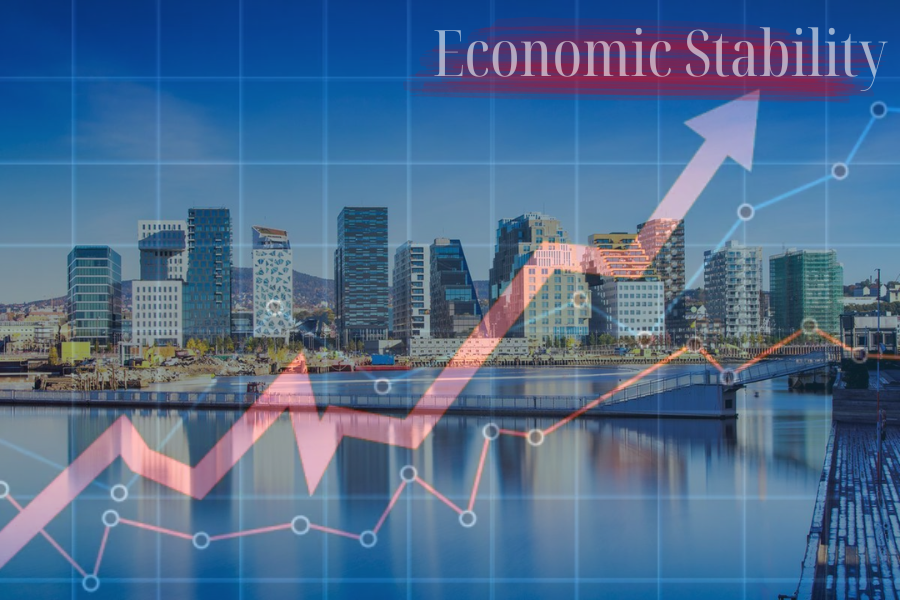
Norway’s economic performance through 2025 and into the next few years is expected to remain solid but unremarkable, sustaining expansion at a normal pace. Growth is supported by strong consumer demand and government spending, while weaker sectors like housing and petroleum investment temper overall momentum. Labour market conditions and inflation trends also point to a stable outlook without sharp oscillations. Although uncertainties persist — from international trade relations to sectoral investment shifts — the broad trajectory suggests steady progress rather than instability. Continued monitoring of key indicators will help clarify how this balance unfolds through 2028.
In contrast to strong consumer demand, investment in housing and petroleum sectors has lagged. Residential construction, which typically accounts for a sizeable share of domestic investment, has remained weak. Petroleum investment — once a key growth driver — is set to decline as major projects initiated in earlier years are completed. This shift dampens overall investment growth and balances out gains in other parts of the economy. The slowdown in these sectors underscores how structural factors can shape broader trends. Despite these constraints, industrial activity linked to exports and services continues to add to gross output. The net effect is a moderated growth pattern: positive, but constrained.
The labour market in Norway has been resilient, with employment rising steadily since the pandemic’s end. Unemployment, though slightly higher than in past years, is expected to decline gradually as labour demand picks up, especially in the service sector. Wage growth remains moderate, supporting household incomes without triggering excessive inflationary pressure. Inflation, while significantly reduced since its 2022 peak, remains above the central bank’s 2 % target, delaying deeper cuts to interest rates. Interest rate projections suggest two modest cuts over the next few years, bringing the key policy rate closer to neutral levels by 2027. International economic conditions are stable, with partner economies growing near trend. These factors combine to shape a future where growth continues steadily, but without dramatic acceleration.
Norway’s economic performance through 2025 and into the next few years is expected to remain solid but unremarkable, sustaining expansion at a normal pace. Growth is supported by strong consumer demand and government spending, while weaker sectors like housing and petroleum investment temper overall momentum. Labour market conditions and inflation trends also point to a stable outlook without sharp oscillations. Although uncertainties persist — from international trade relations to sectoral investment shifts — the broad trajectory suggests steady progress rather than instability. Continued monitoring of key indicators will help clarify how this balance unfolds through 2028.