PUBLISHED January 14, 2026
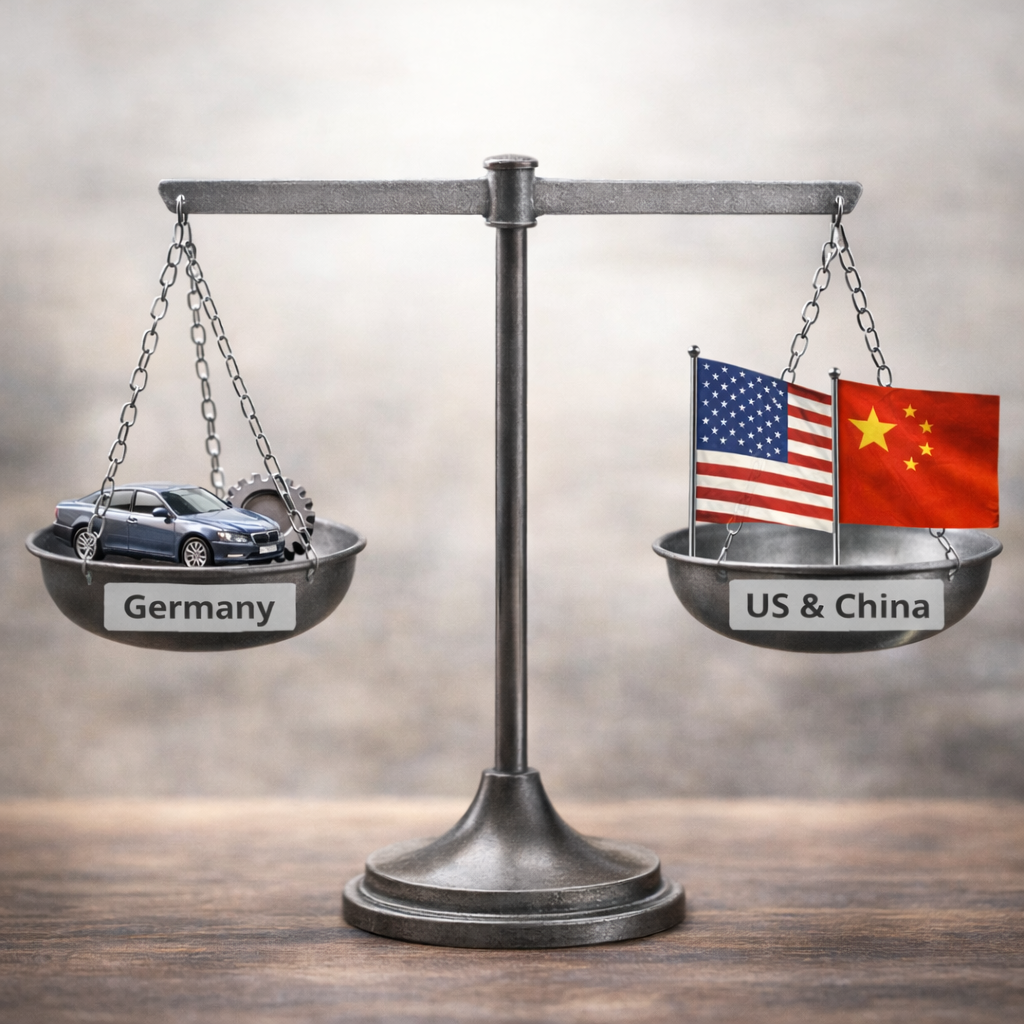
According to “Germany’s export model hit from both sides as US and China demand slumps, Germany’s economy has long been defined by its ability to export high-value industrial goods to the world. From cars and machinery to chemicals and precision equipment, German products have traditionally found strong demand in global markets, making exports a central pillar of national growth. This model has proven resilient through multiple crises, often supported by strong external demand even when domestic conditions weakened.
In 2025, however, this export-driven strategy is facing an unusually difficult test. For the first time in years, demand is slowing simultaneously in Germany’s two most important non-European markets: the United States and China. Both countries have played a crucial role in sustaining German industry, but economic, political and structural changes are now reshaping their relationship with Europe’s largest economy.
The combination of rising trade barriers, shifting global supply chains and increasing competition from abroad is exposing vulnerabilities in Germany’s traditional growth model. As exports decline and uncertainty grows, economists and policymakers are questioning whether the country can continue to rely so heavily on external demand — or whether a broader rethinking of Germany’s economic strategy has become unavoidable.
One of the most immediate challenges for German exporters has emerged from the United States. Trade data shows a noticeable decline in exports to the US, marking a sharp reversal from the steady growth seen in previous years. Core German industries such as automotive manufacturing, machinery and chemicals have been particularly affected, as they account for a large share of exports to North America. A key factor behind this decline is the return of higher US import tariffs, especially on industrial goods like steel, aluminium and vehicles. These measures have made German products more expensive and less competitive in the American market. Economists warn that this is not a short-term disruption but could represent a lasting shift, meaning German companies may need to adjust to structurally lower export volumes to the US rather than expecting a quick recovery.
One of the most immediate challenges for German exporters has emerged from the United States. Trade data shows a noticeable decline in exports to the US, marking a sharp reversal from the steady growth seen in previous years. Core German industries such as automotive manufacturing, machinery and chemicals have been particularly affected, as they account for a large share of exports to North America. A key factor behind this decline is the return of higher US import tariffs, especially on industrial goods like steel, aluminium and vehicles. These measures have made German products more expensive and less competitive in the American market. Economists warn that this is not a short-term disruption but could represent a lasting shift, meaning German companies may need to adjust to structurally lower export volumes to the US rather than expecting a quick recovery.
At the same time, Germany is facing weakening demand from China, another cornerstone of its export success. Unlike the US situation, this slowdown is not driven primarily by tariffs, but by deeper structural changes within China itself. Chinese manufacturers have become more self-sufficient and increasingly competitive in sectors where Germany once dominated. As a result, while German imports from China continue to rise, exports in the opposite direction are losing momentum. This imbalance has widened Germany’s trade deficit with China and raised concerns that the country may lose its long-standing position as one of China’s top export destinations. The shift highlights how global supply chains are evolving and how Germany’s traditional strengths no longer guarantee market access.
The simultaneous decline in demand from both the US and China has exposed vulnerabilities in Germany’s heavy reliance on a small number of major export markets. Economic analysts argue that the country can no longer depend on external demand alone to drive growth. Instead, Germany may need to diversify its trade relationships and reduce its exposure to geopolitical and economic shocks. Strengthening trade within the European Union, reducing internal market barriers and expanding partnerships with emerging markets are increasingly seen as essential steps. In the longer term, Germany’s challenge will be to modernise its export model so that it remains competitive in a world marked by protectionism, shifting industrial power and slower global growth.
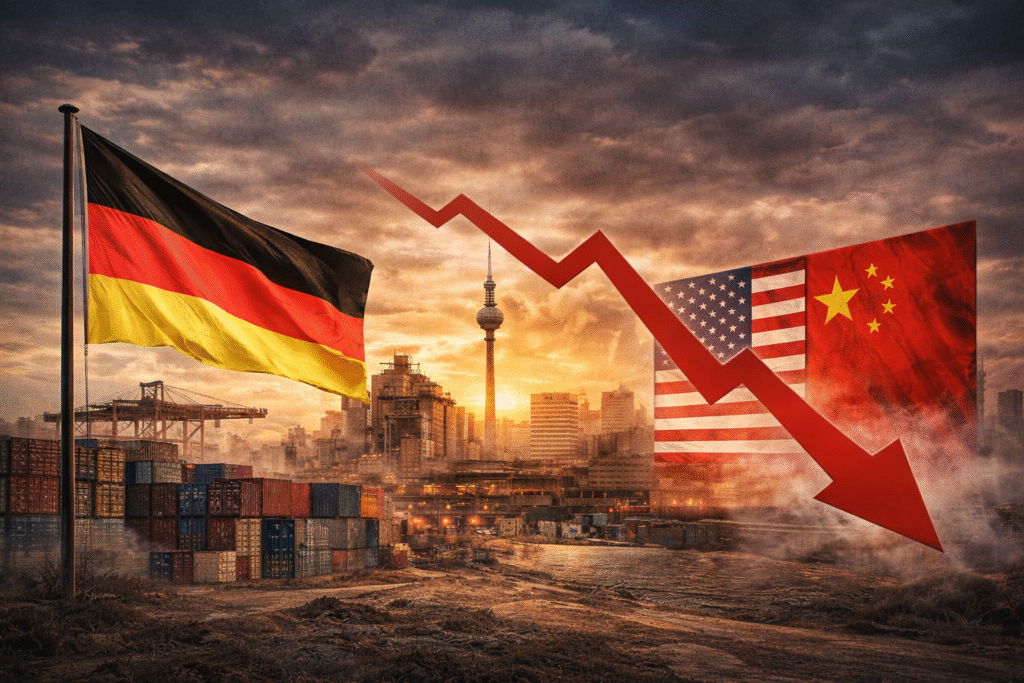
Germany’s economy closed 2025 in a position of relative stability, but with limited momentum. Weakening demand from both the United States and China has reduced export growth, particularly in core industrial sectors. While the country has avoided a sharp downturn, the simultaneous slowdown in its key markets underscores the need to reassess Germany’s reliance on its traditional export-driven model.
At the same time, Germany is facing weakening demand from China, another cornerstone of its export success. Unlike the US situation, this slowdown is not driven primarily by tariffs, but by deeper structural changes within China itself. Chinese manufacturers have become more self-sufficient and increasingly competitive in sectors where Germany once dominated. As a result, while German imports from China continue to rise, exports in the opposite direction are losing momentum. This imbalance has widened Germany’s trade deficit with China and raised concerns that the country may lose its long-standing position as one of China’s top export destinations. The shift highlights how global supply chains are evolving and how Germany’s traditional strengths no longer guarantee market access.
The simultaneous decline in demand from both the US and China has exposed vulnerabilities in Germany’s heavy reliance on a small number of major export markets. Economic analysts argue that the country can no longer depend on external demand alone to drive growth. Instead, Germany may need to diversify its trade relationships and reduce its exposure to geopolitical and economic shocks. Strengthening trade within the European Union, reducing internal market barriers and expanding partnerships with emerging markets are increasingly seen as essential steps. In the longer term, Germany’s challenge will be to modernise its export model so that it remains competitive in a world marked by protectionism, shifting industrial power and slower global growth.
Germany’s economy closed 2025 in a position of relative stability, but with limited momentum. Weakening demand from both the United States and China has reduced export growth, particularly in core industrial sectors. While the country has avoided a sharp downturn, the simultaneous slowdown in its key markets underscores the need to reassess Germany’s reliance on its traditional export-driven model.