Swiss Exports to the U.S. Fall Sharply in Early 2026
Trade with America drops 16%, pharmaceutical shipments weaken, and exporters face rising uncertainty
Swiss Exports to the U.S. Fall Sharply in Early 2026
Trade with America drops 16%, pharmaceutical shipments weaken, and exporters face rising uncertainty
PUBLISHED April 28, 2026
A Major Setback for Swiss Trade
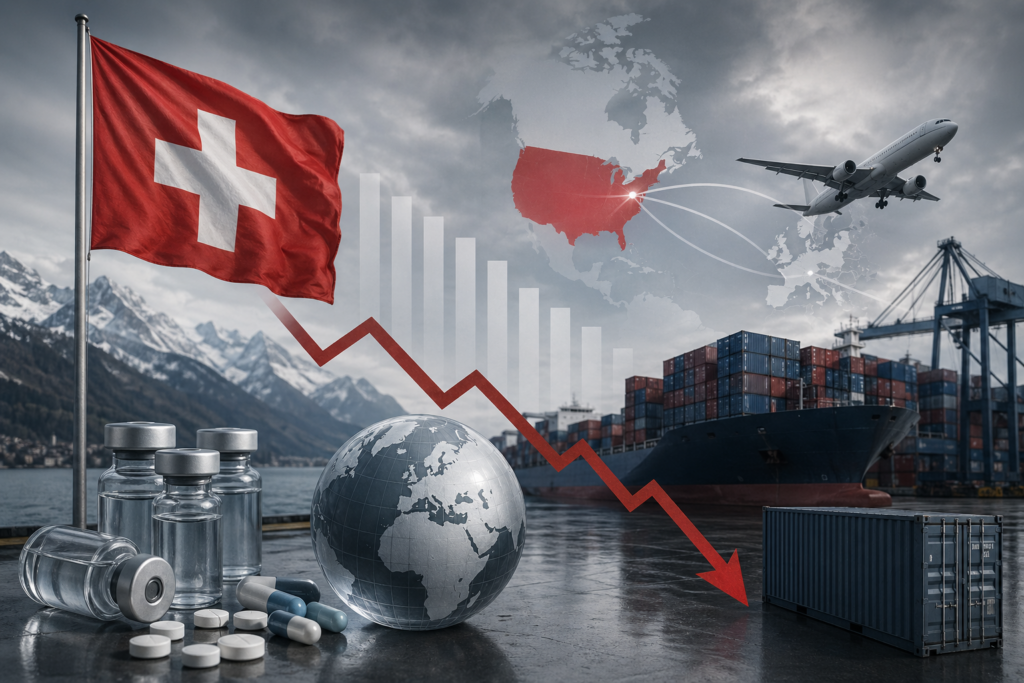
According to “Schweizer Exporte: USA-Geschäft bricht um 16 Prozent ein” published by Tages-Anzeiger, Switzerland’s export sector suffered a notable setback in the first quarter of 2026. Shipments to the United States fell by 16%, creating fresh concern for one of the country’s most important overseas markets. The decline highlights growing pressure on Switzerland’s export-driven economy.
The U.S. Remains a Key Market
The United States has long been one of Switzerland’s most valuable trading partners, especially for high-value sectors such as pharmaceuticals, machinery, precision instruments, and luxury goods. A sharp contraction in demand from the American market can therefore have an outsized effect on Swiss industrial output and business confidence.
Pharmaceutical Sector Adds to the Weakness
Part of the downturn was linked to weaker exports in chemical and pharmaceutical products, which represent the largest share of Swiss foreign sales. When this sector slows, national export totals are often affected immediately. This makes current figures especially significant for investors and policymakers.
Global Uncertainty Hurts Orders
The report also reflects a broader international environment marked by caution. Trade tensions, slower global growth, and changing demand patterns are leading many companies to delay orders or reduce inventories. Export-oriented economies such as Switzerland are particularly sensitive to these shifts.
Global Uncertainty Hurts Orders
The report also reflects a broader international environment marked by caution. Trade tensions, slower global growth, and changing demand patterns are leading many companies to delay orders or reduce inventories. Export-oriented economies such as Switzerland are particularly sensitive to these shifts.
Strong Franc Remains a Challenge
Swiss exporters also continue to face the challenge of a relatively strong Swiss franc. A stronger currency can make Swiss-made goods more expensive abroad, reducing competitiveness in key markets such as the United States. This remains a long-term structural concern for manufacturers.
Europe Watches Swiss Trade Closely
Switzerland may be outside the European Union, but its economy is deeply integrated with surrounding markets. Weak Swiss export performance can influence suppliers, logistics flows, and confidence across neighboring economies. The country’s trade trends are therefore followed closely across Europe.
Outlook Depends on Demand Recovery
The remainder of 2026 will likely depend on whether U.S. demand stabilizes and pharmaceutical exports regain momentum. If global trade conditions improve, Switzerland could recover quickly. If not, exporters may continue facing a difficult year marked by slower growth and uncertain international demand.
Strong Franc Remains a Challenge
Swiss exporters also continue to face the challenge of a relatively strong Swiss franc. A stronger currency can make Swiss-made goods more expensive abroad, reducing competitiveness in key markets such as the United States. This remains a long-term structural concern for manufacturers.
Europe Watches Swiss Trade Closely
Switzerland may be outside the European Union, but its economy is deeply integrated with surrounding markets. Weak Swiss export performance can influence suppliers, logistics flows, and confidence across neighboring economies. The country’s trade trends are therefore followed closely across Europe.
Outlook Depends on Demand Recovery
The remainder of 2026 will likely depend on whether U.S. demand stabilizes and pharmaceutical exports regain momentum. If global trade conditions improve, Switzerland could recover quickly. If not, exporters may continue facing a difficult year marked by slower growth and uncertain international demand.
Follow us on LinkedIn!
Follow us on LinkedIn!
Would you like to sell your products or services worldwide?
Schedule an appointment with our international sales team
Would you like to sell your products or services worldwide?
Schedule an appointment with our international sales team