Norwegian Households Lose Confidence in National Economy
Falling Expectations Signal Growing Uncertainty Despite Stable Personal Finances
Norwegian Households Lose Confidence in National Economy
Falling Expectations Signal Growing Uncertainty Despite Stable Personal Finances
PUBLISHED March 27, 2026
A Sharp Decline in Economic Confidence
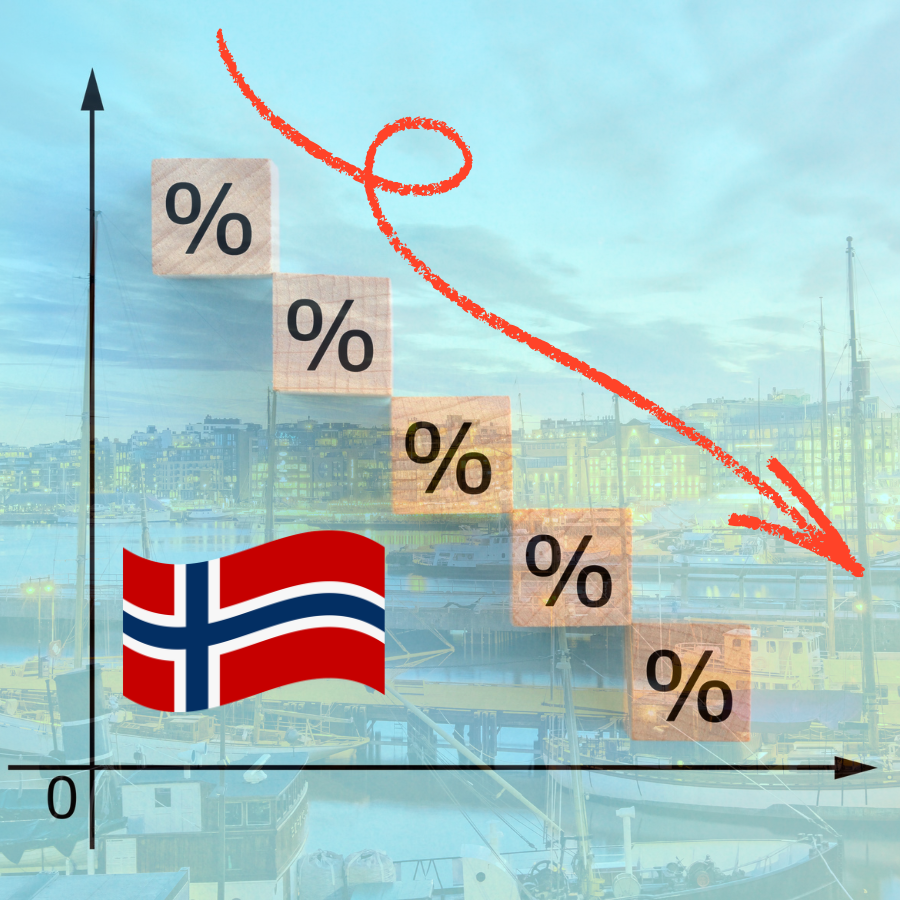
According to data from Finans Norge’s Expectation Barometer, confidence in Norway’s national economy has declined significantly in the first quarter of 2026. The adjusted main indicator dropped to minus 9.4, down from minus 4.7 in the previous quarter, indicating a clear deterioration in expectations among households. This marks a continuation of a downward trend and reflects increasing concern about the country’s economic outlook.
Uncertainty Drives Negative Sentiment
The weakening confidence is largely attributed to rising uncertainty surrounding interest rates, inflation, and unpredictable global trade developments.
In addition, ongoing geopolitical tensions have contributed to a more unstable economic environment, influencing how households perceive future developments. As highlighted in the report, these external and domestic pressures are making people more cautious about the direction of the national economy.
Divided Views Along Political Lines
The data also reveals a clear divide in economic expectations based on political affiliation. Respondents aligned with conservative political groups tend to have a significantly more negative view of the country’s economic situation, while those associated with socialist perspectives show relatively more optimism.
This contrast highlights how perceptions of economic performance can vary depending on broader political outlooks.
Confidence in Personal Finances Remains Strong
Despite the decline in confidence in the national economy, households continue to view their own financial situation positively. Many respondents report stable employment conditions, and wage growth in recent years has helped offset some of the impact of rising prices. This has provided a degree of financial stability at the household level, even as concerns about the broader economy increase.
Early Signs of Growing Economic Concern
The survey was conducted before the latest inflation figures were released, which suggests that the drop in confidence may represent an early signal of deeper concerns. According to the analysis, the weakening sentiment could indicate that economic uncertainty is beginning to take hold more firmly and may continue to influence behaviour in the coming months.
Early Signs of Growing Economic Concern
The survey was conducted before the latest inflation figures were released, which suggests that the drop in confidence may represent an early signal of deeper concerns. According to the analysis, the weakening sentiment could indicate that economic uncertainty is beginning to take hold more firmly and may continue to influence behaviour in the coming months.
Potential Impact on Consumer Behaviour
One of the key implications of declining confidence is its effect on consumption patterns. The report indicates that households are increasingly inclined to prioritise saving rather than spending. If this trend continues, it could have negative consequences for sectors that depend on steady consumer demand, such as retail, hospitality, and tourism.
Norway’s Open Economy Amplifies Risks
As an open economy, Norway is particularly sensitive to international developments. Global instability, shifting trade conditions, and geopolitical tensions can quickly influence domestic expectations and economic performance. This interconnectedness reinforces the vulnerability of economic confidence to external shocks.
Outlook: Cautious Sentiment Moving Forward
Overall, the latest findings suggest that while Norwegian households remain financially stable on an individual level, their outlook on the national economy is becoming increasingly cautious. The data points to a growing disconnect between personal financial confidence and broader economic expectations, with uncertainty likely to remain a defining feature in the near term.
Potential Impact on Consumer Behaviour
One of the key implications of declining confidence is its effect on consumption patterns. The report indicates that households are increasingly inclined to prioritise saving rather than spending. If this trend continues, it could have negative consequences for sectors that depend on steady consumer demand, such as retail, hospitality, and tourism.
Norway’s Open Economy Amplifies Risks
As an open economy, Norway is particularly sensitive to international developments. Global instability, shifting trade conditions, and geopolitical tensions can quickly influence domestic expectations and economic performance. This interconnectedness reinforces the vulnerability of economic confidence to external shocks.
Outlook: Cautious Sentiment Moving Forward
Overall, the latest findings suggest that while Norwegian households remain financially stable on an individual level, their outlook on the national economy is becoming increasingly cautious. The data points to a growing disconnect between personal financial confidence and broader economic expectations, with uncertainty likely to remain a defining feature in the near term.
Follow us on LinkedIn!
Follow us on LinkedIn!
Would you like to sell your products or services worldwide?
Schedule an appointment with our international sales team
Would you like to sell your products or services worldwide?
Schedule an appointment with our international sales team