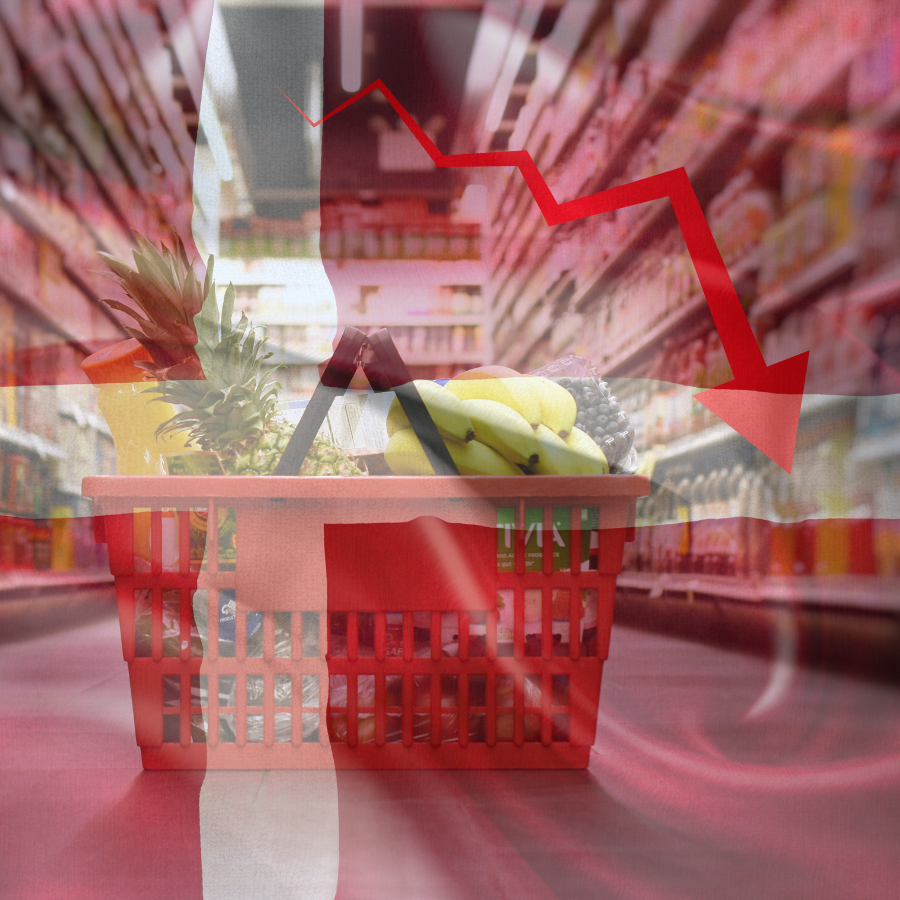
Danish Retail Sales Decline Slightly in February 2026
Weak Monthly Performance Contrasts with Continued Annual Growth
Danish Retail Sales Decline Slightly in February 2026
Weak Monthly Performance Contrasts with Continued Annual Growth
PUBLISHED March 27, 2026
A Modest Monthly Decline in Retail Activity
According to data from Statistics Denmark, as reported by Økonomisk Ugebrev, total retail sales in Denmark fell by 0.3% from January to February 2026 when adjusted for price changes, seasonal effects, and trading days. The figures indicate a slight weakening in consumer activity at the start of the year, suggesting that short-term demand remains somewhat fragile.
Broader Trend Also Points to Weakness
The decline is not limited to a single month, as retail sales over the three-month period from
December to February also decreased by 0.4% compared to the previous three months. This broader development reinforces the view that consumption has been losing momentum, rather than experiencing a temporary fluctuation.
Significant Drop in Culture and Leisure Goods
The most notable decline was recorded in the retail segment for cultural and leisure products, where sales fell by 6.4% between January and February. This category includes goods such as books, sports equipment, bicycles, and recreational items.
A substantial part of the decrease was linked to bicycle sales, which were particularly affected during the period.
Weather Conditions Influence Sales Patterns
The sharp drop in certain retail segments is partly attributed to unusually cold weather in February. As highlighted in the data, seasonal industries such as bicycle retail may have experienced delayed purchases due to weather conditions, indicating that some of the decline could be temporary rather than structural.
Electronics Also See a Decline
Another sector experiencing a downturn was consumer electronics, where sales fell by 2.1% on a monthly basis. This includes products such as mobile phones, computers, and televisions. However, when viewed over a longer period, this category still showed moderate growth, suggesting mixed developments within the retail sector.
Electronics Also See a Decline
Another sector experiencing a downturn was consumer electronics, where sales fell by 2.1% on a monthly basis. This includes products such as mobile phones, computers, and televisions. However, when viewed over a longer period, this category still showed moderate growth, suggesting mixed developments within the retail sector.
Annual Comparison Shows Continued Growth
Despite the monthly decline, retail sales were 2.2% higher in February 2026 compared to the same month in the previous year when adjusted for price changes. Furthermore, six out of eight retail categories recorded higher sales than a year earlier, indicating that the overall trend in retail activity remains positive.
Structural Changes in Retail Classification
The latest data release also reflects a transition to a new classification system based on Dansk Branchekode 2025. This change replaces previous product groupings with a new structure based on retail industries, providing a more detailed view of sectoral developments.
Outlook: Temporary Weakness or Emerging Trend?
Overall, the February figures suggest a slight slowdown in Danish retail activity, but not a broad-based decline. While monthly data points to weaker consumption, the annual growth figures indicate continued resilience. The key question moving forward will be whether the recent decline reflects temporary factors, such as weather conditions, or signals a more sustained shift in consumer behaviour.
Annual Comparison Shows Continued Growth
Despite the monthly decline, retail sales were 2.2% higher in February 2026 compared to the same month in the previous year when adjusted for price changes. Furthermore, six out of eight retail categories recorded higher sales than a year earlier, indicating that the overall trend in retail activity remains positive.
Structural Changes in Retail Classification
The latest data release also reflects a transition to a new classification system based on Dansk Branchekode 2025. This change replaces previous product groupings with a new structure based on retail industries, providing a more detailed view of sectoral developments.
Outlook: Temporary Weakness or Emerging Trend?
Overall, the February figures suggest a slight slowdown in Danish retail activity, but not a broad-based decline. While monthly data points to weaker consumption, the annual growth figures indicate continued resilience. The key question moving forward will be whether the recent decline reflects temporary factors, such as weather conditions, or signals a more sustained shift in consumer behaviour.
Follow us on LinkedIn!
Follow us on LinkedIn!
Would you like to sell your products or services worldwide?
Schedule an appointment with our international sales team
Would you like to sell your products or services worldwide?
Schedule an appointment with our international sales team