Norway’s Tax System Criticised for Unfair Treatment of Foreign Pensions
Experts Warn Current Rules Create Liquidity Traps and Discourage International Workforce Mobility
Norway’s Tax System Criticised for Unfair Treatment of Foreign Pensions
Experts Warn Current Rules Create Liquidity Traps and Discourage International Workforce Mobility
PUBLISHED March 27, 2026
A Structural Imbalance in Pension Taxation
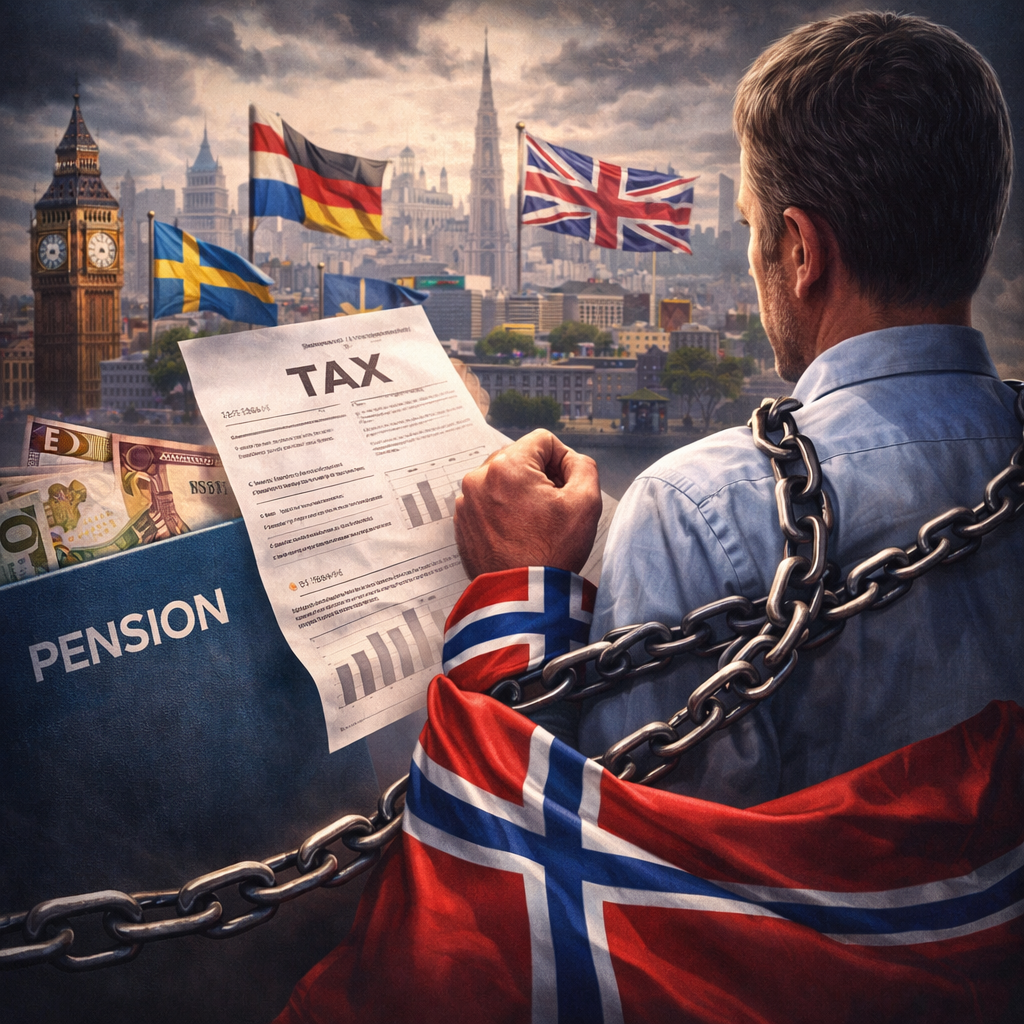
According to an opinion article published in Finansavisen, Norway’s tax system treats domestic and foreign pension schemes in fundamentally different ways, creating what experts describe as an unfair and inconsistent framework. While Norwegian pension savings benefit from deferred taxation, many foreign pension arrangements are reclassified and taxed as ordinary investments, leading to significantly different financial outcomes.
Deferred Taxation Versus Immediate Tax Burden
The contrast between the two systems is particularly striking.
Domestic pension schemes are generally not taxed on returns until the funds are paid out, allowing savings to grow over time without immediate tax pressure. In comparison, foreign pension savings are often subject to ongoing taxation on interest, dividends and capital gains, even though the funds remain locked until retirement age.
Classification as the Core Issue
At the heart of the problem lies the classification of foreign pension schemes. Instead of being recognised as pension savings, many are treated as standard capital investments under Norwegian tax rules.
This leads to additional burdens such as wealth tax and continuous taxation of returns, creating a system that differs sharply from the treatment of equivalent domestic schemes.
Liquidity Trap for Taxpayers
One of the most critical consequences of this approach is the creation of a so-called liquidity trap. Taxes become due on pension assets that cannot be accessed, forcing individuals to pay tax on wealth that is effectively unavailable. This situation is particularly problematic for internationally mobile workers who have accumulated pension rights abroad but are subject to Norwegian taxation while residing in the country.
Risk of Double Taxation and Exit Issues
The system also raises the risk of double taxation. Individuals may be taxed annually in Norway on pension returns and later taxed again in the country where the pension is paid out. In addition, those leaving Norway may face further complications related to exit taxation, especially if pension assets are treated as directly held investments.
Risk of Double Taxation and Exit Issues
The system also raises the risk of double taxation. Individuals may be taxed annually in Norway on pension returns and later taxed again in the country where the pension is paid out. In addition, those leaving Norway may face further complications related to exit taxation, especially if pension assets are treated as directly held investments.
Impact on International Workforce Mobility
According to the article, the current tax framework has practical consequences beyond individual taxpayers. Norway risks becoming less attractive to international professionals, as foreign pension savings are effectively penalised. This may discourage skilled workers from relocating to Norway or lead some to reconsider staying, potentially affecting the country’s competitiveness in attracting talent.
Calls for Reform and Fairer Treatment
The authors argue that reforms are necessary to address these imbalances. Suggested solutions include recognising foreign pension schemes more accurately based on their actual characteristics, introducing clearer qualification criteria, and ensuring mechanisms that prevent double taxation. Such changes would align the system more closely with its stated goals of fairness and economic efficiency.
Outlook: A Debate on Fairness and Mobility
Overall, the debate highlights a broader issue within Norway’s tax system, balancing fairness, mobility, and fiscal policy. While the current framework protects domestic pension savings, it may unintentionally penalise international experience and cross-border careers. As discussions continue, the question remains whether Norway will adjust its approach to better reflect the realities of an increasingly global workforce.
Impact on International Workforce Mobility
According to the article, the current tax framework has practical consequences beyond individual taxpayers. Norway risks becoming less attractive to international professionals, as foreign pension savings are effectively penalised. This may discourage skilled workers from relocating to Norway or lead some to reconsider staying, potentially affecting the country’s competitiveness in attracting talent.
Calls for Reform and Fairer Treatment
The authors argue that reforms are necessary to address these imbalances. Suggested solutions include recognising foreign pension schemes more accurately based on their actual characteristics, introducing clearer qualification criteria, and ensuring mechanisms that prevent double taxation. Such changes would align the system more closely with its stated goals of fairness and economic efficiency.
Outlook: A Debate on Fairness and Mobility
Overall, the debate highlights a broader issue within Norway’s tax system, balancing fairness, mobility, and fiscal policy. While the current framework protects domestic pension savings, it may unintentionally penalise international experience and cross-border careers. As discussions continue, the question remains whether Norway will adjust its approach to better reflect the realities of an increasingly global workforce.
Follow us on LinkedIn!
Follow us on LinkedIn!
Would you like to sell your products or services worldwide?
Schedule an appointment with our international sales team
Would you like to sell your products or services worldwide?
Schedule an appointment with our international sales team