PUBLISHED March 27, 2026
A Continued Downward Trend in Industrial Prices
According to data released by the Federal Statistical Office (Destatis), Germany’s industrial economy is showing clear signs of easing price pressures at the beginning of 2026, as producer prices continue their downward trajectory. Prices for industrial products fell in February compared to the same month a year earlier, reflecting a broader shift in the pricing environment. The figures suggest that the intense inflationary pressures seen in previous years may now be gradually subsiding.
Monthly Developments Reinforce the Pattern
The year-on-year decline in producer prices marks a continuation of a trend that has been developing over recent months. While the decrease is not uniform across all sectors, the overall movement points toward a cooling of cost dynamics within Germany’s industrial base. On a monthly basis, prices also edged slightly lower, reinforcing the perception that the adjustment is ongoing rather than temporary. These developments are closely monitored by economists, as producer prices often serve as an early indicator of future consumer price trends.
Energy Prices as the Main Driving Force
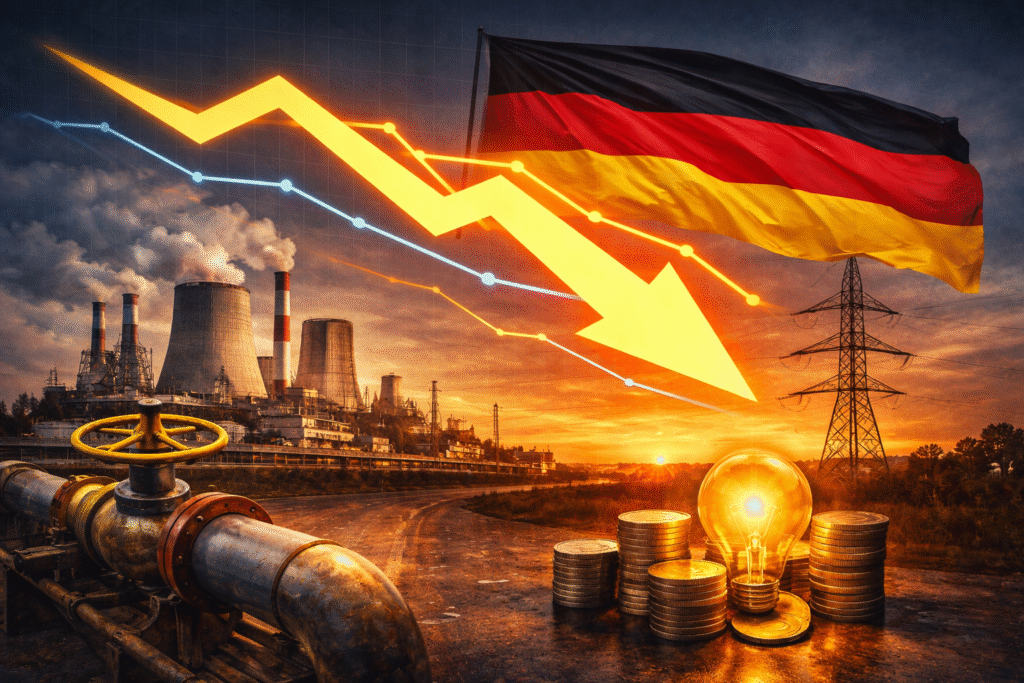
A key driver behind the decline remains the significant reduction in energy prices, which has had a substantial impact on overall industrial costs. Energy, historically one of the most volatile components of producer pricing, has exerted strong downward pressure in recent months. This shift has helped offset increases in other categories, effectively pulling the aggregate index lower. As a result, industries that are heavily dependent on energy inputs have experienced noticeable relief in their cost structures.
Despite the overall decline, not all segments of the industrial sector are following the same pattern. Prices for intermediate goods, for example, have shown moderate increases, highlighting ongoing cost pressures in certain parts of the supply chain. This divergence underlines the complexity of current economic conditions, where improvements in one area may coexist with persistent challenges in another. It also suggests that the normalization of price levels is uneven and may take time to fully materialize across all industries.
Despite the overall decline, not all segments of the industrial sector are following the same pattern. Prices for intermediate goods, for example, have shown moderate increases, highlighting ongoing cost pressures in certain parts of the supply chain. This divergence underlines the complexity of current economic conditions, where improvements in one area may coexist with persistent challenges in another. It also suggests that the normalization of price levels is uneven and may take time to fully materialize across all industries.
The implications of these developments extend beyond the industrial sector itself. Producer prices are widely regarded as a leading indicator for inflation, meaning that sustained decreases could signal a broader easing of inflationary pressures in the economy. Lower production costs may eventually translate into more stable consumer prices, although such effects are typically delayed and influenced by a range of additional factors, including demand conditions and market competition.
At the same time, the mixed signals within the data indicate that inflationary risks have not disappeared entirely. While energy-driven declines are significant, the persistence of price increases in other categories suggests that underlying pressures remain present in parts of the economy. Policymakers and analysts are therefore likely to approach the data with caution, balancing optimism about easing inflation with awareness of ongoing uncertainties.
Looking ahead, the trajectory of producer prices in Germany will depend on several key factors, including developments in global energy markets, supply chain stability, and broader economic conditions within Europe. As one of the continent’s leading industrial economies, Germany’s pricing trends carry wider significance, potentially influencing inflation expectations and policy decisions across the region. The coming months will therefore be crucial in determining whether the current downward trend represents a sustained shift or a temporary adjustment.
The implications of these developments extend beyond the industrial sector itself. Producer prices are widely regarded as a leading indicator for inflation, meaning that sustained decreases could signal a broader easing of inflationary pressures in the economy. Lower production costs may eventually translate into more stable consumer prices, although such effects are typically delayed and influenced by a range of additional factors, including demand conditions and market competition.
At the same time, the mixed signals within the data indicate that inflationary risks have not disappeared entirely. While energy-driven declines are significant, the persistence of price increases in other categories suggests that underlying pressures remain present in parts of the economy. Policymakers and analysts are therefore likely to approach the data with caution, balancing optimism about easing inflation with awareness of ongoing uncertainties.
Looking ahead, the trajectory of producer prices in Germany will depend on several key factors, including developments in global energy markets, supply chain stability, and broader economic conditions within Europe. As one of the continent’s leading industrial economies, Germany’s pricing trends carry wider significance, potentially influencing inflation expectations and policy decisions across the region. The coming months will therefore be crucial in determining whether the current downward trend represents a sustained shift or a temporary adjustment.